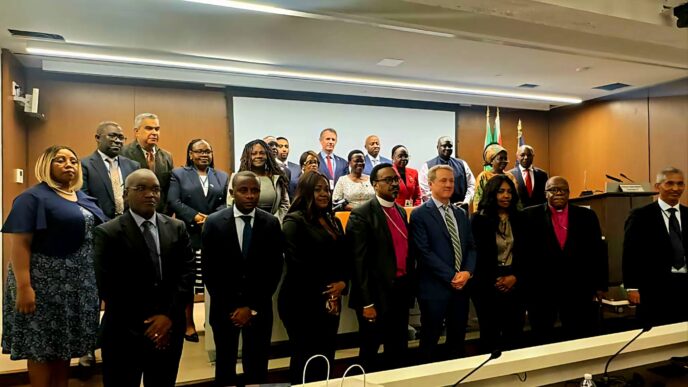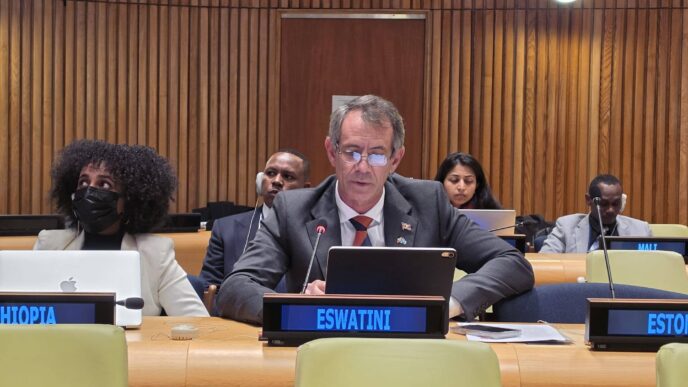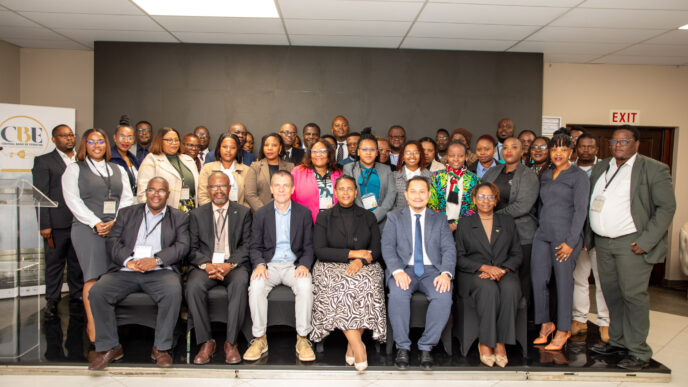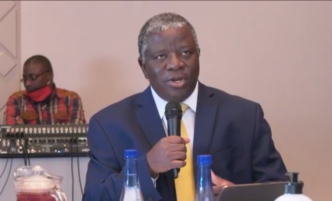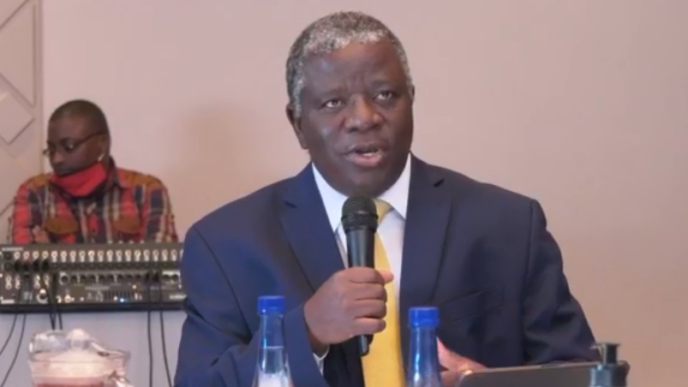


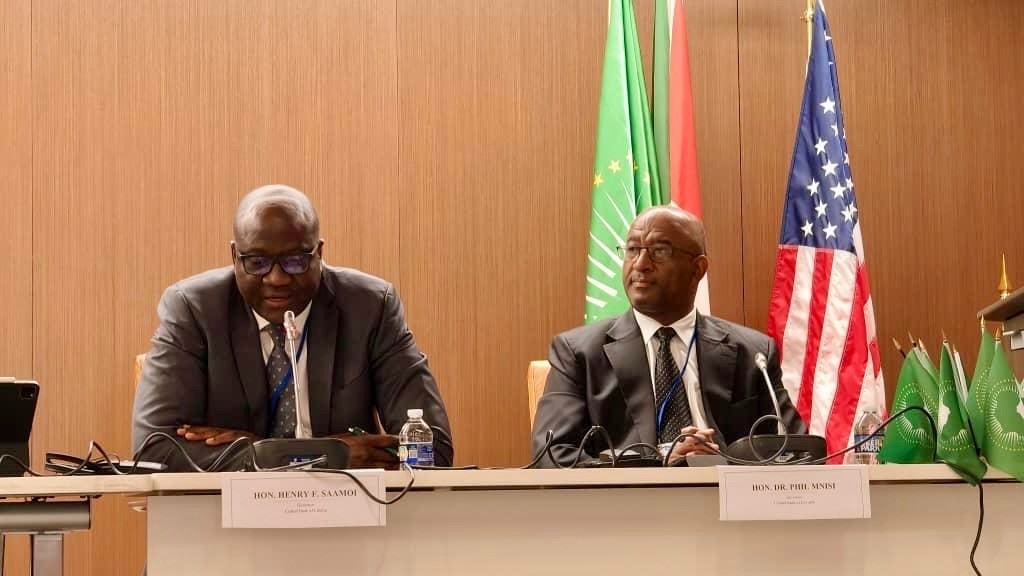
Central Bank of Eswatini (CBE) Governor Dr Phil Mnisi is leading a delegation at the 2026 IMF–World Bank Spring Meetings in Washington D.C., where Eswatini’s financial authorities are engaging in high-level forums covering global financial stability, sovereign debt and private capital mobilisation.
The delegation began its participation on Monday with a session involving the Mission Chief and Executive Director of the IMF Group 1 Constituency, where key developments in the Kingdom were discussed alongside plans for staff engagement with Eswatini.
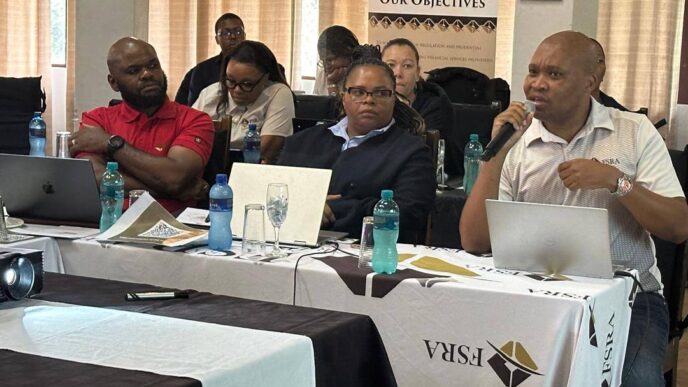
Among the early sessions was one focused on market-based finance, which examined the evolving role of capital markets in financing growth, deepening domestic financial systems and mobilising private capital in an increasingly volatile global environment. 
The session drew representatives from across Eswatini’s official delegation, including officials from the Ministry of Finance and the Centre for Financial Intelligence, reflecting the multi-sectoral nature of the discussions taking place throughout the week.
Before the formal programme got underway, the Eswatini team met on Sunday afternoon to coordinate participation, strategically assigning officials to parallel sessions covering financial stability, sovereign debt sustainability, capital flow management and regulatory oversight of non-bank financial intermediation.
Throughout the week, the delegation is taking part in a range of meetings and analytical forums addressing debt vulnerabilities and accountability, global financial stability risks, capital account openness, the impact of aid retrenchment in Sub-Saharan Africa and the role of market-based solutions in private sector mobilisation. Some of these sessions are open forums while others are restricted technical engagements designed to advance policy dialogue among central bankers, ministries of finance and international financial institutions.