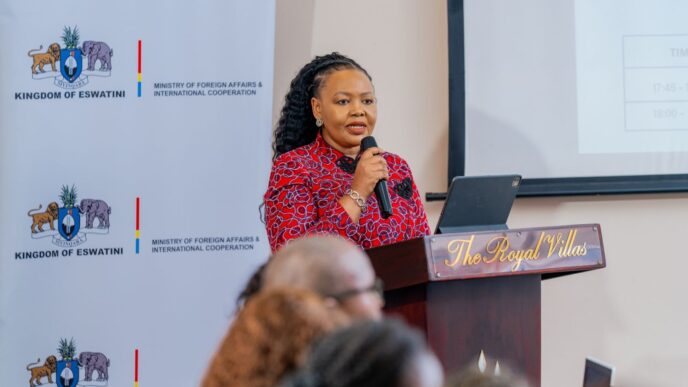


Beijing – China has launched a zero-tariff trade policy covering 53 African countries from May 1, 2026, in what Beijing is calling a historic milestone in China-Africa economic cooperation. The Kingdom of Eswatini is not among the beneficiaries, a direct consequence of Mbabane’s longstanding diplomatic recognition of Taiwan over the People’s Republic of China.
The policy grants tariff-free access to all 53 African nations with which China maintains diplomatic relations. It adds 20 countries to the 33 least developed countries that had already been receiving full tariff exemption since December 1, 2024. For goods falling under tariff quota systems, only the in-quota tariff rate will be reduced to zero, while out-of-quota rates remain unchanged. The arrangement runs from May 1, 2026 to April 30, 2028.
China’s Foreign Ministry spokesperson Lin Jian described the policy as transformative during a regular press briefing in Beijing on Tuesday, saying it “can well be said that the policy is epoch-making in the history of China-Africa relations and international relations.” 
“The zero-tariff treatment will become a golden key to trade prosperity, a propeller to industrial investment, a timely response to challenges, and a bridge connecting the hearts of Chinese and African people,” Lin said. “It will allow more quality and special products from Africa to find their way to the Chinese households, thus delivering tangible gains to the Chinese and African people and improve their wellbeing.”
Lin said the policy comes at a time when protectionism and unilateralism are on the rise globally, and that China chose to share opportunities and pursue common development with Africa through the arrangement as a contribution to global peace and development. He added that China will continue negotiating and signing economic partnership agreements for shared development with African countries, while also upgrading the green lanes system used for importing African agricultural and food products into China to further improve trade facilitation between the two sides.
The announcement has drawn enthusiastic responses from African leaders and business communities. South Africa’s Minister of Trade, Industry, and Competition Parks Tau welcomed the move warmly. “This is a fantastic opportunity. From May 1, we will take full advantage of it,” he said, noting that tariff-free access would boost the volume of South African products entering the Chinese market.
Amukelani Kubayi, acting director for Trade and Investment Promotion in Johannesburg, called the policy “a major milestone” and said it would create new avenues for local traders. He noted that small and medium-sized enterprises stand to benefit the most, particularly in agriculture, where citrus, wine and aloe-based products are expected to see strong growth. South African businessman Manelisa Bane added that zero-rated goods would generate “significant savings” for small businesses and deepen technological collaboration between the two countries.
In Nairobi, the Chinese Embassy and Kenya’s Ministry of Foreign and Diaspora Affairs hosted a seminar titled Zero Tariffs, Infinite Opportunities, where officials expressed confidence that the policy would help the country upgrade product quality and improve its business environment. “The partnership between Kenya and China is enduring, adaptable, and robust,” said Josphat Maikara, director general for Political and Diplomatic Affairs. He added that the initiative comes at a time of global economic uncertainty, making stronger bilateral cooperation even more valuable.
Trade experts say the benefits go well beyond simply removing duties. Wang Chunrui, director of the Georgia Research Center at China’s University of International Business and Economics, told Chinese outlet Yicai that the policy “comes with no political strings attached, does not interfere in any other countries’ internal affairs, and does not take full reciprocal opening-up as a prerequisite.” She said this stands in sharp contrast to preferential trade policies adopted by Western countries, which are often tied to political screening and intermittent implementation.
Wang explained that China will become the world’s first major economy to offer unilateral, full-coverage zero-tariff treatment to all African nations and all least developed countries. She said the move will effectively open up the Chinese market to African agricultural goods, mineral products and manufactured goods, directly boosting export expansion, local production and the continent’s ability to attract international investment, including capital from China, which would in turn create more local jobs and raise Africa’s processing capacity and product added value.
She pointed out that under a normal tariff structure, raw materials attract the lowest tax rates, followed by intermediate goods, while finished products carry the heaviest taxes. With tariffs now removed, African countries stand to gain far more by exporting higher value-added finished products to China rather than raw commodities alone. “This profit gap will generate strong investment appeal for local processing projects and create room for production capacity cooperation between Chinese and African enterprises,” she said.
Wang added that Chinese firms will have stronger incentives to set up processing bases in Africa, conduct deep processing using local raw materials and export the finished products to China tariff-free. She also noted that investors from other regions may be drawn to build factories in Africa, since products manufactured there in compliance with rules of origin can equally enjoy zero tariffs when exported to China.
Wang was clear that the policy is not a one-sided arrangement. “Zero tariffs offer a crucial opportunity for Africa to pursue economic diversification and industrial upgrading,” she said. “In particular, cumulation will help foster regional value chains and closer supply chain cooperation within Africa. As the early arrangement moves forward, African countries will make tariff concession commitments, directly benefiting Chinese export enterprises. At the same time, Chinese manufacturers that use African agricultural and mineral products as raw materials will lower input costs thanks to zero tariffs, thereby improving their global competitiveness.”
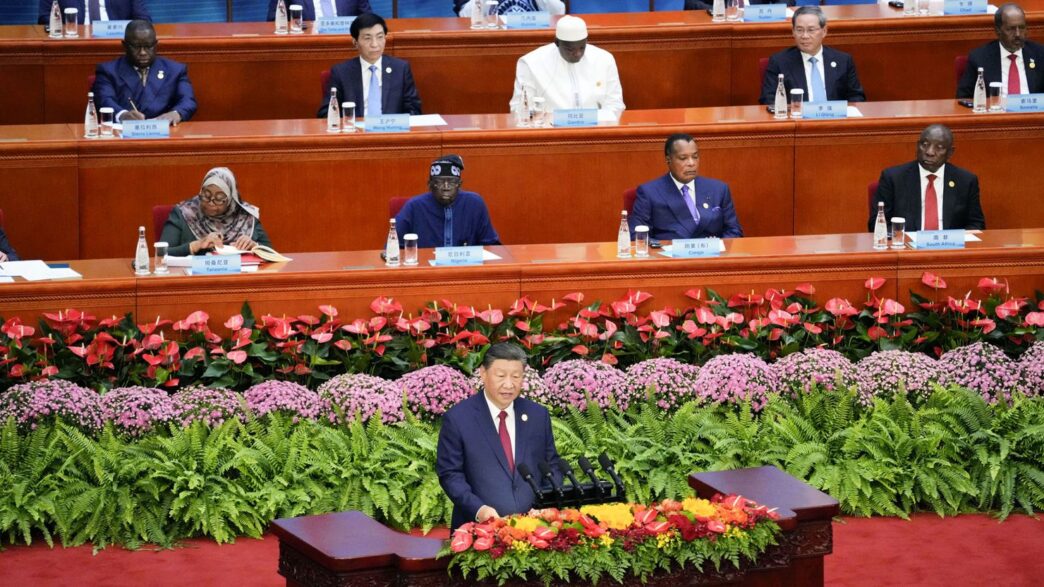
The zero-tariff rollout follows a message from President Xi Jinping to the 2025 FOCAC coordinators’ meeting, where he reaffirmed China’s readiness to negotiate a China-Africa Economic Partnership for Shared Development, with the plan including extending zero-tariff treatment across all tariff lines for participating African nations. Total trade between China and Africa reached approximately USD 348 billion in 2025, with Chinese exports standing at USD 225 billion and African exports to China accounting for USD 123 billion.
Eswatini is the only African country excluded from the arrangement, as the kingdom remains the continent’s sole nation maintaining formal diplomatic ties with Taiwan rather than with Beijing.