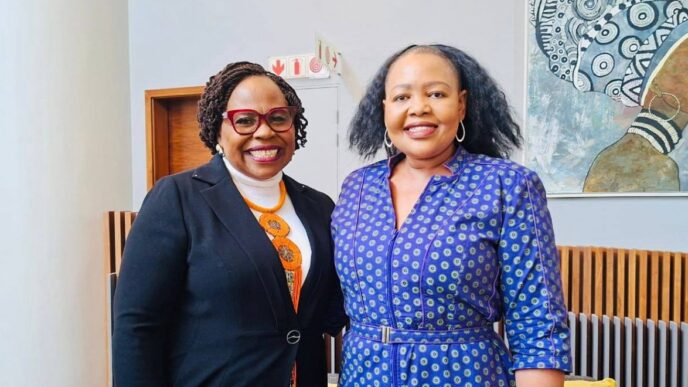


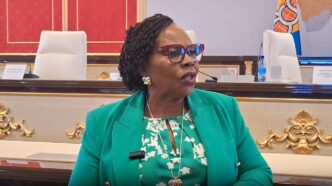
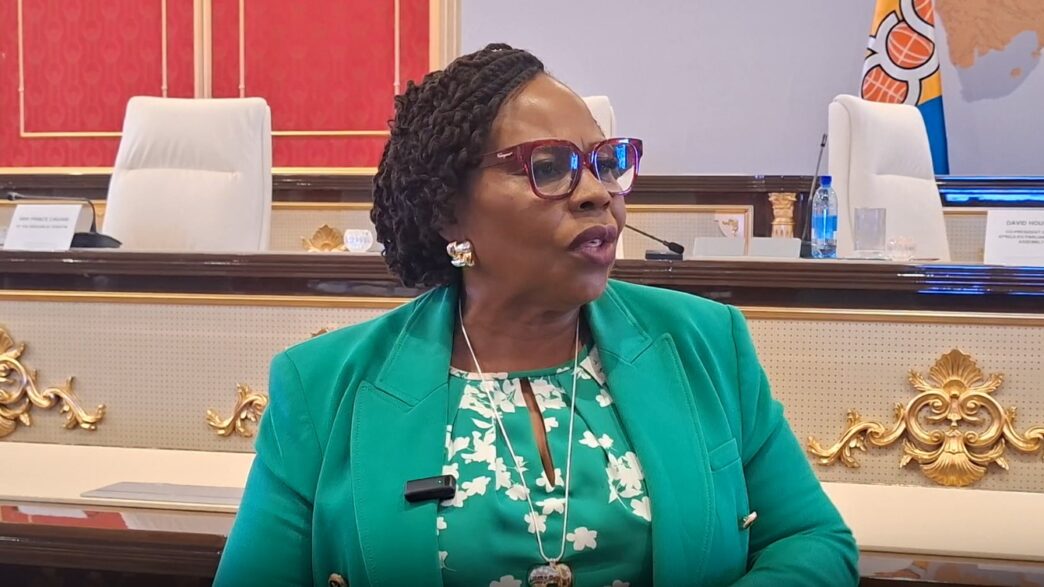
Ezulwini – Zimbabwe’s Minister of Women Affairs, Community, Small and Medium Enterprises Development, Monica Mutsvangwa, has called on investors from across the world to come and do business in Zimbabwe, saying the country has created the right environment for growth.
Mutsvangwa made the call on Wednesday, 13 May 2026, during Africa-EU talks on women at the OACPS-EU Parliamentary meetings, where she spoke about Zimbabwe’s policies on women empowerment and economic development.
“Please, come to Zimbabwe. Come do business. Zimbabwe’s open for business and we need to get that narrative out there,” she said. 
The minister said women empowerment and gender equality are not just moral issues but strategic decisions that any nation must take to develop economically.
“Zimbabwe recognizes the fact that women are the ones who are working hard, tilling the land, putting the good food on the table,” she said.
Mutsvangwa said Zimbabwe’s approach to women empowerment starts with creating a safe environment free from patriarchal evils such as child marriages and gender-based violence, before moving on to equipping women with entrepreneurial skills, digital skills and access to markets.
She said Zimbabwe works with universities through what the country calls heritage education 5.0, a programme that trains students not to seek employment but to become employers, with incubation and innovation hubs set up to support young entrepreneurs coming out of higher institutions.
On financial inclusion, Mutsvangwa said commercial banks, which previously ignored women and small businesses, have since opened dedicated SME and women’s desks in their banking halls after realising that women borrowers are reliable.
“There hasn’t been a problem of women not paying back their loans,” she said.
The minister said her ministry covers all 10 provinces of Zimbabwe, with officers deployed at provincial and ward level to ensure no one is left behind, adding that officers literally knock on people’s doors to make sure their dreams are realised.
“Our president has made it very clear that Zimbabwe can only be built by Zimbabweans. And we should always remember that if you don’t work hard, our country will never prosper,” she said.
On agriculture, Mutsvangwa said Zimbabwe has scaled up dam construction and irrigation schemes across the country’s 35,000 villages to deal with the effects of climate change, while also addressing malnutrition and child marriage through a strict legal framework.
“In Zimbabwe, we came up with a law which says anybody who marries off a child below 18 years, that’s criminal. Whether it’s aunts, uncles, father, mother, they are all considered criminal acts,” she said.
She said gender equality is enshrined in Zimbabwe’s constitution, which was people-driven and endorsed in 2013, with input from traditional chiefs and religious leaders.
Mutsvangwa said Zimbabwe’s literacy rate stands at above 95 per cent, as attested by UNESCO, and that the country offers investors a secure environment where returns on investment can be freely repatriated.
“We have created an environment where investors can bring in their money and you will not have any problems of taking away the interest you make out of that money,” she said.
She pointed to Zimbabwe’s tourism sector, including Victoria Falls, one of the seven wonders of the world, and its agricultural output, noting that blueberries grown by women farmers in Zimbabwe are today found in markets in Dubai, Hong Kong and China.
“No country can develop on its own. So Zimbabwe is part of the regional, continental, and global platform. We are here benchmarking. We are learning from others,” Mutsvangwa said.