

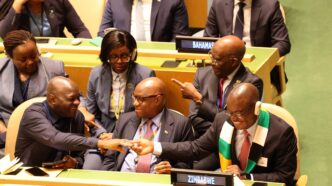
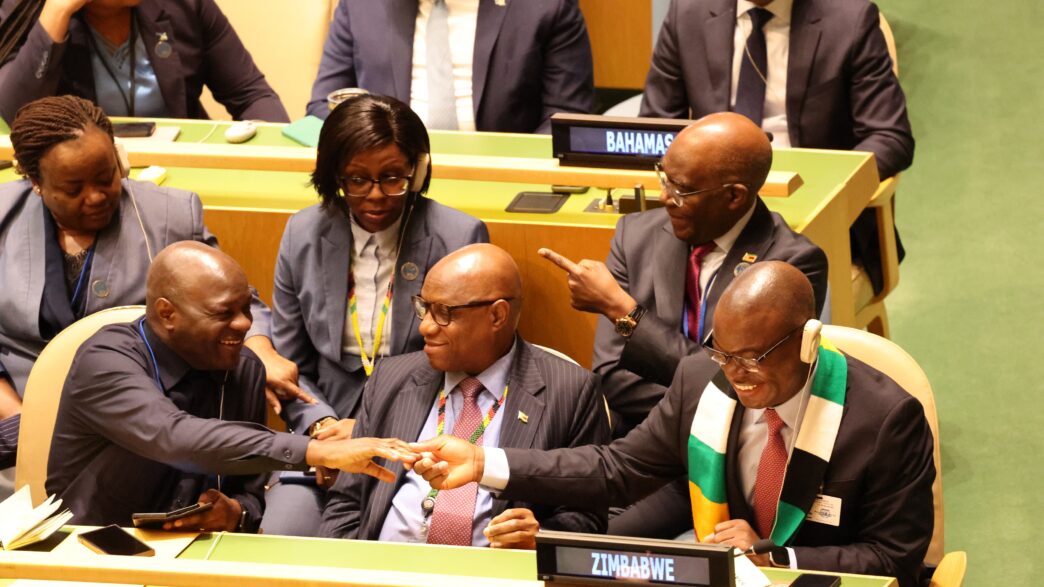
New York – Zimbabwe has been elected to a non-permanent seat on the United Nations Security Council, securing the position unopposed at the UN General Assembly in New York on Wednesday.
It is the third time Zimbabwe has held a seat on the 15-member council since the country gained independence in 1980.
President Emmerson Mnangagwa said the election “marks a significant diplomatic milestone” for Zimbabwe, which will represent the African bloc on the council. Foreign Affairs and International Trade Minister Prof Amon Murwira represented the country at the General Assembly, where he received congratulations from fellow diplomats following the vote. 
“This resounding victory underscores the effectiveness of our engagement and re-engagement agenda, demonstrating the global community’s confidence in Zimbabwe’s leadership and commitment to international peace,” Mnangagwa wrote on X.
“As we assume our seat on the global stage, Zimbabwe is poised to contribute meaningfully to international peace, security and multilateral cooperation, championing a fairer and more equitable global order while amplifying Africa’s voice.”
Zimbabwe and Caribbean candidate Trinidad and Tobago, both running without opposition, each received more than 180 votes from the 193-member General Assembly.
The Security Council has 15 members, five of them permanent with veto power: the United States, Russia, China, Britain and France. The remaining 10 seats rotate among regions of the world, with the General Assembly electing five countries by secret ballot each year to serve two-year terms.
Elsewhere in the vote, Portugal and Austria defeated Germany for two seats reserved for mainly Western nations. Portugal received 134 votes and Austria 131, while Germany, Europe’s economic powerhouse that had previously served six terms on the council, received 104 votes.
German Foreign Minister Johann Wadephul told reporters the outcome was “a real disappointment,” saying Russia campaigned against Germany because of Berlin’s strong backing for Ukraine.
“It also may have cost us votes that Germany must always assume a special responsibility for Israel with regard to the Middle East conflict,” he said.
Austria’s foreign ministry described its election as capping a 15-year campaign and called it a “strong international sign of confidence” in the country.
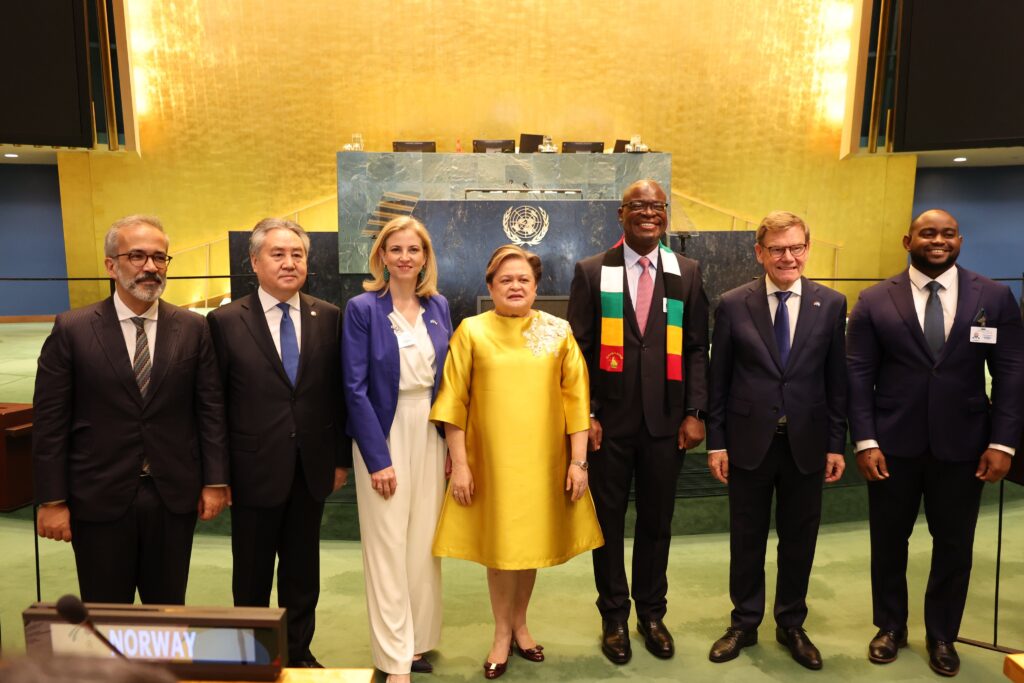
In another contested race, Kyrgyzstan defeated the Philippines by 143 votes to 49 after four rounds of voting, becoming a first-time member of the council. Kyrgyzstan’s Foreign Minister Jeenbek Kulubayev said his country was entering the role during “a turbulent time” and pledged to work alongside fellow council members.
The five new members, Zimbabwe, Trinidad and Tobago, Portugal, Austria and Kyrgyzstan, will take their seats on 1 January next year, replacing Denmark, Greece, Pakistan, Panama and Somalia.
The Security Council is charged under the UN Charter with maintaining international peace and security, though its effectiveness has been repeatedly undermined in current conflicts, where veto powers exercised by Russia over Ukraine and by the United States over Gaza and Iran have blocked council action. Efforts spanning decades to reform the body have so far failed, though a fresh push for reform is currently under way.