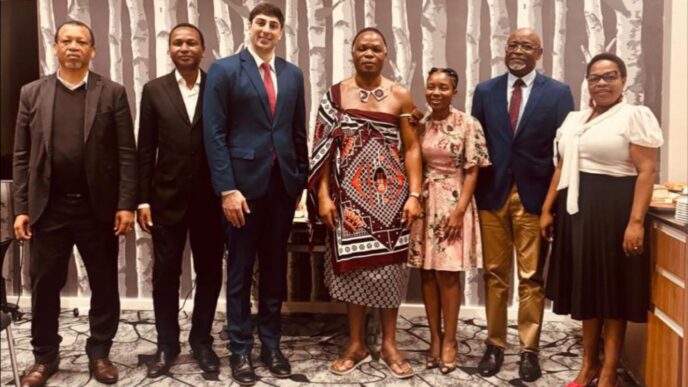


Eswatini is ramping up efforts to expand electricity access through off-grid renewable energy solutions, with Principal Secretary of the Ministry of Natural Resources and Energy, Lindiwe Mbingo, representing the country at Sustainable Energy Week (SEW) in Gaborone, Botswana. She participated in a panel discussion titled “Energy for Development: The Critical Role of Off-Grid Renewables in Empowering Lives and Livelihoods.”
Mbingo outlined Eswatini’s plan to achieve universal electricity access by 2030, noting that while the country has an electrification rate of 88%, some communities remain outside the reach of the national grid. To address this, the government has launched pilot projects for mini-grids and solar home systems to serve remote areas.

Beyond electrification, Eswatini is also piloting solar water pumping schemes to provide clean water in rural areas, reducing dependence on costly grid electricity and improving living standards. 
In the health sector, Mbingo spoke about Eswatini’s efforts to electrify health facilities and reduce operational costs through renewable energy. A partnership with UNICEF Eswatini is introducing solar photovoltaic (PV) systems in rural and urban health centers to improve power reliability, especially in clinics that experience frequent outages.
She also pointed to the role of renewable energy in agriculture, particularly in improving irrigation methods to boost productivity. Eswatini’s “Catalysing Renewable Energy Access and Transition” project aims to equip smallholder farmers, MSMEs, women, youth, and vulnerable groups with the knowledge and skills to access funding for renewable energy initiatives.