

Mbabane – Deputy Prime Minister Thulisile Dladla has officially launched the National Disaster Risk Management Authority, known as NDRMA, replacing the former National Disaster Management Agency in a transition that signals a fundamental shift in how the Kingdom manages disasters.
The new authority, established under the National Disaster Risk Management Act 2025, has been named “Umvalo Wesive,” a name that emerged from a siSwati naming competition. The two winners, Mlungisi Zibonele Bhembe and Bachazile Dlamini, were each awarded E5,000 at the launch ceremony for coining the name.

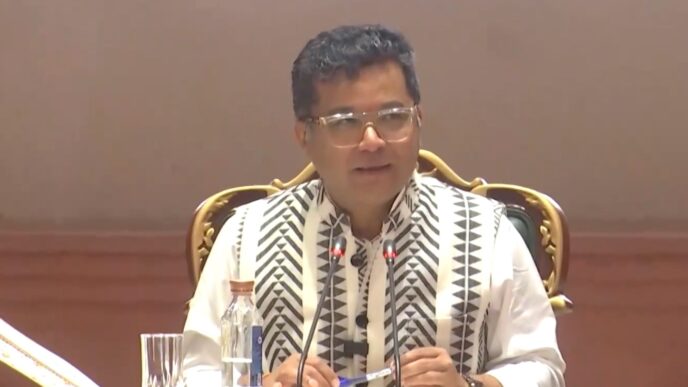
Deputy Prime Minister Thulisile Dladla pictured with former government officials at the official launch of the National Disaster Risk Management Authority, Umvalo Wesive, which replaces the former National Disaster Management Agency under the Disaster Risk Management Act 2025.
Speaking at the launch, DPM Dladla said the change was long overdue given the evolving nature of disasters in Eswatini and across the world. “The disaster risk landscape globally including Eswatini has changed due to climate change and climate variability. We have seen severe storms, prolonged rainfall, dry spells occurring within the same season. This change we are unveiling today has been shaped by lessons learnt, experiences and multiple emergencies the organisation has handled over its ten year life,” she said. 
The Deputy Prime Minister was clear that the transition went beyond a simple name change. “This transition is not only symbolic. It represents a significant change in the way Government intends to manage disaster risk. The country is moving from a system that was largely associated with disaster response to a stronger and more proactive system focused on risk reduction, preparedness, early warning, response, and recovery,” she said.

Dladla noted that the legal foundation for the new authority was put in place at the end of last year. “In December 2025, His Majesty enacted the Disaster Risk Management Act, 2025. The enactment of the DRM Act, 2025 reflects Government’s commitment to protect lives, livelihoods, infrastructure, and national development. Disasters affect every sector of society and often reverse development gains that Government, communities, and partners have worked hard to achieve. For this reason, disaster risk management must be treated as a national development priority,” she said.

The NDRMA will serve as the principal national institution responsible for coordinating and monitoring disaster risk across Eswatini, supporting government and stakeholders to strengthen risk information, early warning systems, emergency preparedness, national coordination and resilience building.
Dladla laid out clear expectations for the new authority. “The authority must strengthen early warning systems so that timely and reliable information reaches all communities, including rural and vulnerable populations. It must ensure that disaster risk reduction is integrated into development planning, so that public investments are protected and future risks are reduced,” she said.
She added: “The authority must also strengthen preparedness and response systems through effective emergency operations, coordination platforms, and public awareness. It must support communities to understand risks and take practical action before disasters occur. The establishment of the NDRMA comes at a time when risk is increasing and preparedness can no longer be postponed. We must invest in prevention today to reduce losses tomorrow.”