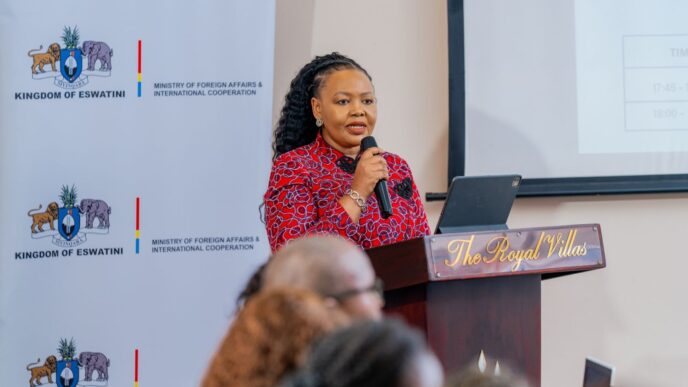



Ezulwini – The Press Club of Eswatini has used World Press Freedom Day to lay bare the economic hardships facing journalists in the kingdom, telling the Minister responsible that the average journalist earns about E3,500 a month and that many cannot afford basic necessities such as health insurance.
The remarks were made on Thursday, April 30, 2026, at a World Press Freedom Day gathering in Eswatini, where Press Club representatives painted a sobering picture of life inside the kingdom’s newsrooms.
“Hon Minister, journalists are among the lowest-paid professionals. The average salary is about E3,500 a month. Many work without permanent or long-term contracts, while some are still earning per story,” the Press Club said. 
The organisation pointed out that correspondents and freelancers in Eswatini are still being paid less than E1 per word, while companies in neighbouring South Africa now pay E4 per word. It said journalists in the kingdom cannot make a living wage from the profession and are forced to join long queues with the general public at government hospitals because they cannot afford medical insurance of any kind.
The Press Club also drew attention to the cost of investigative journalism, noting that a story on the trafficking of young girls into forced marriages or on tax evasion by the elite would require no less than E10,000, money that newsrooms are unwilling to part with. “Some of the stories we need to investigate are costly,” the organisation said.
It warned that a press that is economically crippled cannot be fully free. “Freedom is not only the absence of censorship. Freedom also means the ability to work with dignity, with a contract, with fair pay, and with resources to tell stories that matter,” the Press Club said.
The organisation attributed part of the problem to a lack of diversity in the media landscape, saying the limited number of radio stations, television stations and newspapers in Eswatini contributes directly to the poor working conditions most journalists endure. It also noted that only journalists working in public media enjoy better working conditions.
The Press Club made two direct appeals to the Minister. It asked that the living conditions of journalists be investigated with a view to closing the wide gaps in remuneration across the industry. It also called on the Minister to persuade the head of government to reinstate the Editor’s Forum Breakfast meetings, saying the gatherings played a major role in promoting transparency and accountability in government.
“A press that is economically crippled cannot be fully free. When a journalist is worried about rent, transport, or the next meal, it becomes harder to ask tough questions, to investigate corruption, or to hold power to account,” the Press Club said.