


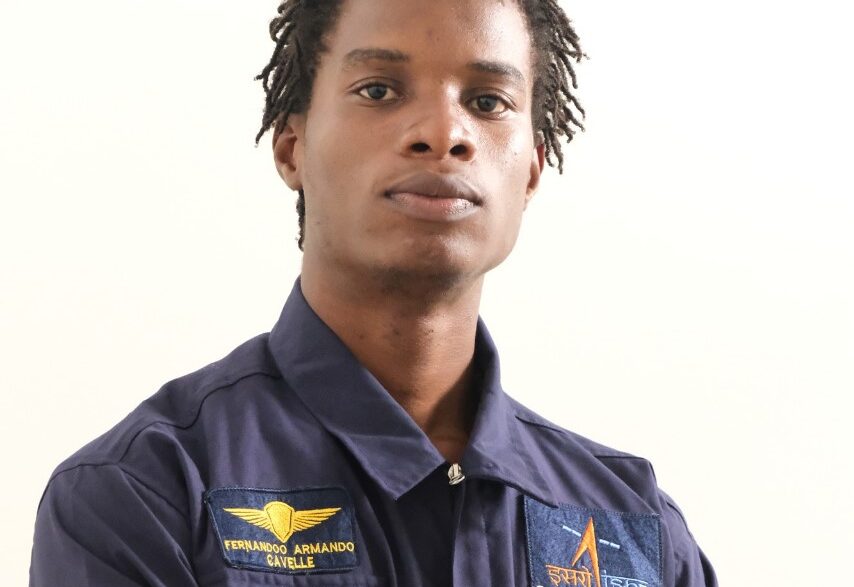
Maputo – A 25-year-old Mozambican architect has made history by becoming the first person from his country to earn the title of analog astronaut, someone who simulates space missions on Earth, and now has his sights set on working at NASA.
Fernando Cavele, based in Maputo, says his journey into space exploration began in 2019 when a physics professor connected the dots between astronomy and architecture during a classroom lecture.
“The desire to enter the field of space exploration began exactly in 2019, when I started researching astronomy and likewise met a professor, who happened to be a physics professor, who in one of the classes spoke about this relationship between astronomy and architecture,” Cavele told Lusa at his Maputo residence, which doubles as a creative workshop. 
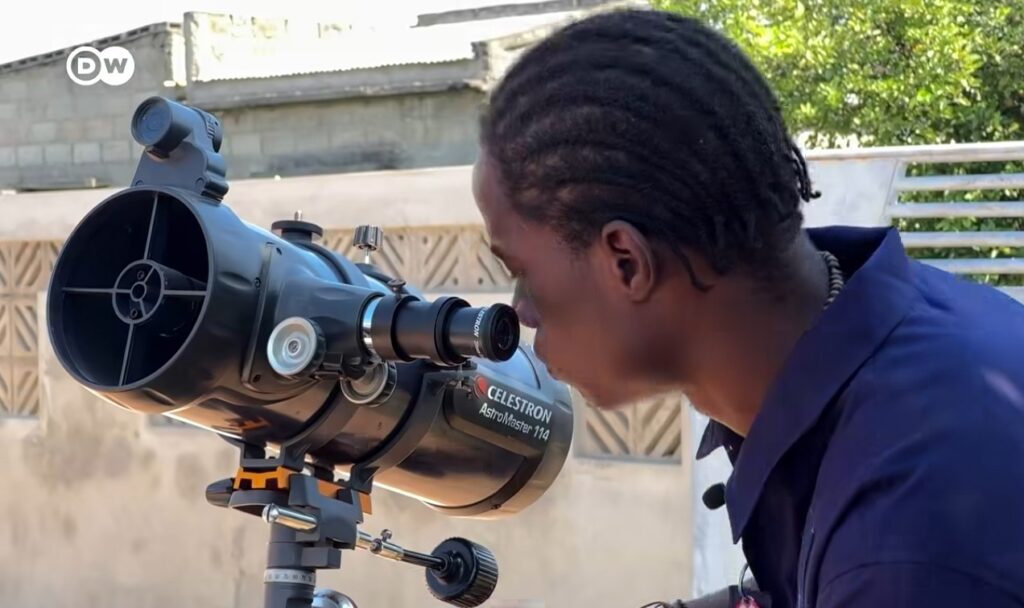
From that point, the young architect began deepening his knowledge of astronomy while pursuing his architecture studies, driven by a belief that the design of habitable spaces and the science of the universe were not as far apart as they seemed.
His workspace tells that story. Architectural sketches sit alongside scribbled floor plans and musical scores, a space where science, art and imagination meet daily.
Early inspiration came from international figures like Elon Musk, but Cavele says he also leaned on homegrown mentors, including Edson Jackson, founder of Mozambique’s first astronomy club.
“I am inspired by the way SpaceX was born, NASA itself, which is an agency I aspire to reach, as a worker and a technician who works there at NASA, as a space architect,” he said.
The road was far from smooth. Cavele described years of institutional rejections, limited access to information and financial barriers that made progress slow and uncertain.
“I went through many difficulties, turbulence, and even institutional denials along the way,” he said.
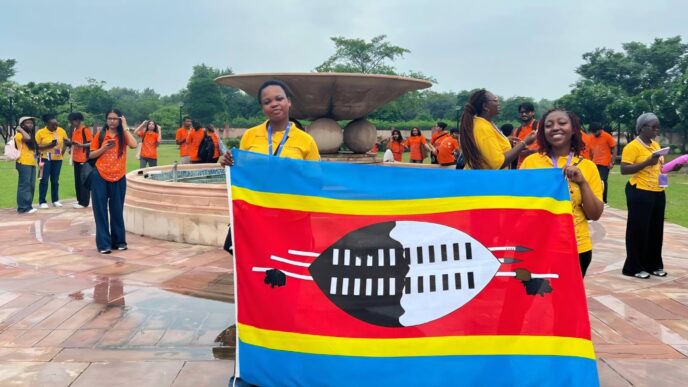
A turning point came in 2025 when he submitted research in materials science for an international competition. It was accepted, and he was invited to present at a conference in India with his full participation funded by the organisers.
“They believed in me, invited me, and financed my entire participation. I was one of the youngest on that panel,” he said.
That same trip to India marked his biggest achievement to date. Cavele participated in an analog mission, a seven-day simulation of space living conditions on Earth, recreating the routines, resource constraints and isolation that astronauts would face on missions to Mars or the Moon. Completing the mission earned him the title of analog astronaut.
“It was a bit difficult,” he said, pointing to language barriers, different time schedules and the challenge of managing limited resources. Those difficulties were eased, he said, by teammates who made him feel at ease.
“Within the mission itself, things became a bit accessible, because the people who were there with me, my team, also collaborated a lot so that I could feel almost at home,” he said.
After returning, Cavele conducted his own research to verify whether any other Mozambican had achieved the same milestone.
“I had to do a lot of research to see if anyone had reached there before me and I found that I was the first,” he said.
His investigation also turned up past attempts by other Mozambican professionals to connect with agencies like NASA, but none had reached the same outcome.
Cavele is now running a fundraising campaign to secure a place in a master’s degree programme in Advanced Architecture at the Institute for Advanced Architecture of Catalonia in Spain. He has also launched a startup aimed at developing technologies for space exploration industries in Mozambique.
“We are working on developing technologies capable of responding to the demands of space exploration and integrating Mozambique into this global ecosystem,” he said.
He acknowledged that in Mozambique, the space sector offers no guarantees, but urged young people not to let that stop them.
“Abstract themselves from the difficulties and continue to believe that, with vision, effort, and a dream, everything can become possible,” he said.