

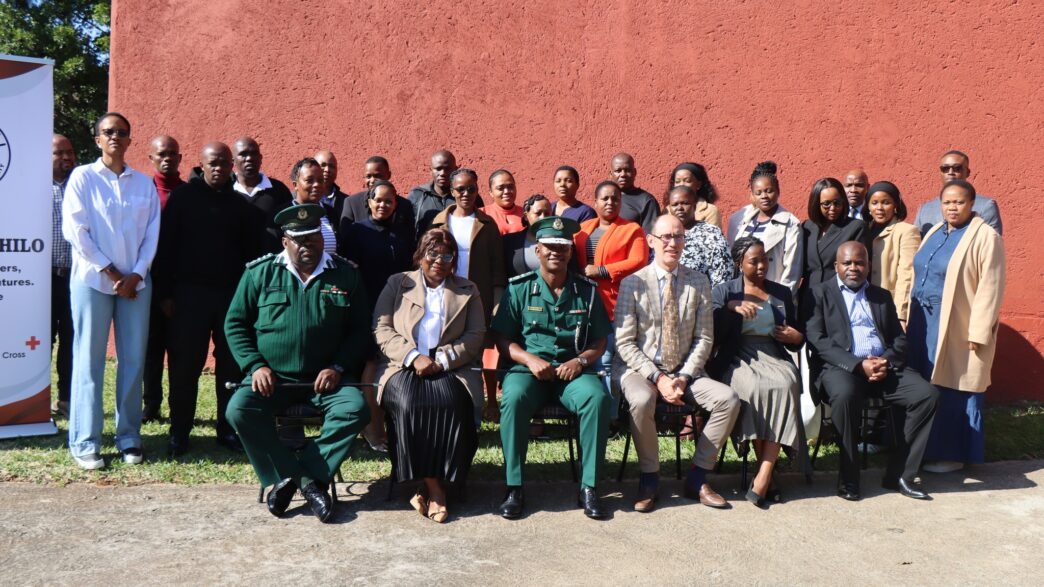
Matsapha – His Majesty’s Correctional Services (HMCS) has opened a five-day Mental Health and Psychosocial Support (MHPSS) and Gender Equality Training of Trainers Workshop at Brookside Lodge, bringing together correctional officers, development partners and rehabilitation stakeholders to strengthen mental health support within the Kingdom’s correctional centres.
The workshop, which opened on Monday, was organised in collaboration with the European Union and Baphalali Eswatini Red Cross Society, and runs under the Khetsimphilo theme aimed at breaking barriers and creating equal futures through improved rehabilitation and psychosocial support initiatives.
Officially opening the workshop, HMCS Commissioner Mancoba Nkambule described the initiative as a timely intervention, noting that correctional officers work in highly demanding environments that expose them to stress, trauma and emotional fatigue. 
“Mental health and psychosocial support is not a luxury, but a necessity. A mentally healthy correctional officer is better equipped to exercise sound judgment, maintain professionalism, manage conflict appropriately and contribute positively towards rehabilitation outcomes,” Nkambule said.
He also expressed gratitude to the EU and the Red Cross for backing the initiative. “Your investment in the wellbeing of correctional officers and vulnerable youth demonstrates a profound understanding that rehabilitation is not merely about confinement, but about restoring dignity, promoting healing and ultimately creating safer communities,” he added.
European Union representative Becerra Marta Jose Angel spoke about the importance of the Khetsimphilo programme and welcomed the collaboration between HMCS and the Red Cross Society in promoting rehabilitation and knowledge sharing.
Baphalali Eswatini Red Cross Society representative Nyasha Mkombo expressed excitement about the programme and acknowledged the partnership between the EU and HMCS in making the initiative possible.
Discussions during the workshop are centred on strengthening rehabilitation and reintegration services, promoting ethical and professional conduct, improving mental health awareness and enhancing collaboration between psychology and social work professionals. Participants will also engage on cultural competence, innovative outreach interventions and addressing trauma faced by inmates, particularly young people from vulnerable backgrounds.