



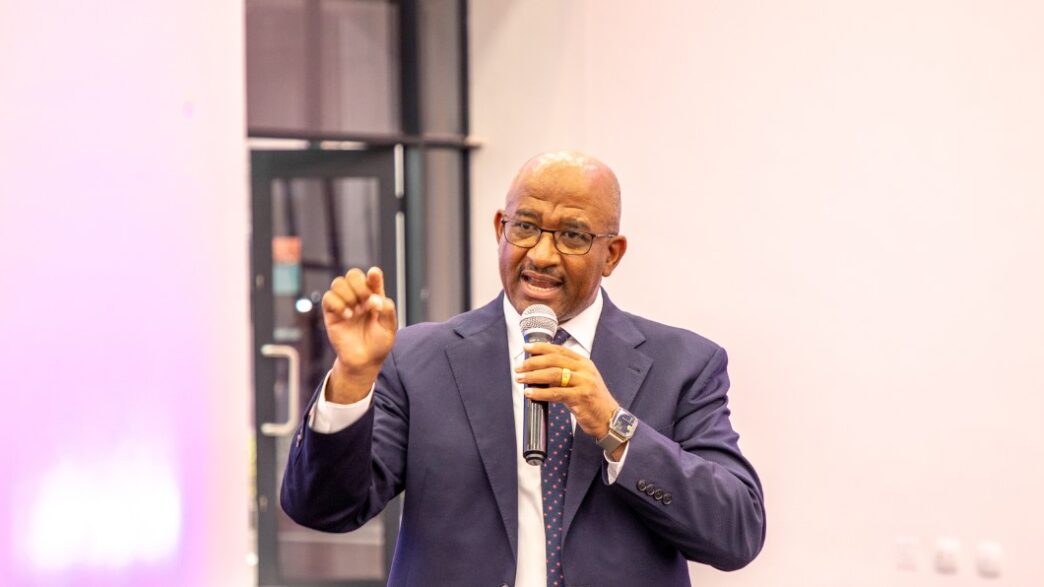
Mbabane – The Central Bank of Eswatini has kept its discount rate unchanged at 6.75%, following a monetary policy meeting held in Mbabane on Thursday, 29 May.
The Bank and the Monetary Policy Consultative Committee met to assess the appropriate monetary policy stance, taking into account global, regional and domestic economic conditions. The decision to hold rates was described as cautious, with the Bank citing the need to closely monitor the impact of the ongoing Middle East crisis and rising oil prices.
Commercial banks are expected to maintain the prime lending rate at 10.25% until the next monetary policy meeting. 
On the domestic front, Eswatini’s economy grew by 5.7% year-on-year in the fourth quarter of 2025, slightly below the revised 5.9% recorded in the third quarter. The moderation was attributed to weaker performance in the primary and secondary sectors, while the tertiary sector remained resilient.
Headline consumer inflation rose to 2.0% in April 2026, up from 1.6% in March 2026. The increase was driven by higher prices in housing and utilities, transport, and restaurants and hotels. Liquid fuel prices surged by 23.3% in April, compared to a 5.5% deflation in the previous month.
The Bank revised its inflation forecast for 2026 upward to 3.31%, from 3.27% projected in March, and to 3.74% for 2027, up from 3.48%. The revision was attributed largely to geopolitical tensions in the Middle East, which have contributed to a sharp rise in global oil prices.
Credit extended to the private sector grew by 0.9% month-on-month to E23.2 billion at the end of March 2026. Credit to the business sector rose by 2.6% to E12.7 billion, while credit to households and non-profit institutions amounted to E9.5 billion, reflecting a marginal contraction of 0.2%. Credit to other sectors declined by 9.2% to E1.0 billion.
Non-performing loans declined by 0.3% from the previous month but rose by 3.5% compared to the previous year, amounting to E1.4 billion in March 2026. The NPL ratio settled at 6.8%.
Gross official foreign exchange reserves stood at E8.8 billion as of 22 May 2026, equivalent to 2.0 months of import cover. Total public debt stood at E40.6 billion, or 38.9% of GDP, at the end of April 2026, a decline of 4.1% from the revised E42.3 billion recorded in March.
Globally, the International Monetary Fund revised its 2026 growth outlook down to 3.1% from 3.3%, while raising its global inflation forecast to 4.4% for 2026. Regionally, the South African Reserve Bank increased its repo rate by 25 basis points to 7.0%, citing rising inflationary pressures, and revised its inflation forecast for 2026 upward to 4.4%.
Central Bank Governor Dr. Phil Mnisi said the Bank would continue to monitor international, regional and domestic developments and act in line with its mandate to foster price and financial stability conducive to economic growth in Eswatini.