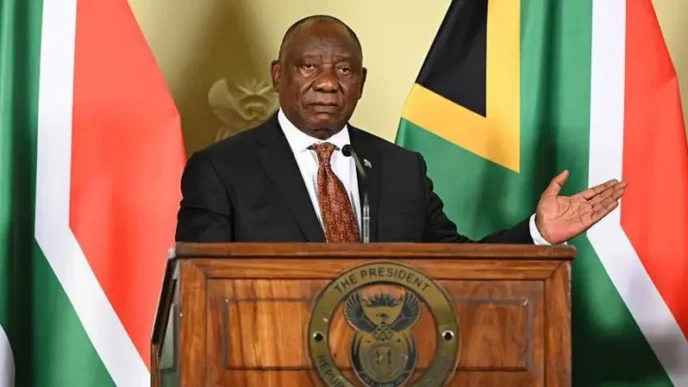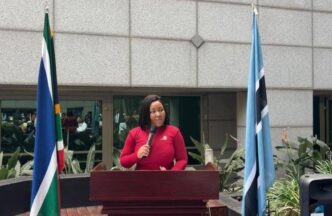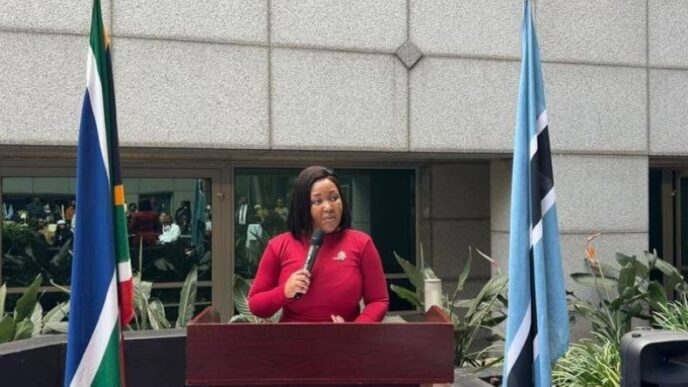


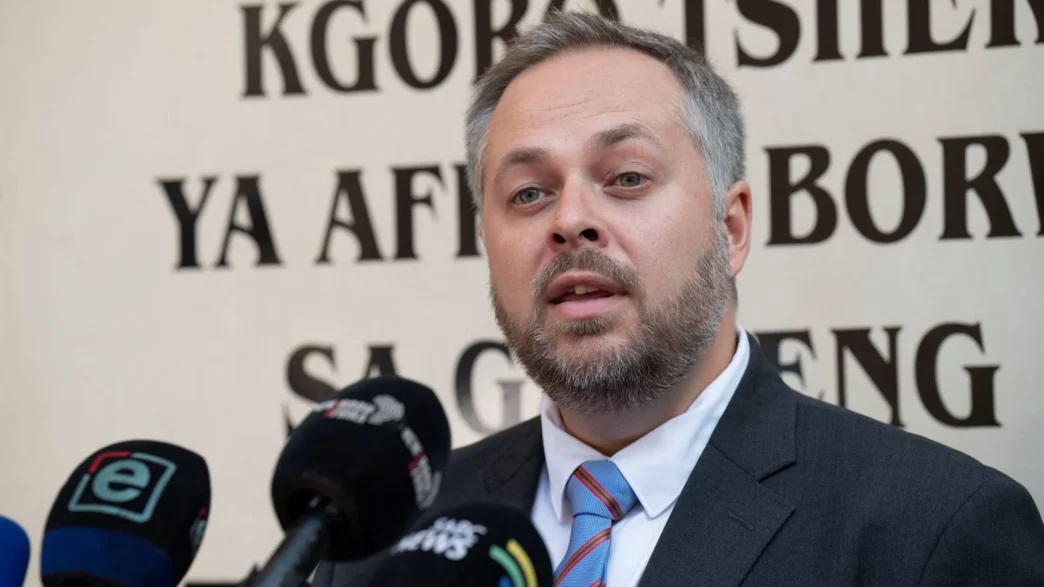
Pretoria – South Africa’s Inter-Ministerial Committee on Migration convened in Pretoria on Sunday to brief the media on progress made in implementing President Cyril Ramaphosa’s migration strategy, revealing that more than 40 000 people had been arrested for immigration contraventions since 1 January 2026.
Justice Minister Mmamoloko Kubayi, who chairs the committee, outlined a five-point plan covering border security, the rule of law, stamping out corruption in the migration system, cracking down on violence and lawlessness, and refining the legislative framework.
“This approach is a unified effort designed not only to restore public confidence, rule of law, protect our borders, but to actively support the safety and well-being of all our communities,” Kubayi said. 
She added that the briefing was the first of many. “This is work in progress and we’ll continue to brief the nation every time we make this progress.”
Over 7 400 arrests were recorded in the past month alone, with multidisciplinary operations led by deputy ministers of Home Affairs, Police and Labour targeting business premises in the Western Cape, KwaZulu-Natal and Gauteng, including employers found to be hiring undocumented workers.
“This is some of the work that is being done and it’s going to intensify and expand as we continue,” Kubayi said.
The Border Management Authority has deployed drones and body-worn cameras at ports of entry and established roadblocks at key corridors including Beit Bridge, where drugs with a street value of just under one billion rands were seized. Nine Bangladeshi nationals were also intercepted at OR Tambo International Airport attempting to enter on fraudulent visas.
Home Affairs Minister Leon Schreiber noted that OR Tambo had become a key interception point for arrivals from outside the African continent. “People from outside of Africa tend to arrive in the country by air, and so the process of deportation or refusing them entry tends to happen in an airport environment,” he said.
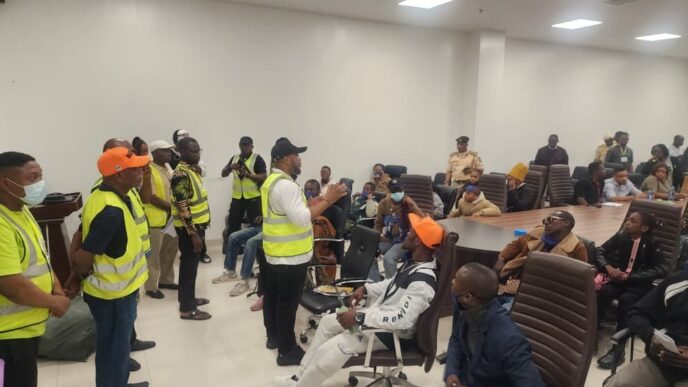
Approximately 7 000 Malawian nationals have gathered in Durban’s Sherwood Park area seeking repatriation. The government made clear no refugee camps would be established. “South Africa does not have refugee camps and there is no intention to create camps even on a temporary basis,” Kubayi said.
The Malawian government commissioned eight buses to transport its citizens home, with South Africa providing an additional ten. So far, 980 Malawians have been deported from the Lindela Repatriation Centre.
Deputy Minister of Home Affairs Njabulo Nzuza confirmed that of the 1 140 Malawian nationals verified, all were found to be in the country illegally. “The embassy has issued a collective passport for them to be able to move,” he said, adding that biometric checks were being conducted to identify individuals with outstanding criminal matters before repatriation. As of Sunday evening, 2 745 repatriations had been recorded since Ramaphosa’s address.
The committee issued a firm warning against civilians conducting their own immigration checks. “We have observed, disturbingly, that some citizens are insisting on conducting identity checks and other immigration enforcement activities. This is illegal and should stop immediately,” Kubayi said.
She also cautioned on the limits of the citizen’s arrest provision under the Criminal Procedure Act. “If you don’t follow CPA Section 42, you will be arrested as well,” she said.
On disinformation, Kubayi warned that manipulated videos and images were being used to incite violence and damage South Africa’s reputation abroad. “These are often part of a targeted disinformation campaign explicitly designed to incite violence, cause panic and fuel attacks on foreign nationals,” she said.
The committee will begin stakeholder engagements this week, with weekly public briefings to follow.