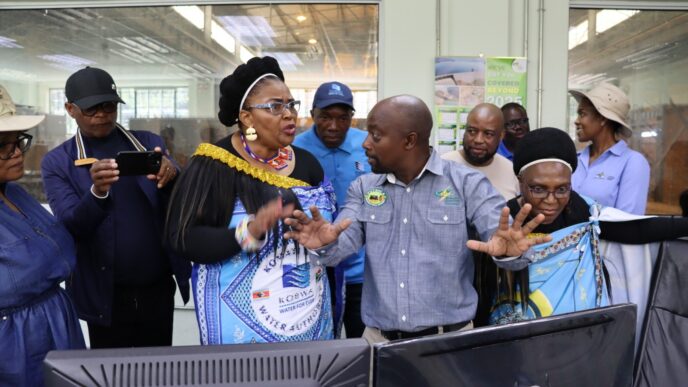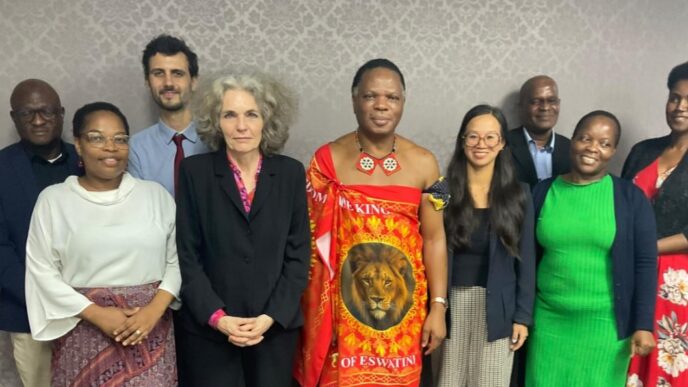


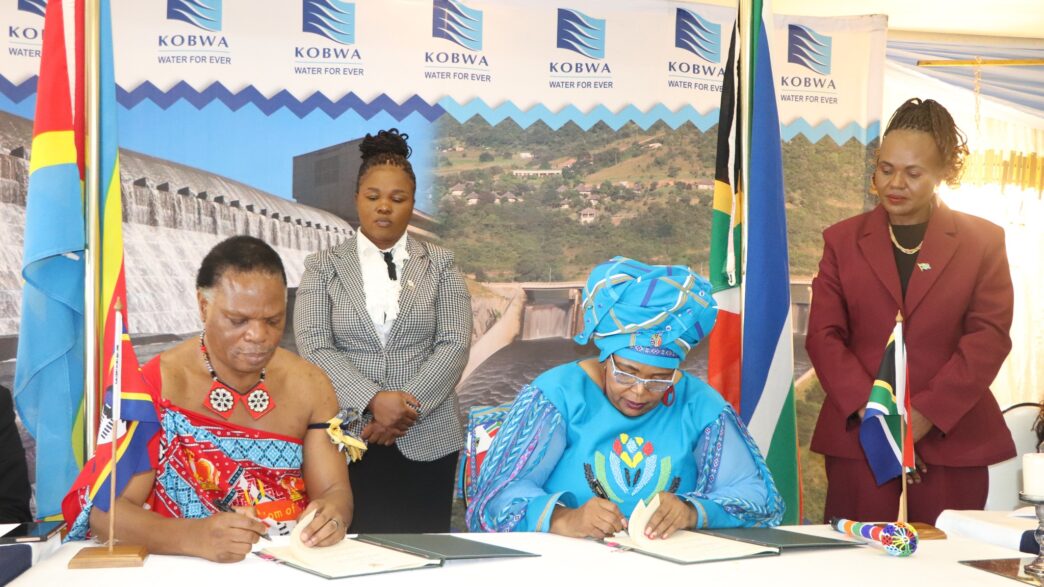
Mbabane – Eswatini and South Africa have signed a revised Komati Basin Water Authority treaty, marking a major step in strengthening cooperation on shared water resources and unlocking new development opportunities.
The agreement was signed on Friday, March 13, 2026, at Maguga Lodge by Minister of Natural Resources and Energy HRH Prince Lokhokhela and South Africa’s Minister of Water and Sanitation, Honourable Pemmy Majodina.
The revised treaty is set to guide the sustainable development and management of the Komati River Basin, while paving the way for Phase Two projects, including revenue generating initiatives aimed at boosting economic growth and reducing dependency on member states. 
It also strengthens bilateral cooperation between the two countries, improves river flow monitoring and creates opportunities for future dam construction, irrigated agriculture and hydropower generation.
The ministers pointed to the importance of continued collaboration under the Joint Water Commission agreement signed in 1992, which serves as a technical advisory body on water resource development and utilisation. The original Komati Basin treaty, also signed in 1992, led to the establishment of the Komati Basin Water Authority in 1993.
KOBWA was tasked with raising finance, as well as designing, constructing, operating and maintaining the Maguga and Driekoppies dams. The treaty also set out water allocation arrangements and cost sharing mechanisms between Eswatini and South Africa for the construction and maintenance of the infrastructure.
After more than three decades without review, both countries moved to update the agreement in response to legislative changes, evolving operational conditions and international commitments on transboundary water cooperation.
The revised treaty expands KOBWA’s mandate to support government efforts in delivering water services and introduces mechanisms for generating revenue to sustain its operations. The review process included public consultations in both countries and followed all required procedures for international agreements.
During the signing, the ministers called for compliance with minimum cross border water flows at the Ressano Garcia gauging station. They encouraged KOBWA and the Inkomati Usuthu Catchment Management Agency to work together to meet the required 2.6 cubic metres per second as outlined in the Incomati Maputo agreement.
Support was also pledged to the Incomati Maputo Water Commission, which promotes cooperation between Eswatini, Mozambique and South Africa on the development, protection and sustainable use of shared water resources.
Since its establishment in 1993, KOBWA has overseen major projects including the construction of the Driekoppies Dam with a capacity of 251 million cubic metres and the Maguga Dam with a capacity of 332 million cubic metres.