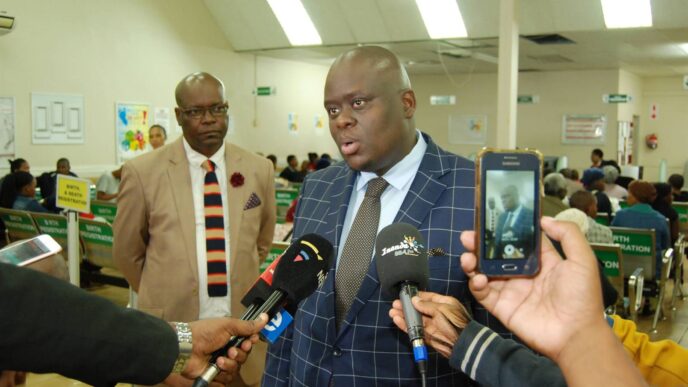


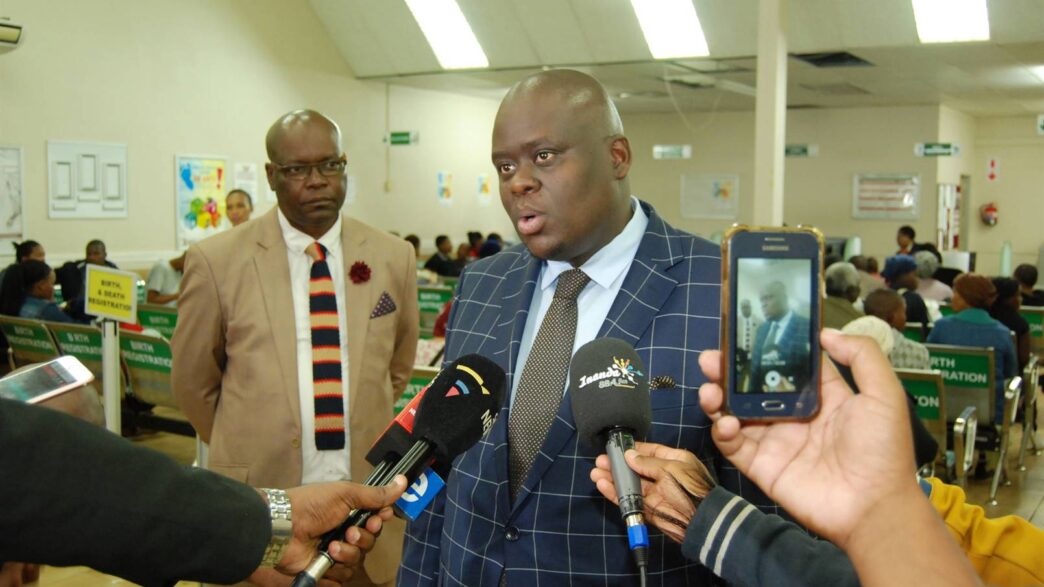
Johannesburg – South Africa’s Deputy Minister of Home Affairs Njabulo Nzuza has told Zimbabwean Exemption Permit holders who wish to remain in the country to apply for permanent residency, saying the ZEP was always intended as a temporary arrangement and not a long-term immigration solution.
The call comes as cabinet approved sweeping changes to South Africa’s immigration system through a new white paper on citizenship, immigration, and refugee protection, described as one of the most far-reaching reforms of the country’s immigration framework since 1994.
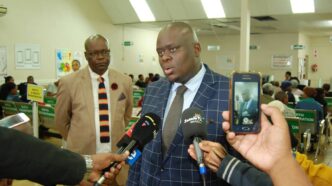
Speaking on the ZEP situation, Nzuza said holders of the permit needed to explore other legal pathways. “The exemption permit itself was meant to be a temporary arrangement but rather if they seek to stay within the country then they must apply for other forms of entrance into the country, they can apply for permanent residents and so on. All those applications will be looked at in merit. It’s not going to be a blanket approach where you say well all ZEP holders are now permanent residents. Each and every person must apply and then we determine if they qualify,” he said. 
The development is significant for Eswatini, which shares a border with South Africa and has thousands of emaSwati living and working across the Swazi corridors into South Africa, many of whom interact daily with South African immigration policies that directly affect their livelihoods and movement.
At the heart of the new white paper is a points-based system for visas and citizenship that places economic contribution above years of residence. Nzuza explained the shift in approach. “Previously what you will have is that you will have a year based progression system where a person will have stayed for so many years in the country and as such I deserve citizenship. Now we no longer going to be looking at the years, we are looking at contribution. Is what you are contributing positive to the country? How have you been contributing before?” he said.
The white paper also seeks to consolidate what were previously separate pieces of legislation covering citizenship, refugee protection and immigration into a single law. “It overhauls what were different pieces of legislation where you had the citizenship act allocated alone, where you had refugee protection and asylum seeker allocated alone, immigration laws are located alone and you will often find conflict in terms of how you operate in the environment. Now we are bringing everything together to one piece of legislation that will regulate all,” Nzuza said.
On the refugee and asylum seeker system, the Deputy Minister said the current framework was being abused by economic migrants disguising themselves as asylum seekers. “The aim here is that we must receive true and honest refugees as against receiving economic migrants who are then masquerading as refugees or asylum seekers which really clogs up the system and allows us to delay when we have to process honest asylum seekers,” he said.
Under the new system, people seeking asylum will be conditionally admitted into the country rather than automatically accepted. Refugee reception centres will also be relocated closer to border areas to allow for quicker processing, and virtual reception centres will be introduced. Nzuza said South Africa’s first safe country principle, drawn from United Nations conventions, would now be formally written into domestic law.
On attracting skilled workers, Nzuza said the points allocated under the new system would be guided by the country’s current skills needs and would change over time. “Right now you need a lot of engineers, you need a lot of AI technicians and so on. So we work with the department of higher education and training to tell us which skills at a given period are amongst the high ranking because it’s not a consistent issue,” he said.
The Department of Home Affairs must now draft legislation to implement the white paper policy.