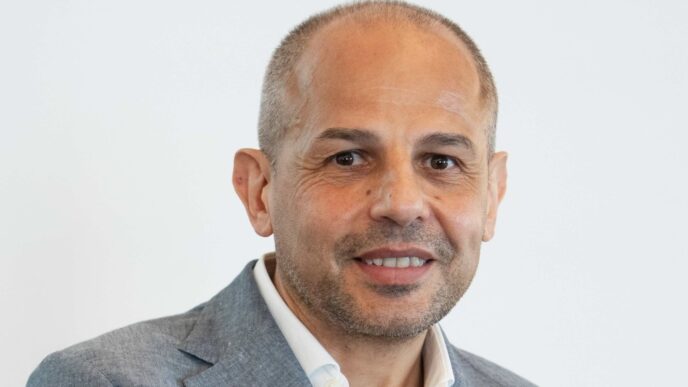


The man leading Nigeria’s push to bring electricity to millions of unserved rural communities will speak at the Energies 3.0 Conference, a virtual international event running from April 22 to 24, 2026, where he is expected to share lessons from what has become one of the world’s most ambitious off-grid electrification programmes.
The conference, organised by the Green Institute of Nigeria, runs daily from 10:00 AM to 4:00 PM online. Registration is open at www.greeninstitute.ng/energies2026.
Dr. Abba Aliyu is the Managing Director and CEO of Nigeria’s Rural Electrification Agency, a position he has used over more than two decades in energy policy to drive a significant expansion of electricity access across rural and underserved communities. Under his leadership, over 350 mini-grids and 1.4 million solar systems have been deployed, reaching more than eight million Nigerians. He facilitated a financing partnership worth ₦100 billion with First City Monument Bank and secured 750 million US dollars for the DARES programme, described as the world’s largest off-grid initiative. The agency also works in partnership with the African Development Bank and the World Bank under the Nigeria Electrification Project. 
Asked about the biggest opportunities and challenges in scaling decentralised renewable energy across Nigeria, Dr. Aliyu said the country has reached a turning point.
“Nigeria boasts of a population of over 200 million people and the nation sits at a pivotal moment where decentralised renewable energy is no longer an alternative, but the backbone of inclusive electrification,” he said, describing it as a huge market for economic growth.
He said millions of households, markets, small businesses and public institutions remain either unserved or underserved by the national grid, creating strong demand for renewable energy solutions.
“For the very first time in the history of the energy sector, there is a structured pathway, complete with verified and verifiable energy access data, to provide clean energy solutions to the unserved and the underserved,” he said, pointing to the Federal Government’s National Electricity Strategy and Implementation Plan as evidence of this structured approach.
Dr. Aliyu said Nigeria is moving toward becoming the renewable energy hub of the African continent, backed by sufficient natural resource deposits and a policy environment that has evolved to de-risk investments and attract private capital. He cited the Federal Government’s 2025 “Nigeria First” agenda as a key initiative designed to drive local manufacturing in the renewable energy sector while accelerating strategic investments.
He said over 160 Renewable Energy Service Companies are currently operating in a competitive, private sector-driven market, and that the agency has directly facilitated more than two billion naira in commercial bank financing accessible to these companies in under two years.
“We believe that bridging the finance gap requires innovative instruments, blended finance structures, and stronger, more consistent participation from domestic financial institutions,” he said.
On the persistent barriers, Dr. Aliyu pointed to the cost and availability of long-term local financing.
“Local currency financing remains limited and expensive, exposing developers to foreign exchange risks. As we move closer to energy independence in Nigeria, our goal is to continue to facilitate big ticket local financing for the private sector players,” he said.
He said the agency is also addressing the sustainability of clean energy infrastructure through the Rural Electricity Users Cooperative Society, which is being used as a mechanism to tackle maintenance challenges and stimulate demand. He said productive use and income-generating activities are being encouraged to prevent underutilisation of installed systems.
On the role of public-private partnerships in accelerating rural electrification while keeping energy affordable, Dr. Aliyu said the model is already delivering results.
“PPPs are central to unlocking scale, leveraging the strength one finds in strategic alignment,” he said, describing what he called the magic that happens when public sector objectives around energy poverty and affordability are deliberately aligned with private sector innovation, efficiency and capital.
“By absorbing a portion of the upfront costs or performance risks, government interventions make it more attractive for private developers to enter underserved and harder-to-reach markets,” he said, adding that when effectively structured, such partnerships ensure deployment at scale while keeping projects aligned with national electrification goals.
The issues Dr. Aliyu will address at the conference are directly relevant to Eswatini. The Kingdom imports the majority of its electricity, primarily from South Africa’s Eskom and from Mozambique, while rural communities in areas including Shiselweni and Lubombo continue to face energy access challenges. The off-grid and mini-grid models Dr. Aliyu’s agency has deployed in Nigeria represent approaches that Eswatini’s energy planners and private sector actors have been exploring as the country works to reduce its dependence on imported power.