




Researchers may have achieved a major breakthrough in the fight against pancreatic cancer, with a new drug showing it can nearly double survival outcomes in patients with the disease.
Clinical trial results published in April 2026 show that a drug called daraxonrasib, when combined with chemotherapy, extended the median survival of patients with metastatic pancreatic cancer from 6.7 months to 13.2 months.
“The possibility is unlike, really, anything we’ve seen in pancreatic cancer in many years,” said Chris Chen, an oncologist at Stanford University School of Medicine. “I think this is truly an earth-shattering moment in pancreatic cancer.” 
The drug works by targeting a genetic mutation called KRAS, found in nearly 90 percent of pancreatic cancer tumours. For decades, the mutation was considered impossible to target with drugs. When KRAS mutates, cells, as oncologist Olatunji Alese of Emory University’s Winship Cancer Institute describes it, “just keep dividing and growing and dividing until it practically snuffs out the life of the patient.”
The mutations were first discovered in the early 1980s, but it was not until 2013 that researchers learned inhibitory compounds could bind the mutant genes and stop their signals. The first KRAS-inhibiting drug was approved by the United States Food and Drug Administration in 2021 for lung cancer, but it was not potent enough to treat pancreatic cancer.
Daraxonrasib, taken once daily as an oral medication, could change that. Matthew Katz, a surgical oncologist at The University of Texas MD Anderson Cancer Center, said that while six months may not sound significant to some, it is a major gain for this patient group. “In the patient population that was being evaluated, six months is huge. It is a definite win,” he said.
Beyond survival gains, the drug could also make treatment less burdensome. “You don’t have to come in for IV infusions or wear a pump at home that delivers the chemo,” said Brian Wolpin, an oncologist at the Dana-Farber Cancer Institute. “It is, I think, more convenient.”
Daraxonrasib is not the only drug in the pipeline. By last count, more than 70 pancreatic cancer KRAS inhibitors are being developed. Researchers plan to submit daraxonrasib for regulatory review soon, and US regulators have identified it as a high-priority therapy, a designation that could speed up its review to just a few months.
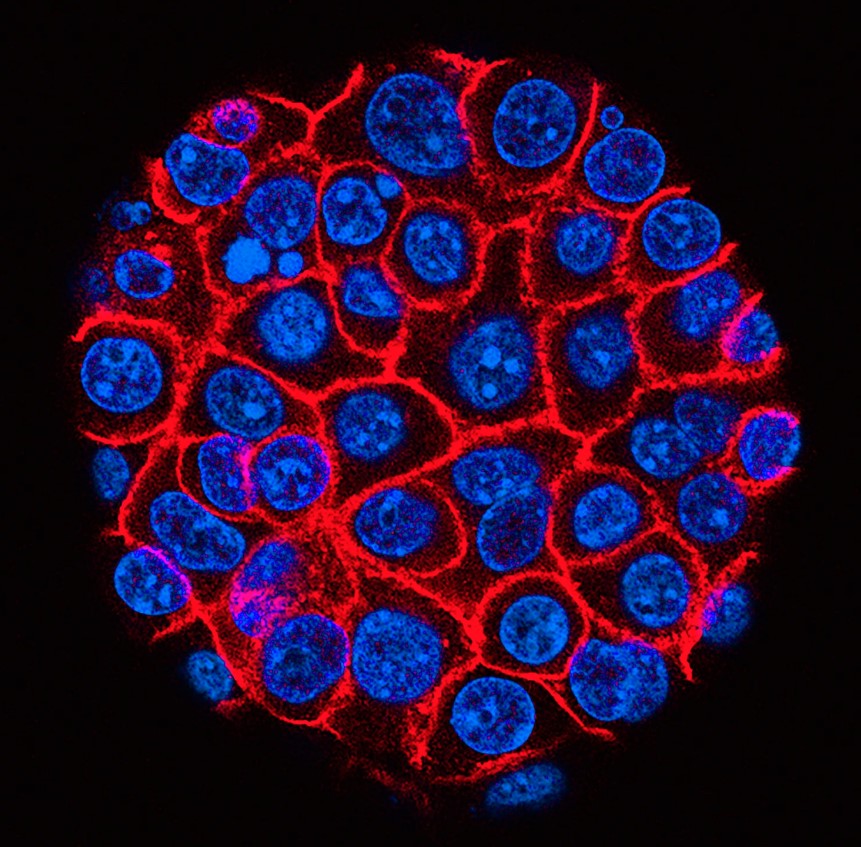
USC Norris Comprehensive Cancer Center/National Cancer Institute/Science Photo Library
Despite the promising developments, early detection remains a major challenge. Unlike breast or colorectal cancer, there is no screening test for pancreatic cancer, and it rarely shows early warning signs. Most patients are first diagnosed at stage IV, when the disease has already spread, giving them just a three percent chance of surviving five years.
“You need to find it earlier, and you need to have more effective ways to treat it,” Wolpin said. “You put those two things together, and we would hope we would be able to cure a lot more people if we could do that.”
Researchers say the advances in targeting KRAS represent a meaningful shift after decades of slow progress. “I think KRAS inhibition is very likely to radically change how we treat the disease,” Wolpin said. “We’ve wanted to be able to do this for several decades, but have not had the tools to do that, and now that the chemistry has moved forward, this could really change how we treat pancreatic cancer.”