

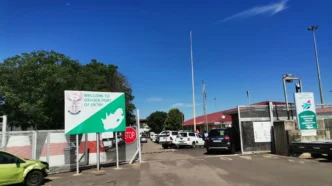
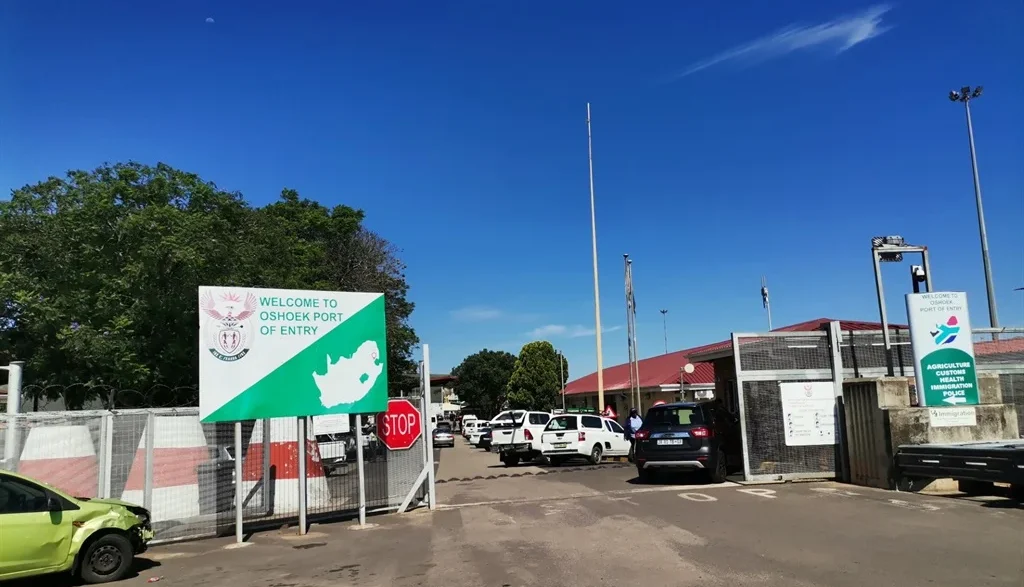
Oshoek – South Africa is set to demolish and rebuild six of its busiest land border posts, including Oshoek, which serves as the main gateway between the Kingdom of Eswatini and South Africa, in a R12.5 billion infrastructure overhaul that Home Affairs Minister Leon Schreiber described as the single biggest investment ever made in the country’s border management system.
Schreiber announced the multi-year programme at a media briefing on Tuesday, saying it would transform South Africa’s ports of entry into modern, secure and efficient gateways for trade and travel.

“Today we take the next step on our journey to reform South Africa’s immigration and border management system into a modern, secure, efficient and truly world-class institutional ecosystem,” he said. 
The six ports earmarked for complete demolition and rebuilding are Lebombo on the Mozambique border, Beitbridge on the Zimbabwe border, Oshoek on the Eswatini border, Kopfontein on the Botswana border, and Maseru Bridge and Ficksburg on the Lesotho border. The project will be implemented through a public-private partnership.
Schreiber said the six ports are responsible for the bulk of cross-border activity in the country.
“Together, they account for over 80% of cross-border trade and passenger flows through South Africa’s land borders,” he said, adding that while the six posts represent only about 11 percent of South Africa’s 53 land ports of entry, they generate 80 percent of traffic volume and likely a similar share of illicit activity.
The minister was candid about the state of the current infrastructure, saying ageing facilities and fragmented systems have been holding the country back for years.
“Congestion, outdated infrastructure, and fragmented systems have slowed down trade and increased the cost of doing business. Weaknesses have been exploited through illegal migration, illicit trade, and fraudulent practices that undermine both revenue collection and the rule of law,” Schreiber said.
The overhaul is designed to replace manual and fragmented border processes with integrated, technology-driven systems, moving what he described as duplication and delay toward coordination and convenience.
For emaSwati and traders who cross through Oshoek regularly, the upgrade promises shorter queues, reduced congestion and more predictable movement of goods and people. Schreiber said the economic benefits would be felt well beyond the border gates.
“Shorter turnaround times. Reduced congestion. More predictable movement of goods and people. These improvements go directly to the heart of economic growth,” he said.
He also cited research showing that even modest improvements in border efficiency can have an outsized effect on regional trade.
“Studies estimate that even a 5% reduction in border clearance time can increase intra-regional exports by around 10%,” Schreiber said.
The upgraded infrastructure is also expected to tighten enforcement and protect revenue collection through enhanced surveillance and integrated data systems.
“This is smart government in action. This is how we unlock trade and economic growth to deliver better lives for the people of South Africa,” the minister said.