

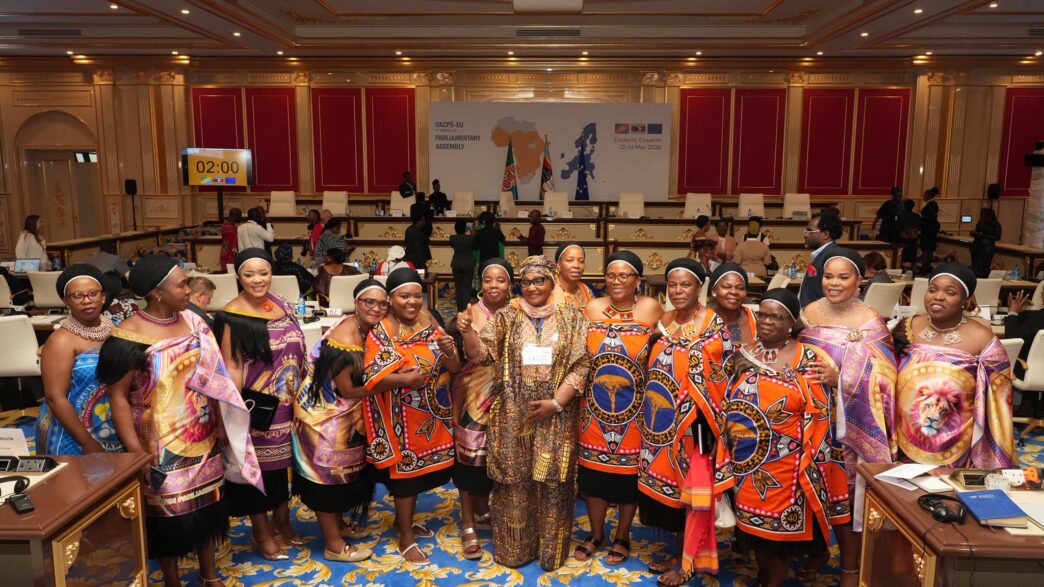
Ezulwini – The women’s caucus at the Organisation of African, Caribbean and Pacific States (OACPS) – EU Joint Parliamentary Assembly urged for an inclusive policy direction for the attainment of the UN International Year of the Women’s Farmer 2026 campaign.
Moderated by the European Parliament member from the Netherlands, Ingeborg Teelak, and the deputy speaker of the National Assembly in Botswana, Helen Pushie Manyeneng, the women’s forum under the theme “Empowering women in agricultural value chains as a driver of economic development” convened at the first assembly gathering since the signing of the Samoa agreement on Wednesday at the Ezulwini Palazzo ICC.
Other comments came from Lauren Philip, director of the partnership on UN; Zimbabwean Minister of Women and Affairs, Small and Medium Enterprises Development Monica Mutseva; Ghana Deputy Minister of Food and Agriculture John Center Domilo; Eswatini Senator Linda Nxumalo; and Hhohho Member of Parliament Tenele Magagula. 
Teelak underlined the necessity of establishing gender equality, stating that men’s participation in the caucus is also necessary. She emphasised the importance of closing the gender gap in school, the workplace, and decision-making processes.
She also said the forum was dedicated to empowering women in agriculture value chains as a driver of economic development, with the UN International Year of the Women’s Farmer 2026 aligned with Africa-EU policy alignment, which is essential to responding to immediate pressures.
The instability in the Middle East was also highlighted as affecting farmers with soaring fertiliser prices while in the process straining food security.
The powerful message that women are vital to the agri-food sector and necessary for the future of sustainable development was conveyed.
“Across sub-Saharan Africa, women are the backbone of agricultural production, processing and trade. They work on the lands in their field. They go to the markets and sell their products. They make long, long hours. But yet, despite all their contribution, there’s a persistent gender gap that continues to constrain their productivity and economic potential,” Teelak said.
There was also mention of persistent structural barriers in agriculture, including limited access to land, finance, technology and markets as well as non-balanced decision-making spaces that remain remote across the agriculture value chain.
The European Common Agricultural Policy was seen as one of the relevant lessons to expose opportunities for women, especially with its emphasis on sustainability, innovation, rural development and resilience.