

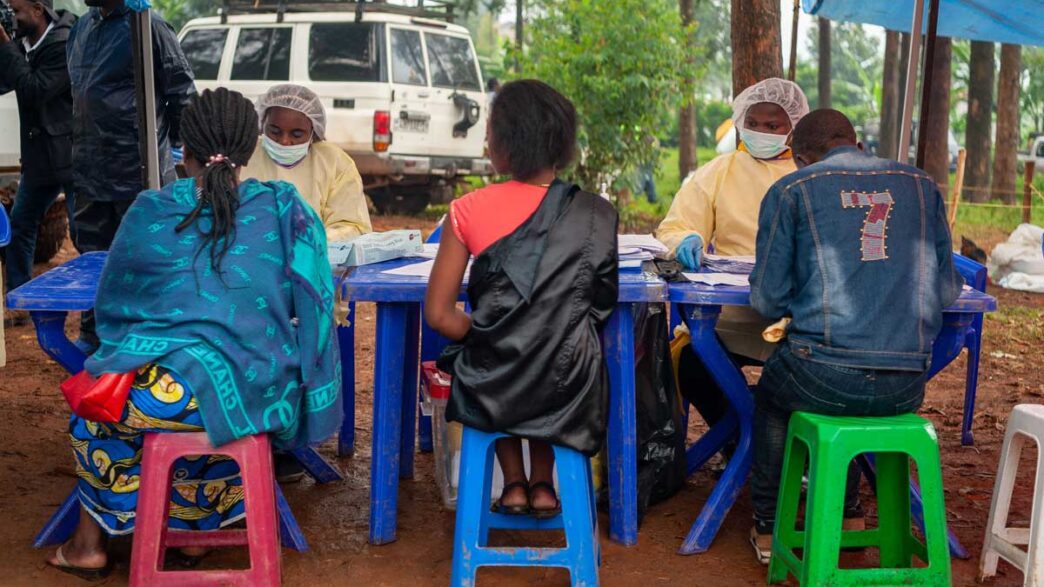
A rare and deadly strain of Ebola with no licensed vaccine or treatment has broken out in the Democratic Republic of Congo and spread into Uganda, prompting the World Health Organisation to declare its highest level of global health alert.
WHO confirmed on May 17, 2026, that the outbreak is caused by the Bundibugyo virus, which can kill up to 50% of those it infects and is so uncommon that standard rapid field tests often fail to detect it. WHO Director-General Tedros Adhanom Ghebreyesus declared the situation a Public Health Emergency of International Concern, the highest level available under the International Health Regulations.
WHO first received word of an unknown illness with high mortality on May 5, 2026, but it took ten more days to confirm the cause. The delay happened for two reasons: the virus differs from the more familiar Zaire and Sudan strains, making it easy to miss on standard field tests, and the outbreak is centred in a conflict zone where access to diagnostic facilities is extremely difficult. 
By May 18, there were 528 suspected cases and 132 suspected deaths across the two countries, with 131 of those deaths recorded in DRC. WHO cautioned that the true scale of the outbreak remains unclear, saying there are “significant uncertainties to the true number of infected persons and geographic spread associated with this event,” including “limited understanding of the epidemiological links with known or suspected cases.”
That uncertainty is what troubles experts most.
“The number of suspected cases reported before confirmation suggests transmission may have been ongoing for several weeks before the outbreak was formally recognised,” said Dr Daniela Manno, a clinical epidemiologist at the London School of Hygiene and Tropical Medicine.
The epicentre is the mining town of Mongbwalu in DRC’s Ituri Province, a busy commercial hub. As infected people travelled to Rwampara and Bunia in search of medical care, they carried the virus with them. By May 15, two imported cases had already been confirmed in Uganda’s capital, Kampala. Ituri also shares borders with Uganda and South Sudan, raising fears of wider regional spread.
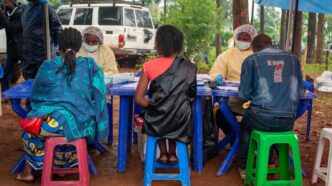
Conflict in Ituri is making the response harder. Surveillance teams cannot move freely, rapid response units face deployment obstacles, and the safe transport of laboratory samples is being disrupted. The province is also home to more than 270,000 displaced people, with 1.9 million residents in need of humanitarian assistance.
Prof Emma Thompson, Director of the MRC University of Glasgow Centre for Virus Research, said the infection of healthcare workers was a troubling sign.
“Infections in healthcare workers are a serious warning sign in any filovirus outbreak, because they indicate unrecognised transmission in healthcare settings and gaps in infection prevention and control,” she said.
Bundibugyo virus was first identified in 2007 following an outbreak in Uganda’s Bundibugyo District, near the DRC border. A second outbreak struck DRC’s Province Orientale in 2012, with 59 cases and 34 deaths. Fatality rates in both previous outbreaks ranged between 30% and 50%.
Like other Ebola strains, Bundibugyo is believed to originate in fruit bats and spreads through direct contact with the blood, secretions or bodily fluids of infected people. Symptoms begin with fever, fatigue, muscle pain, headache and sore throat, and can progress to gastrointestinal complications, organ failure and haemorrhagic bleeding. The incubation period runs from 2 to 21 days.
Two licensed Ebola vaccines exist, Merck’s rVSV-ZEBOV and Johnson and Johnson’s Zabdeno/Mvabea regimen, but both were designed to fight the Zaire strain. Bundibugyo carries different genetic material and surface proteins, which means protection against Zaire cannot be assumed to work against Bundibugyo.
Thompson was blunt about what that means.
“In plain terms, we do not currently have a proven, licensed, Bundibugyo-virus-specific vaccine available for outbreak control, and further urgent research is required,” she said.
Two experimental candidates exist in the pipeline. One uses the same platform as the Merck vaccine but targets Bundibugyo, though no doses are ready and producing enough for clinical trials could take six to nine months. The second uses the ChAdOx platform, the same technology behind some COVID-19 vaccines, with doses potentially available within two to three months. Neither candidate has yet been tested in animals or humans against Bundibugyo virus.
Gavi, the Vaccine Alliance, is working with WHO and the Coalition for Epidemic Preparedness Innovations to assess whether any existing or pipeline vaccines could be used in the response. Gavi chief executive Dr Sania Nishtar noted that around 2,000 doses of Ebola vaccine are already inside DRC and could be deployed if WHO experts determine there is a case for using them in a trial setting. Gavi is also looking at whether its First Response Fund could accelerate development and delivery.
Until a vaccine option is confirmed, Manno said the response would rely on contact tracing, case isolation, infection prevention, safe burials and community engagement.
Prof Trudie Lang, Professor of Global Health Research at the University of Oxford, said the most urgent need was community-led action.
“The immediate priorities are an urgent need for locally led and delivered community engagement effort to reduce transmission, strengthen trust and support early care-seeking and reporting,” she said.
“Second, laboratory systems and access to detection capabilities must be strengthened to enable faster case identification, more effective surveillance and improved outbreak monitoring.”
Lang added that the response depends on cooperation across all levels of government and health systems.
“This response also depends upon strong cooperation, transparent information sharing and interoperable systems so that the situation can be understood and managed effectively across local, national and regional levels.
“There is strong local expertise and significant regional capacity already engaged in the response. Africa CDC and WHO have moved swiftly and are highly active, and response coordination and collaboration are robust and underway.
“Building and connecting these existing strengths and systems will be essential to bringing the outbreak under control.”
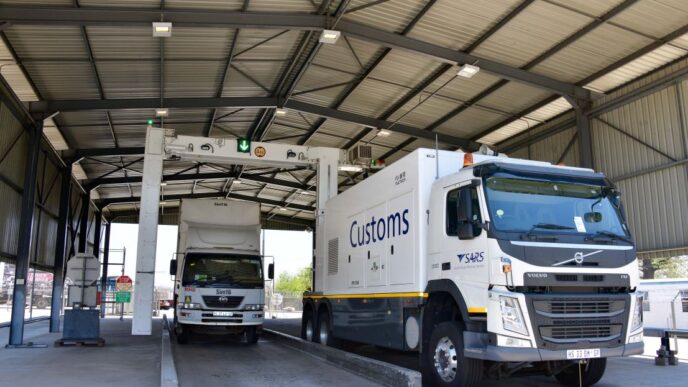
WHO has called on neighbouring countries, which would include those in the southern African region, to strengthen their preparedness while warning against closing borders or restricting trade.