

Pretoria – South Africa’s Department of Science, Technology and Innovation has announced a R10.4 billion budget for the 2026/2027 financial year, with the Square Kilometre Array telescope project alone receiving R5 billion as the country doubles down on its ambition to become a global leader in research and innovation.
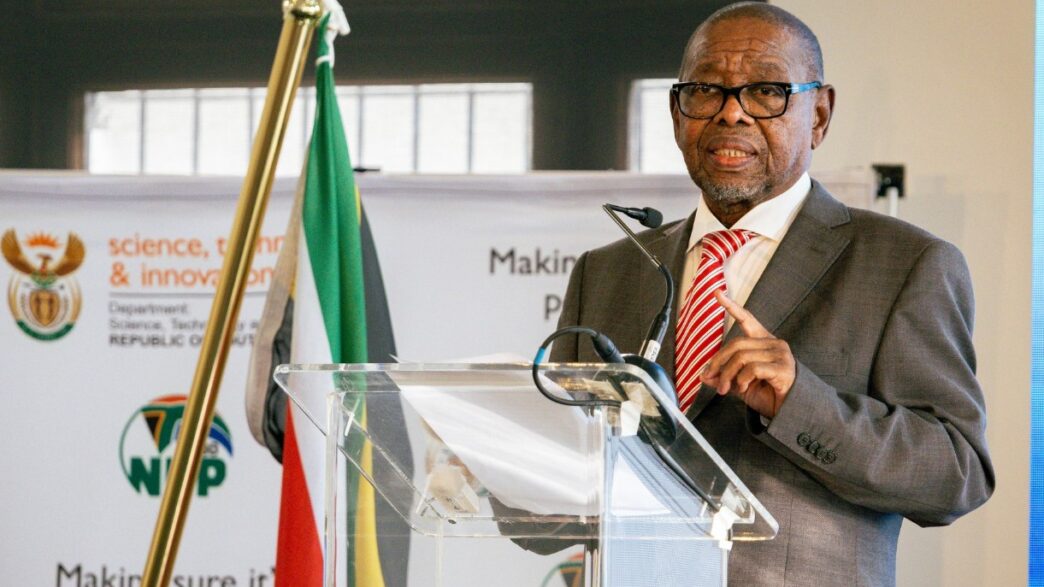
Science, Technology and Innovation Minister Professor Blade Nzimande and Deputy Minister Dr Nomalungelo Gina made the announcement when addressing Parliament on Friday, 15 May, laying out plans for how the funding would be deployed over the next three years.
Nzimande told Parliament that with the world facing one of the most unpredictable and precarious moments in human history, the future depended on the country’s willingness to use innovation to advance justice, equality and peace. 
The budget priorities are guided by the Decadal Plan 2022 to 2032 and include raising gross expenditure on research and development to 1.5% of GDP, accelerating the transformation and expansion of the science, technology and innovation human resources and research workforce, and strengthening coordination across the national system of innovation through the Inter-Ministerial Committee on STI and the Presidential Plenary for STI.
The department will maintain support for key science projects including the Square Kilometre Array and strengthen pandemic preparedness capacity. Strategic innovation compacts with science and technology-intensive state departments and private sector partners will also be developed, alongside upgrades to critical science infrastructure and the development of high-end skills through the Presidential PhD Programme.
Nzimande said the department would also mobilise more funding to expand programmes in artificial intelligence, energy security, space, vaccine manufacturing and indigenous knowledge systems, while strengthening strategic partnerships across Africa and the Global South.
Among the progress reported from the previous year, 19 infrastructure projects were approved in partnership with KfW, a German bank, to strengthen South Africa’s vaccine development, testing, manufacturing and regulation.
“We also allocated R14.9 million to strengthen bio-surveillance, ease livestock export restrictions linked to foot-and-mouth disease, and support the Biosecurity Hub at the University of Pretoria,” Nzimande said.
The Council for Scientific and Industrial Research also launched a Hot Isostatic Press facility in Tshwane to strengthen local manufacturing, improve metal component performance and reduce reliance on offshore processing.
Deputy Minister Gina said the government was clear that without significantly stronger industry investment in innovation, South Africa would not be able to compete at the pace required by a rapidly changing global economy.
“We are therefore intensifying our engagement with business leadership to unlock greater investment in science, technology and innovation for the country. To drive this forward, we are establishing dedicated working groups and workstreams with major national corporations to build impactful, long-term industry partnerships,” she said.
Gina also pointed to the transformation agenda within the science and innovation pipeline, noting that the professional profile remained overwhelmingly white, male and urban.
“Women and rural people are underrepresented. Transformation of the STI in its class composition, gender, and race is fundamental to our agenda,” she said.
She added that the budget vote marked a strategic shift for the department.
“While these areas remain important, DSTI is making a strategic focus on innovation and technologies in strengthening the system of national innovation. We are making headway in this mandate; we will leave no one behind,” Gina said.
Other highlights from the department’s work included the graduation of 96 students with bachelor’s degrees in indigenous knowledge systems from North-West University, a programme the department has funded since 2013. The department also established 13 Living Labs, nine Centres for Innovation and Entrepreneurship and mLabs in four provinces, providing physical spaces and innovation infrastructure for innovators to develop and take prototype solutions to market.
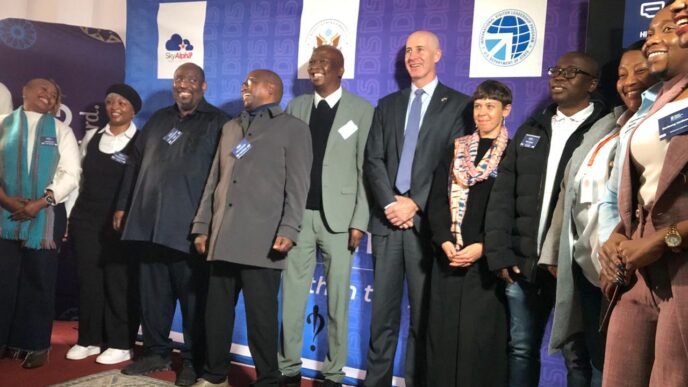
The budget vote was preceded by a public engagement programme hosted at Iziko Museum, attended by local and international stakeholders, school learners and university students, which included exhibitions and a public lecture on artificial intelligence delivered by Professor of Computer Science Vukosi Marivate.