

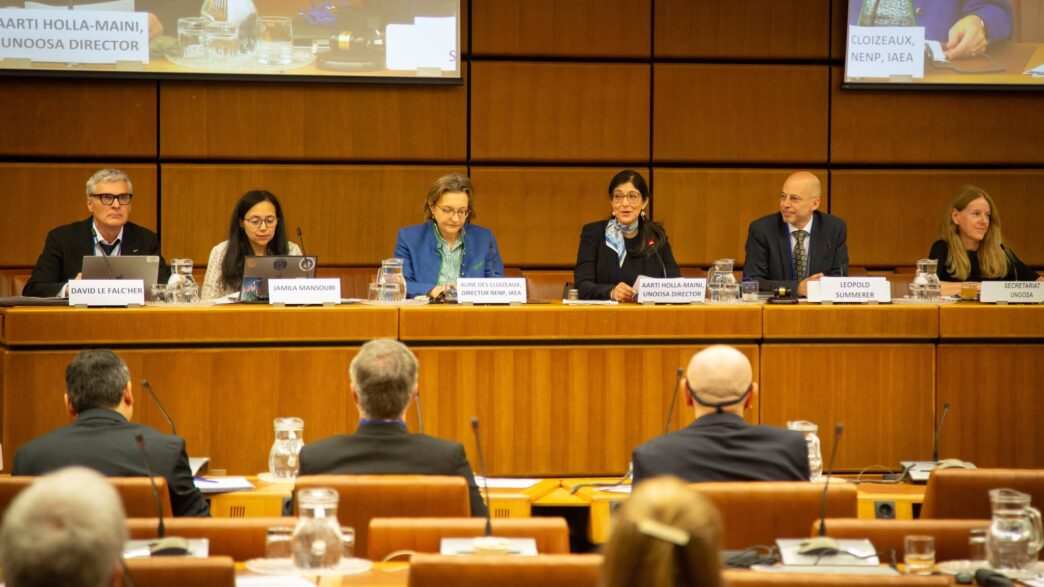
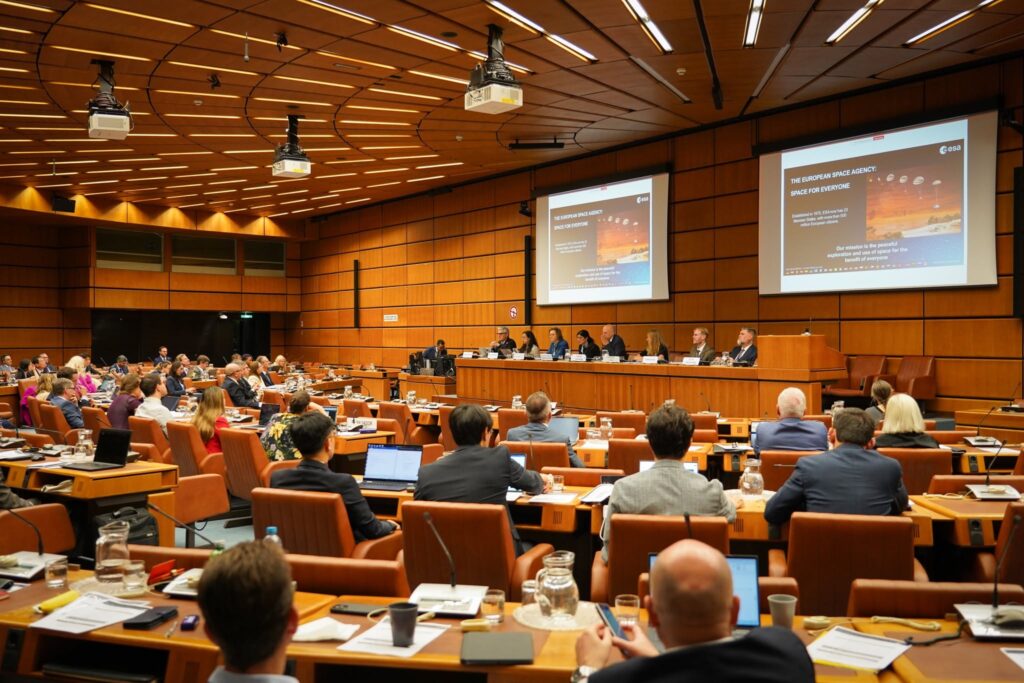
Vienna – Experts from governments, international organisations, industry and academia gathered in Vienna on 9 June 2026 for a workshop on the future of nuclear power source applications in outer space, jointly organised by the United Nations Office for Outer Space Affairs (UNOOSA) and the International Atomic Energy Agency (IAEA).
The workshop brought together specialists to exchange knowledge, discuss emerging technologies, strengthen international cooperation and map the path forward for safe space exploration powered by nuclear energy.
Nuclear power sources have long been central to space exploration, enabling missions to distant planetary bodies that would otherwise be unreachable. With crewed missions returning to the Moon and deep-space missions pushing further than ever before, organisers said these technologies are becoming even more critical. 
Participants explored a range of technologies, from radioisotope power systems to advanced nuclear reactors, and how they could support future lunar missions, sustained human presence on the Moon, and the exploration of Mars and beyond.
Discussions also covered the importance of existing international frameworks, including the 1992 Principles on the Use of Nuclear Power Sources in Outer Space and the 2009 Safety Framework developed jointly by the UN Committee on the Peaceful Uses of Outer Space (COPUOS) and the IAEA, to ensure that technological innovation proceeds alongside safety.