

Abdullah Ibrahim, one of the defining voices of South African jazz, has died at the age of 91 after a short illness. His family confirmed he “passed away peacefully, surrounded by his family in Germany.”
Born Adolph Johannes Brand in Cape Town in 1934, Ibrahim began composing at the piano at the age of seven, picking out tunes by ear. What followed was a career spanning eight decades and dozens of recordings that earned him a permanent place in the history of African music.
As a teenager he played in a swing band before forming his own trio, and later joined a sextet called the Jazz Epistles, which also featured fellow South African jazz great Hugh Masekela. 
Ibrahim, who performed for years under the stage name Dollar Brand, changed his name after converting to Islam in the late 1960s.
Among his most celebrated works is the 1974 composition Mannenberg, which became deeply associated with the struggle against apartheid, South Africa’s system of legalised racial segregation. As apartheid tightened its grip following its legal enforcement in 1948, jazz, seen as counter-cultural and a space for racial mixing, fell out of favour with the authorities. The political climate eventually broke up the Jazz Epistles, and Ibrahim relocated to Switzerland.
It was there that American jazz icon Duke Ellington heard him play and brought him to the United States. Over time, Ibrahim developed a sound that wove together South Africa’s vocal and harmonic traditions with the improvisation and rhythmic feeling of jazz.
Despite decades abroad, he returned regularly to South Africa to perform and record. His final live appearance came at the Cape Town International Jazz Festival less than three months ago, where his family said he “once again captivated audiences with the artistry, grace and profound musical vision that defined his life’s work.”
His partner Dr Marina Umari said: “Abdullah passed away peacefully with South Africa and its people in his heart. His love for his country never wavered, no matter where in the world he found himself.”
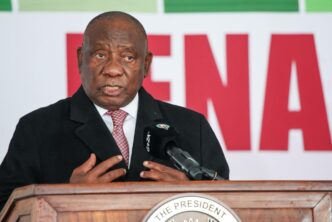
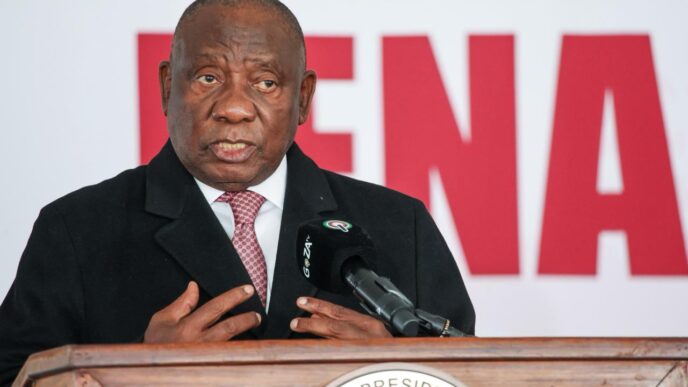
President Cyril Ramaphosa paid tribute, saying Ibrahim’s “creations honoured the South Africa that shaped his political commitment and musical brilliance,” adding: “He has enriched our lives with his musical gifts and his involvement in making the world a better place.”