

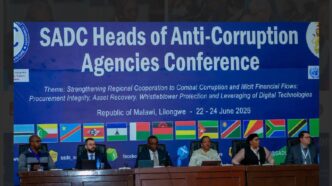
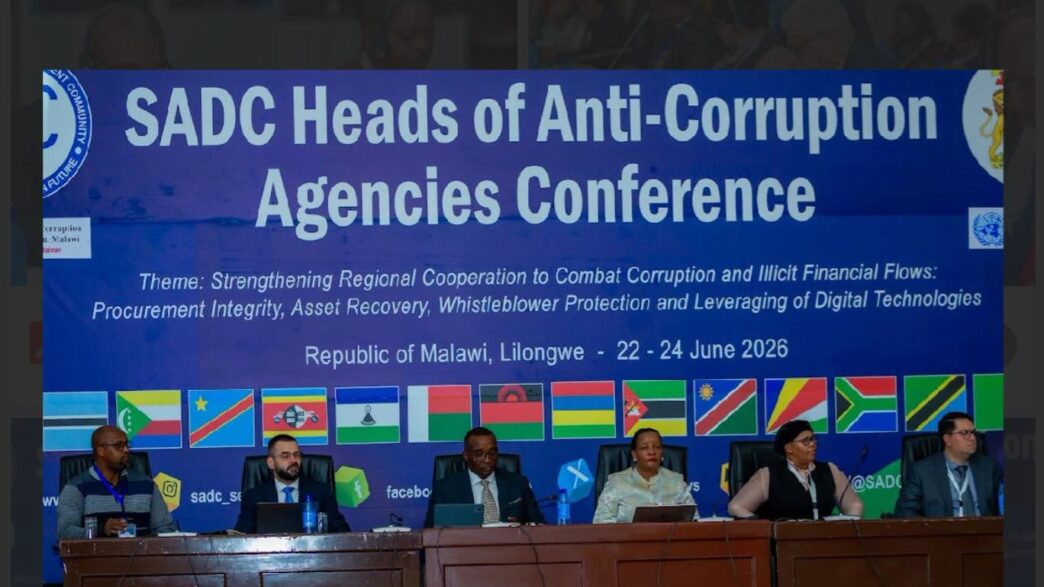
Lilongwe – Heads of anti-corruption agencies at the Southern African Development Community (SADC) conference resolved to move ahead with strengthening the operational independence and capacity of anti-corruption agencies’ efforts in the fight against corruption.
The meeting, convened jointly by the SADC Secretariat, the United Nations Office on Drugs and Crime (UNODC), and the Government of the Republic of Malawi, was concluded this week in Lilongwe, Malawi, where member states renewed their commitments to strategic partnerships and regional cooperation in combating corruption, illicit financial flows, and related financial crimes.
Participating were heads of anti-corruption agencies, policymakers, prosecutors, financial intelligence experts, development partners, and civil society representatives from across the region. 
The conference also agreed to accelerate the transition to digital public procurement systems and beneficial ownership registries; enhance regional cooperation on financial investigations, asset tracing and recovery; and promote the use of artificial intelligence and data analytics to detect corruption risks in procurement processes.
The focus in the meeting was strengthening public procurement transparency and beneficial ownership disclosure, enhancing asset recovery and financial investigations, advancing whistleblower protection frameworks, and leveraging digital technologies and innovation to improve anti-corruption systems.
The SADC Deputy Executive Secretary for Corporate Affairs, Dr Judith Kateera, who spoke at the opening, said it was important to safeguard public resources and called for strengthening governance institutions in the region to fight corruption.
“Corruption continues to undermine development gains, weaken public trust, and divert resources away from essential services. Our collective response must therefore be coordinated, innovative, and firmly anchored in regional cooperation and accountability,” said Dr Kateera.
Participants noted the challenges that continue to face the region, among these being weaknesses in public procurement systems, limited asset recovery outcomes, fragmented whistleblower protection mechanisms, and uneven adoption of digital tools for investigations and case management.
The conference allowed the exchange of experiences and best practices on strengthening financial investigations, improving inter-agency cooperation, and enhancing the use of technology in corruption prevention and detection, with the meeting drawing from the progress made in the SADC Strategic Anti-Corruption Action Plan (2023-2027) implementation.
They urged consistency in the implementation of the SADC Protocol Against Corruption, the African Union Convention on Preventing and Combating Corruption (AUCPCC), and the United Nations Convention Against Corruption (UNCAC).