

The Ford Ranger XLT remains a strong contender in South Africa’s double cab market despite recording slower acceleration after Ford replaced its six speed automatic transmission with a 10 speed gearbox.
The 2.0 litre single turbo diesel Ranger was previously described as Ford’s “best kept secret” when the current generation was introduced in 2022.
Although the engine produced 125 kW and 405 Nm, which was 7 kW and 15 Nm lower than the previous version, it delivered impressive performance. 
The earlier Ranger XL 4×2 single turbo completed the 0 to 100 km/h sprint in 11.02 seconds. This was more than three seconds quicker than the previous generation’s single turbo and nearly 1.5 seconds faster than the older 157 kW and 500 Nm bi turbo models.
The current generation’s 154 kW and 500 Nm 2.0 litre bi turbo was only three tenths of a second quicker than the single turbo in earlier testing.
Much of the single turbo’s performance was credited to its six speed automatic gearbox. The previous generation single turbo and bi turbo models, together with the current bi turbo, used Ford’s 10 speed automatic transmission, which was introduced to the Ranger range in 2019.
Ford later removed the six speed gearbox from the Ranger line up. The 3.0 litre V6 turbodiesel, 2.0 litre single turbo diesel and 2.3 litre turbocharged petrol engine, which replaced the bi turbo diesel, are now paired with the 10 speed transmission.
During a high performance test of the Ranger XLT 4×4, the 2.0 litre single turbo recorded a best time of 12.61 seconds from 0 to 100 km/h. The comparable single turbo 4×4 fitted with the six speed gearbox completed the same test in 11.74 seconds.
Despite the slower time, the new model remains competitive with older powertrains. Its sprint time is close to the 12.34 seconds recorded by the former 3.2 litre five cylinder engine and the 12.45 seconds achieved by the previous bi turbo.
The change has created a wider performance gap between the single turbo and the Ranger’s 3.0 litre V6 and 2.3 litre petrol engines. Buyers seeking acceleration below 10 seconds will therefore need to move into the more expensive models.
Equipment and safety
The Ranger XLT offers more equipment than the entry level XL and is priced from R793 500 in South Africa.
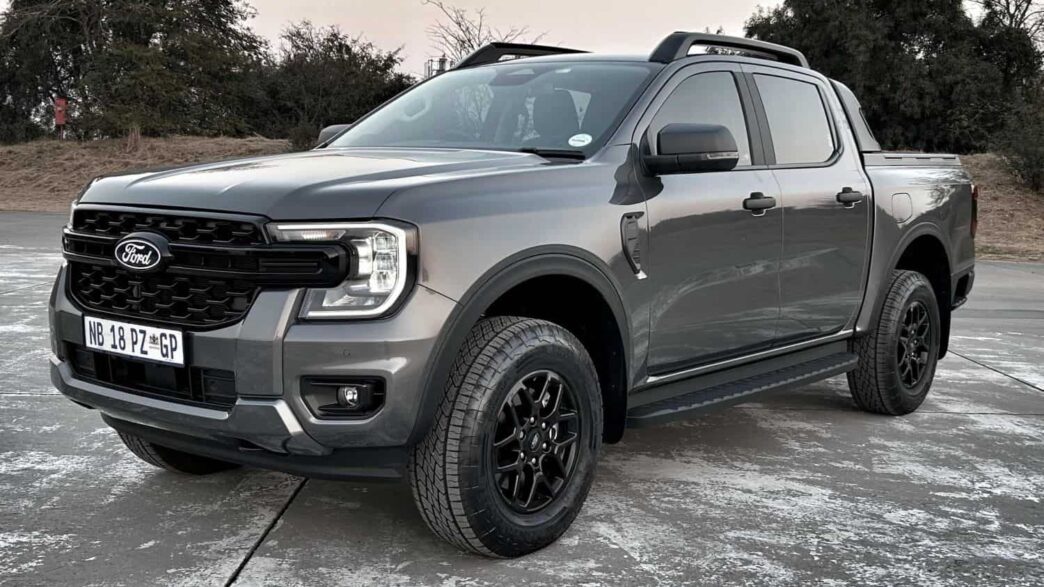
Its exterior features include LED headlights, daytime running lights, LED taillights, black roof rails, side steps, a flexible rack system and black 17 inch alloy wheels.
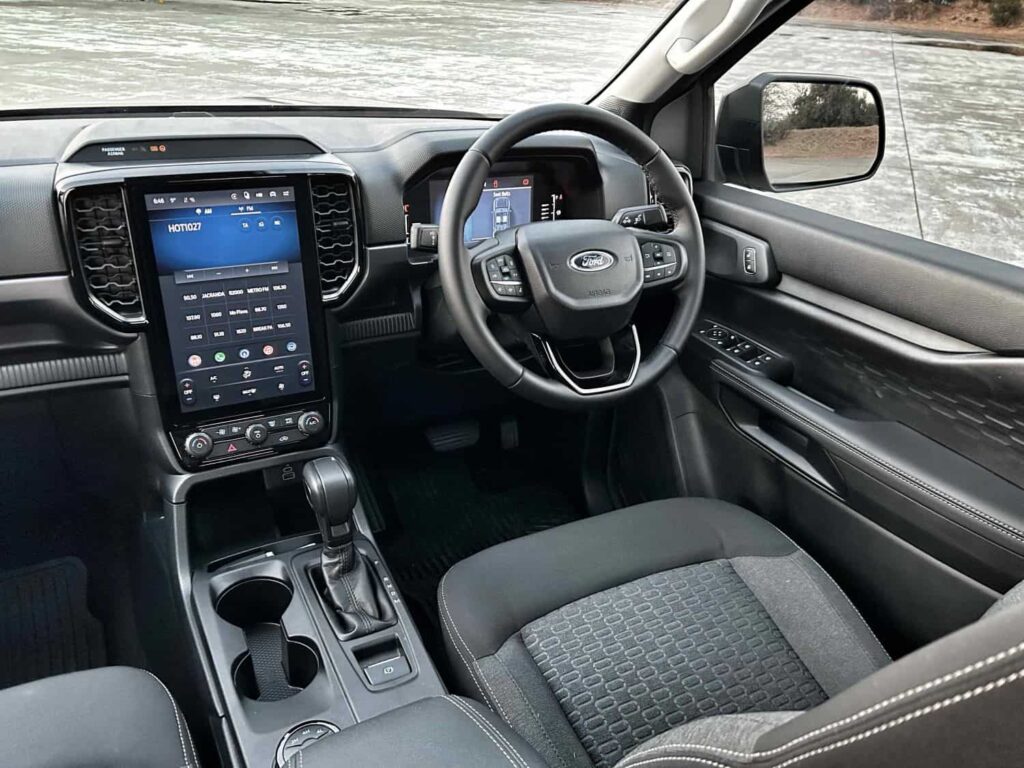
Inside, the vehicle is fitted with a 12 inch touchscreen infotainment system with SYNC4, wireless Apple CarPlay and Android Auto, as well as an eight inch digital instrument cluster.
Other standard features include keyless entry, push button start, rain sensing wipers, automatic headlights, dual zone climate control and a rear view camera.
The XLT does not include some features available on higher specification models, such as leather seats, a leather covered steering wheel and gear lever, electronically adjustable front seats and heated front seats.
Safety equipment includes seven airbags, dynamic stability control and hill descent control. Advanced driver assistance systems include adaptive cruise control, blind spot monitoring, forward collision warning and autonomous emergency braking.
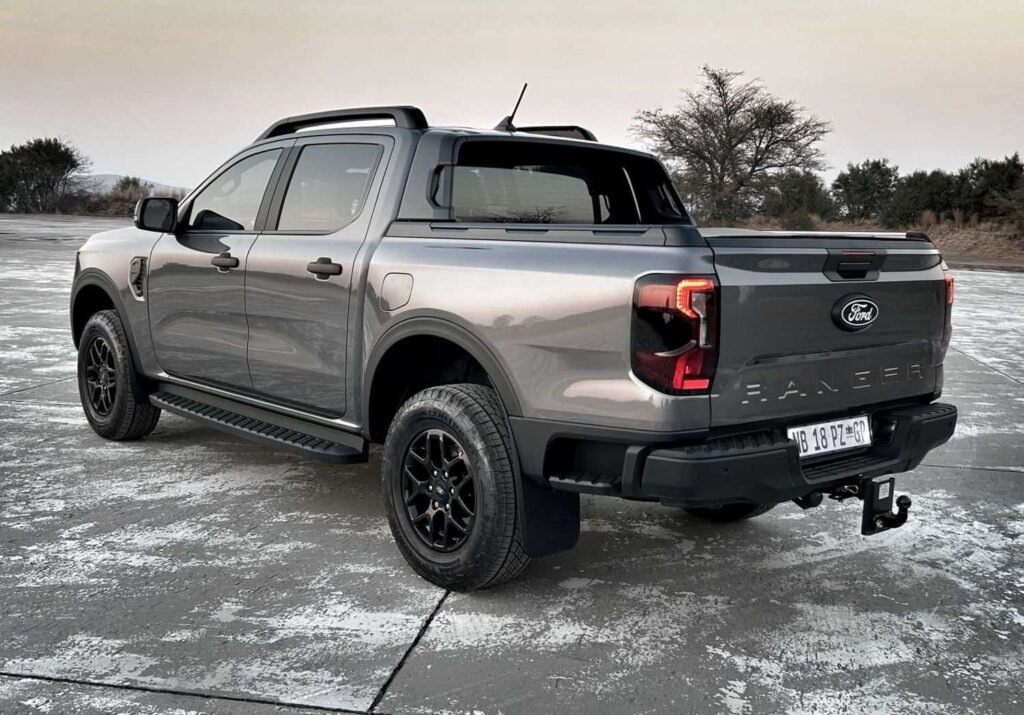
The model tested was a Ford Ranger 2.0 litre single turbo XLT 4×4 double cab with a 10 speed automatic transmission. It produces 125 kW at 3 500 rpm and 405 Nm between 1 750 and 2 500 rpm.
The vehicle has a licensing mass of 2 241 kg and a claimed top speed of 175 km/h. Its claimed fuel consumption is 7.7 litres per 100 km, while the test recorded 9.2 litres per 100 km.
The 80 litre fuel tank provides a claimed range of 1 039 km, compared with 870 km recorded during testing. The vehicle produces 202 g/km in carbon dioxide emissions.
The test vehicle had travelled 2 665 km and was fitted with 255/70 R17 Continental Cross Contact ATR tyres. The test was conducted on 7 August 2026 at a temperature of eight degrees Celsius.
The Ranger XLT completed the quarter mile in 18.71 seconds at 120.29 km/h and the half mile in 29.57 seconds at 143.89 km/h.
It recorded 7.17 seconds from 60 to 100 km/h, 10.01 seconds from 80 to 120 km/h and 21.56 seconds from 60 to 140 km/h, with the tests conducted in Drive Sport mode.
The vehicle comes with a four year or 120 000 km warranty and a six year or 90 000 km service plan.
Despite the performance decline linked to the transmission change, the Ranger XLT continues to offer a broad range of equipment, safety technology and everyday practicality as it competes with mid specification Toyota Hilux double cabs.