


The Kingdom of Eswatini joined other Southern African Development Community (SADC) Member States in supporting a global appeal for urgent action on dryland forest conservation during a panel discussion held on 7 May 2025 at the United Nations Headquarters in New York, USA.
The discussion formed part of the United Nations Forum on Forests (UNFF) and was organised by Saudi Arabia’s National Centre for Vegetation Cover and Combatting Desertification in partnership with the Food and Agriculture Organisation (FAO). Representing the SADC Secretariat was Ms Ndapanda Kanime, Senior Programme Officer for Natural Resources and Wildlife, who addressed the challenges affecting dryland forests across the region.
Kanime drew attention to the economic importance of natural resources in SADC, where over half of the region’s GDP depends on agriculture, forestry, and mining. She warned that land degradation, agriculture expansion, infrastructure development, and climate change continue to place stress on water sources, forests, and soils, threatening livelihoods in Eswatini and neighbouring countries. 
She referenced the SADC Regional Indicative Strategic Development Plan (RISDP) 2020–2030 and associated strategies on forestry, biodiversity, and climate change as key frameworks guiding member states’ response to these pressures. The plan supports integrated natural resource management across the region.
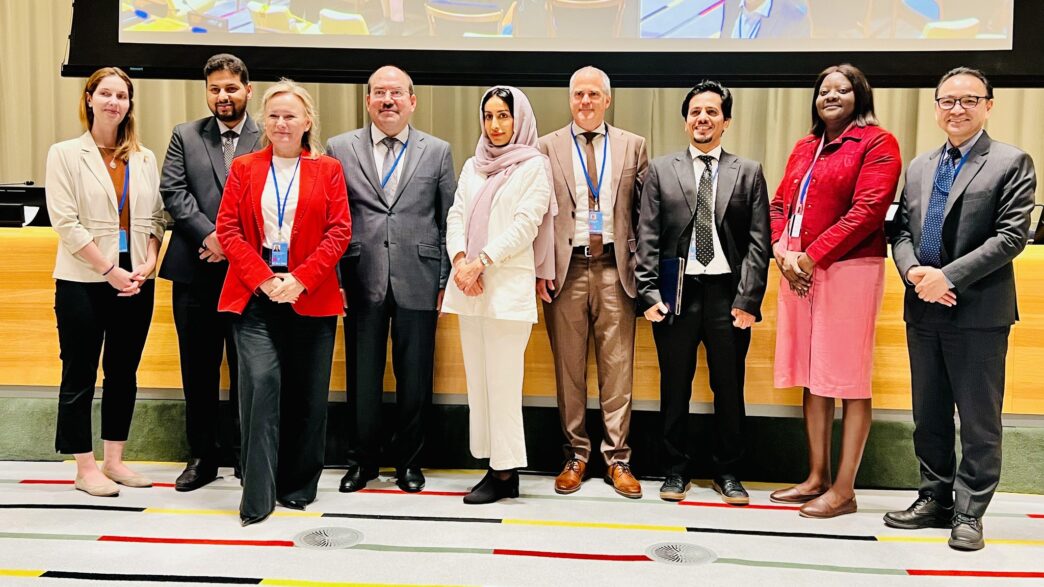
The panel featured global experts including Ms Malgorzata Buszko-Briggs from FAO, Mr Amal Daej Aldaej of Saudi Arabia’s National Centre for Vegetation Cover, Paula Prist of the International Union for Conservation of Nature (IUCN), Minoru Takada from the UNFF Secretariat, and Fritjof Boerstler of the FAO.
On the previous day, 6 May, SADC Member States, including Eswatini, had called for stronger outreach and public engagement to promote forest protection. They reaffirmed their efforts to implement the United Nations Strategic Plan for Forests 2017–2030 through national awareness campaigns, including commemorating the International Day of Forests in March.
SADC delegates also supported the UNFF Secretariat’s proposal to make the Forest Pavilion a regular feature at climate change conferences, as part of efforts to sustain global attention on forests as a key climate solution.