



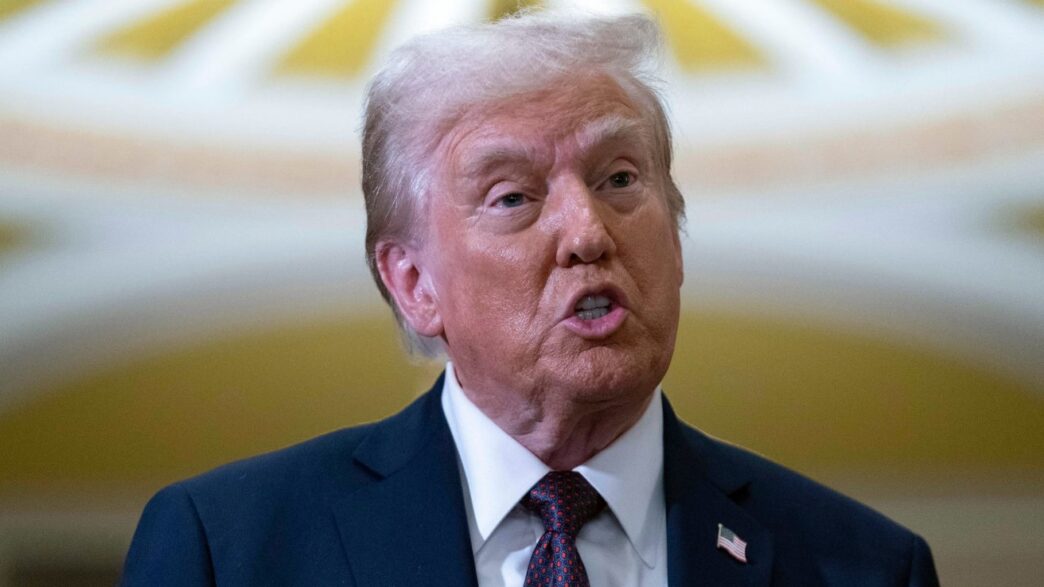
Washington DC – Global tensions escalated on Tuesday after United States President Donald Trump issued an 8pm deadline to Iran, warning that “a whole civilization will die tonight” if Tehran failed to reach an agreement with Washington.
The deadline, set for midnight GMT, comes amid intensifying conflict involving Iran and Israel, with threats of expanded military action across the Middle East. Trump has warned that Iranian power plants and key infrastructure could be destroyed if no deal is reached.
Iran has responded by signalling it would retaliate by targeting infrastructure in Gulf neighbouring states. Tehran has also refused to reopen the Strait of Hormuz, a crucial global oil shipping route, further rattling international markets. 
The United States Energy Information Administration said fuel prices could continue rising for months even if the Strait of Hormuz reopens. In its short term energy outlook report, the agency noted that the trajectory of prices would depend on the duration of the closure and the level of disrupted oil production in the Middle East.
“Just as we had never before seen the strait close, we’ve never seen it reopen. What exactly that looks like remains to be seen,” the EIA said.
The agency expects that restoring full oil flows through the Strait could take months after the conflict ends, with uncertainty likely to keep oil prices above pre conflict levels for the remainder of the year.
In Lebanon, the war has spilled over after Iran backed Hezbollah began launching rockets at Israel in early March. Israel has since carried out strikes in Lebanon and launched a ground incursion in the south. Lebanon’s health ministry reports that 1,461 people have been killed in Israeli attacks, with more than one million displaced.
The Israeli military has also warned vessels operating between Tyre and Ras Naqoura in Lebanese waters to sail north immediately, signalling a possible imminent strike.
Diplomatic tensions rose at the United Nations where China and Russia vetoed a Security Council resolution aimed at coordinating efforts to protect commercial shipping in the Strait of Hormuz. Eleven members voted in favour, two against and two abstained.
Meanwhile, Iraqi armed group Kataib Hezbollah announced it would release abducted United States journalist Shelly Kittleson, who was taken in Baghdad in late March. The group said she must leave Iraq immediately.
In Iraq’s Basra region, at least three people were killed and five wounded when rockets fired from the direction of Kuwait struck a house in Khor al Zubair, according to security and health officials.
European leaders have also reacted to the rising tensions. Canadian Prime Minister Mark Carney called on all parties to respect international law and avoid targeting civilians and civilian infrastructure. Belgian Foreign Minister Maxime Prévot described deliberate attacks on civilian infrastructure as clear violations of international humanitarian law.
Legal experts have raised concerns over Trump’s rhetoric. Brian Finucane, Senior Adviser at the International Crisis Group and former legal adviser at the US Department of State, said, “Trump’s threat that ‘a whole civilization will die tonight, never to be brought back again,’ could plausibly be interpreted as a threat to commit genocide.”
Finucane cited international and US legal definitions of genocide, warning that escalation could cause grave harm to Iran’s population and trigger further retaliation.
French President Emmanuel Macron announced that French nationals Cecile Kohler and Jacques Paris had been released after more than three years of detention in Iran. He said they were on their way to France following mediation by Oman.


