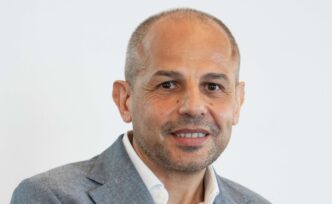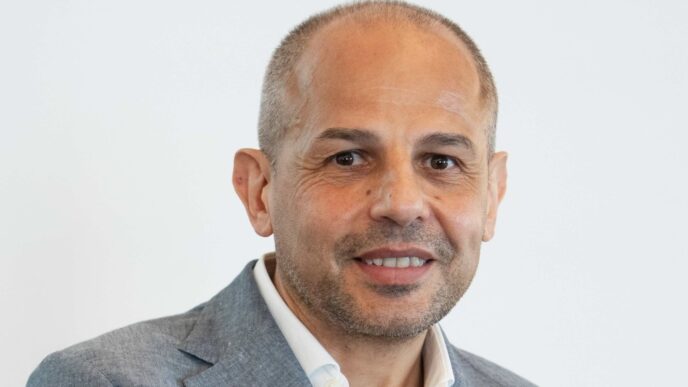




An applied environmental anthropologist who leads social science and environmental justice work at one of the United States’ prominent carbon advisory firms will speak at the Energies 3.0 Conference, a virtual international event running from April 22 to 24, 2026.
The conference, organised by the Green Institute of Nigeria, runs daily from 10:00 AM to 4:00 PM online. Registration is open at www.greeninstitute.ng/energies2026.
Dr. Grant Gutierrez is Head of Community Impacts at Carbon Direct in the United States, where he leads the firm’s social science and environmental justice advisory practice supporting work on carbon removal and decarbonisation. He has conducted community-based ethnographic research in Chile, California and the Pacific Northwest on watershed conservation, hydropower development, floodplain restoration and climate change adaptation. Before joining Carbon Direct, he served in state and local government in Washington state, where he worked to integrate environmental justice frameworks into policy and programme development. He is also Affiliate Faculty at the School of Environmental and Forest Sciences at the University of Washington, where he teaches and conducts research on equitable climate change adaptation. 
Dr. Gutierrez’s message for the conference is direct: communities most exposed to climate risk should be the first to benefit from climate finance, not the last to be consulted.
He said carbon markets and climate finance carry genuine potential to direct resources toward front-line communities, but realising that potential requires deliberate structural choices rather than good intentions.
“The most important shift is moving from project-level commitments to enforceable accountability,” he said, adding that this means requiring community benefit frameworks as a standard condition of project finance rather than a voluntary add-on.
He said co-governance mechanisms must give affected communities real decision-making power over how projects are sited, designed and operated, and that the definition of measurable benefit must reflect what communities themselves recognise.
“Local employment, environmental health improvements, restored land access, and meaningful say over what happens in their neighborhoods,” he said, describing what genuine community benefit looks like in practice.
Dr. Gutierrez pointed to Carbon Direct’s work supporting forest restoration projects, where the firm has helped develop community benefit frameworks that establish formal community advisory councils as part of project governance.
“These aren’t merely consultation processes. They’re structured mechanisms that give local stakeholders an ongoing voice in how projects evolve, how benefits are distributed, and how accountability is maintained over time,” he said. “That kind of project design is what separates a strong project from one that looks good on paper.”
He said community impacts analysis is foundational to project quality at Carbon Direct, because projects that lack community buy-in face regulatory, reputational and permanence risks.
“The best carbon projects are ones where community benefit and carbon integrity are designed together from the start,” he said.
On the broader state of corporate climate action, Dr. Gutierrez said the most significant shift underway is a move toward quality, which he described as an opportunity rather than a compliance burden.
He said leading companies are moving beyond first-generation carbon offset purchases toward projects that are durable, verifiable and grounded in the communities where they operate, but that the real question goes beyond avoiding bad actors.
“How do we build the infrastructure for corporate climate commitments that actually hold up over time?” he said.
He described three components of that infrastructure: scientific and technical rigour through independent verification of climate commitments, policy and regulatory alignment so that long-term strategies remain credible, and community and equity integration so that affected communities share in benefits and hold genuine decision-making power.
He said at Carbon Direct these are not treated as trade-offs.
“Our advisory work is grounded in the view that environmental justice analysis is a quality indicator, not a separate track. Projects that earn social license have greater chances of long-term success. Commitments grounded in equity are harder to challenge,” he said.
He said when evaluating a climate investment, Carbon Direct asks a fundamental question about who carries the risk and who receives the benefit.
“A commitment that can’t answer those questions isn’t ready to be called credible, no matter how the tonnage adds up,” he said.