

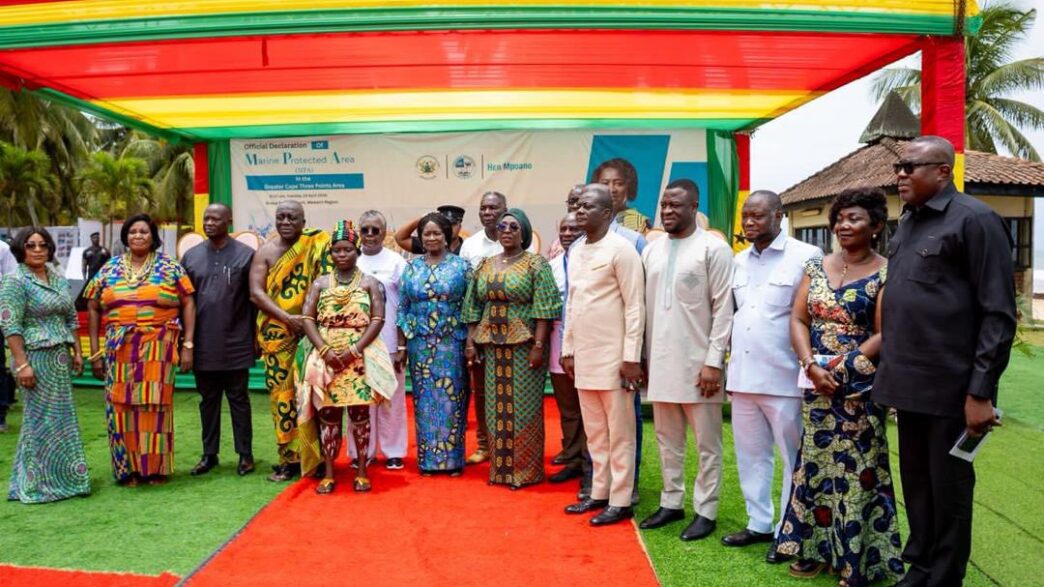
Cape Coast – Ghana has launched its first Marine Protected Area at Greater Cape Three Points in the Western Region, marking a significant moment in the country’s environmental protection efforts.
Vice President Jane Naana Opoku-Agyemang described the initiative as “a bold step toward sustainable marine management,” calling for strong collaboration to protect Ghana’s marine resources.
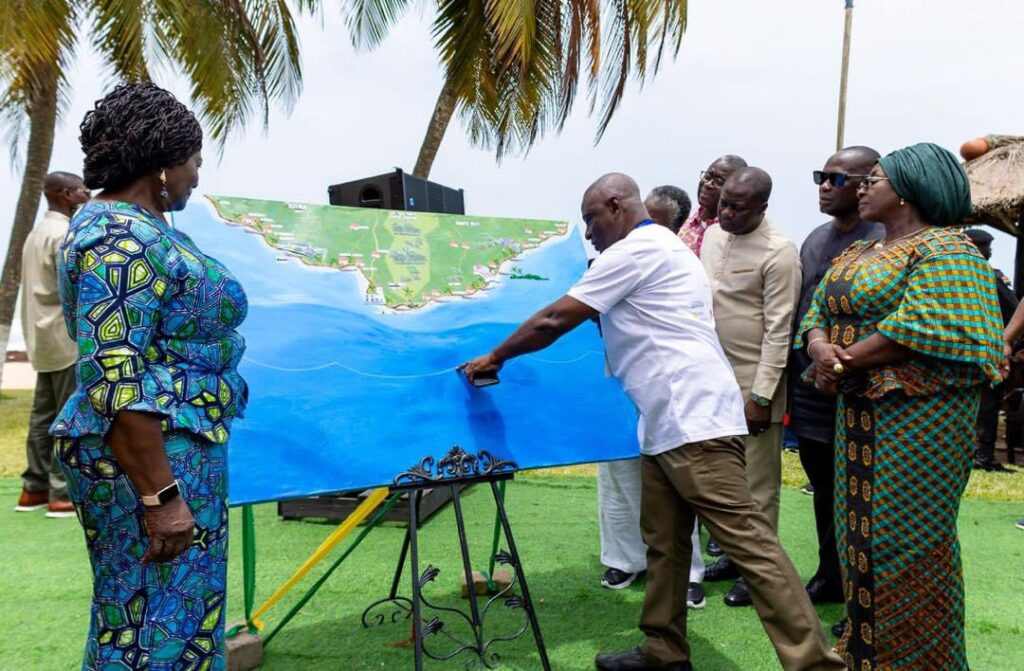
Minister for Tourism, Culture and Creative Arts, Abla Dzifa Gomashie, spoke about the importance of the Marine Protected Area for tourism, livelihoods, and cultural preservation, noting its role in conserving biodiversity and promoting sustainable tourism. 
The initiative forms part of Ghana’s broader blue economy agenda and reinforces the country’s national commitment to climate action and marine conservation.
The development carries relevance for Eswatini, a landlocked kingdom that depends heavily on regional coastal economies and trade routes through neighbouring countries. As African nations move to protect marine resources, the ripple effects on inland economies like Eswatini’s, particularly those tied to fishing imports and tourism trends across the continent, remain worth watching.