


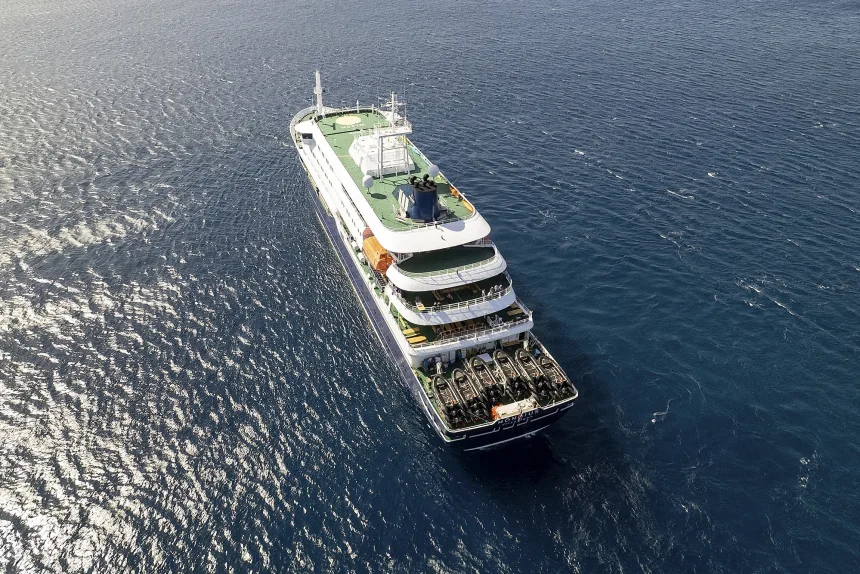
Cape Verde – Three people have died and several others are ill following a suspected hantavirus outbreak aboard a cruise ship travelling from Argentina to Cape Verde, a group of islands off the coast of West Africa, prompting questions about how the rare rodent-borne disease managed to spread in such an unusual setting.
The World Health Organization confirmed one hantavirus case and said five more are under investigation. WHO added on Monday that the risk to the wider public remains low, though experts are still trying to piece together how the outbreak occurred on board the vessel.
What is hantavirus? 
Hantavirus is a strain of viruses spread by rodents through their bodily fluids and droppings. People most commonly become infected by inhaling particles from dried rodent droppings, particularly when sweeping them up and causing the particles to become airborne. Infection can also happen by touching contaminated surfaces and then touching the mouth or nose, or through rodent bites and scratches, though the latter is rare.
Only one strain, the Andes virus native to South America, is known to spread from person to person, and even then, this is uncommon.
What are the symptoms?
The disease initially feels like the flu, with patients experiencing fatigue, fever, chills and body aches. Over time, it can damage the heart, lungs or kidneys, leading to severe shortness of breath, organ failure and death.
Hantaviruses found in Europe and Asia cause hemorrhagic fever with renal syndrome, which affects the kidneys and can lead to low blood pressure, internal bleeding and acute kidney failure. Between five and 15 percent of such cases are fatal, according to the US Centers for Disease Control and Prevention.
Hantaviruses found in the Americas cause hantavirus pulmonary syndrome, which attacks the lungs. Nearly 40 percent of those who develop respiratory symptoms may die from this form of the disease, the CDC said.
Is there a cure?
There is no specific treatment. Patients can be given fluids, rest and care for individual symptoms, which makes prevention all the more important. The CDC recommends keeping rodents out of the home by sealing gaps and holes, keeping food sealed and using thick containers with tight lids for garbage.
When cleaning rodent droppings, gloves should be worn, the waste sprayed with a bleach solution and left for five minutes before being wiped up with paper towels and disposed of safely.
How common is it?
Between 60,000 and 100,000 cases of the kidney-affecting form are estimated worldwide each year, with China accounting for roughly half, according to a 2024 study. In the United States, 890 cases were reported between 1993 and 2023, mostly in western states.
The disease drew wider attention last year when Betsy Arakawa, wife of Oscar-winning actor Gene Hackman, died from hantavirus pulmonary syndrome at 65. Investigations at the couple’s New Mexico property found dead rodents and rodent nests in several outbuildings. It is believed she died around a week before Hackman, who was in the advanced stages of Alzheimer’s disease.
How did the cruise ship outbreak happen?
That remains unclear. Dr Charlotte Hammer, an assistant professor and epidemiologist at the University of Cambridge, outlined several possible scenarios.
“It is not entirely uncommon for rodents to hitch a ride on a ship, which could be one possibility,” Hammer said.
She added that given the incubation period of one to eight weeks, passengers could also have been infected when the ship last docked in Argentina, or through person-to-person transmission, which she described as “very unlikely” at this scale.
Dr Scott Miscovich, a family physician and president and CEO of Premier Medical Group, said a thorough sampling of the ship was necessary to get answers.
“All the droplets, all the dust in every room, all the kitchens, all the ventilation systems need to be sampled and then cultured,” he said.
WHO said detailed investigations are underway, including sequencing of the virus.