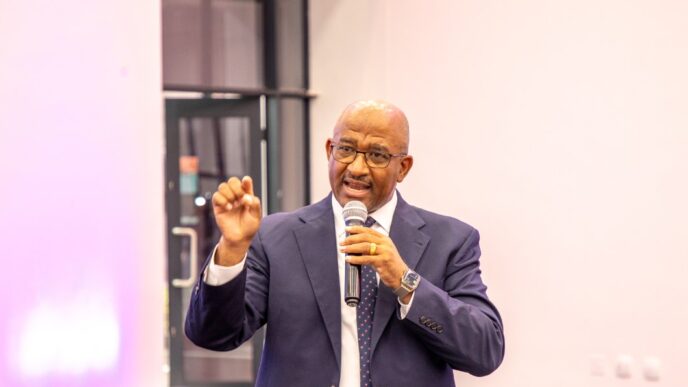


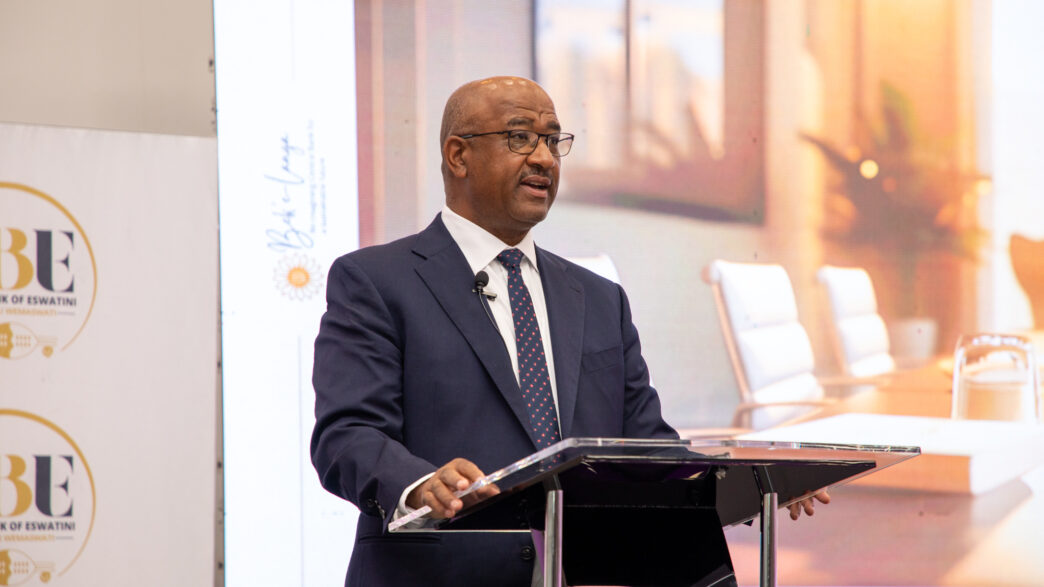
Ezulwini – Central Bank of Eswatini Governor Dr. Phil Mnisi on Thursday delivered his Annual Monetary Policy Statement at the CBE Complex in Mbabane, drawing leaders from the financial sector, government, and academia for the high-profile occasion.
This year’s statement was delivered under the theme “Monetary Policy in a Time of Uncertainty and Heightened Geopolitical Tensions,” reflecting the pressures bearing down on Eswatini’s economy from a rapidly shifting global landscape.
Dr. Mnisi reported that the Kingdom’s banking sector continues to show good growth and strong health, backed by adequate capital reserves. The sector maintained a strong liquidity position, well above the regulatory minimums of 22.0% for commercial banks and 20.5% for development and savings banks. 
The Governor warned, however, that Eswatini’s deep economic ties with South Africa mean that electricity supply constraints, exchange rate volatility, and shifts in regional financial conditions continue to spill over into the domestic economy, making forward-looking risk assessment and cross-border surveillance increasingly important.
On the trade front, the CBE announced it is partnering with the Eswatini Revenue Service and Common Monetary Area members to introduce a Trade Verification System. The system will automate the matching of customs declarations with cross-border foreign exchange transactions, with the aim of combating trade mis-invoicing, illicit financial flows, and foreign exchange leakages.
Dr. Mnisi closed his statement with six key takeaways. Global economic resilience is being heavily tested, with forecasts revised downwards due to the Middle East conflict, ongoing trade tensions, rising national debt levels, and fiscal deficits. Eswatini’s economy, owing to its open nature, remains vulnerable to these negative global macroeconomic dynamics despite showing robust growth in the past year.
The banking sector continues to grow in both size and number of participants, with credit extension remaining supportive of economic growth. Inflation in Eswatini is expected to trend upwards in the near term, driven by global oil prices pushing fuel costs higher and feeding directly into transport and food prices.
Following two years of largely accommodative monetary policy, Dr. Mnisi said higher inflation expectations have increased the likelihood of interest rates rising in the near to immediate term. The Bank, he said, is watching global developments closely and will respond accordingly to safeguard the country’s price and financial stability mandate.