

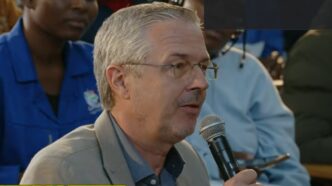
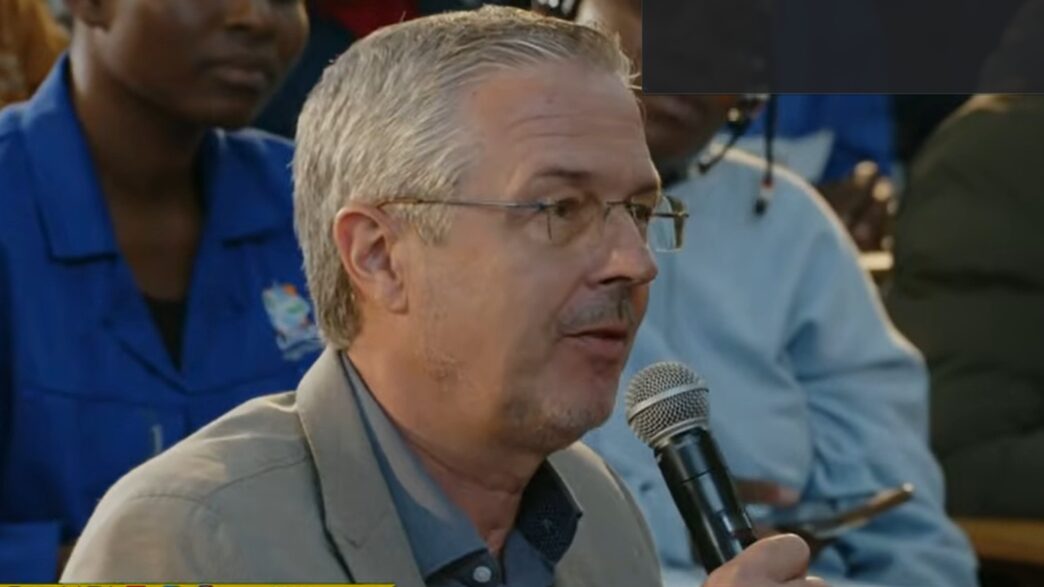
Luyengo – European Union (EU) Ambassador to Eswatini, Karsten Mecklenburg, stated that despite the country’s dire energy situation, Eswatini has the ability to switch to 100% sustainable renewable energy.
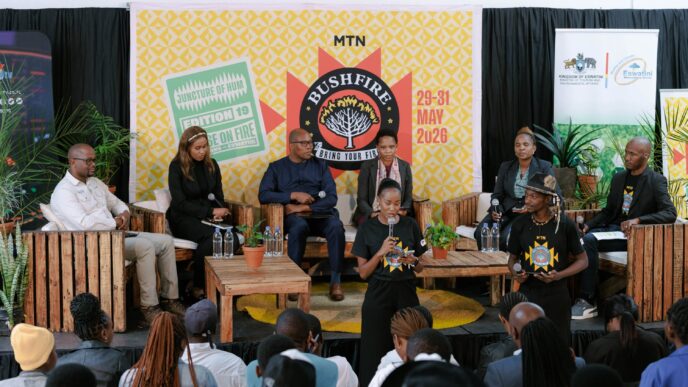
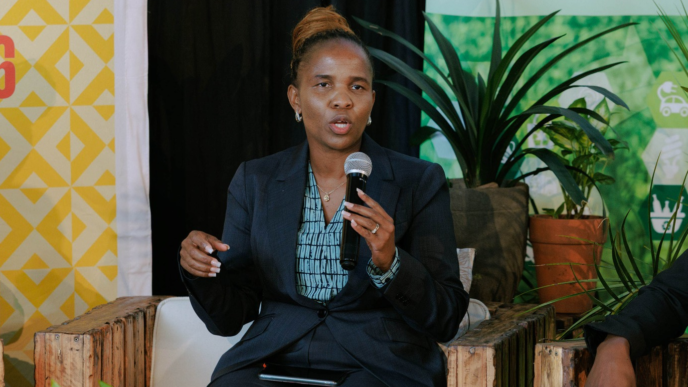
He was commenting during the panel discussion of the 2026 MTN Bushfire Bring Your Fire Live Dialogue themed “Powering the Future: Balancing Development, Sustainability and Access”, held at the University of Eswatini Lunyengo Campus on Tuesday where it was argued that the 70% electricity that the country imports was not sustainable.
“Eswatini has a huge potential. You could become 100% renewable. I’m convinced of that. So, when and how? We don’t know. But technology is advancing rapidly,” he said. 
Mecklenburg stressed that his remarks did not undermine the nation’s sovereignty or force the EU’s viewpoints on it.
“So, I do accept that from a moral perspective, I, as the European, I’m not telling you you cannot do thermal because you will then respond, ‘Yeah, but you have polluted the globe for the last 50 years. ” So now it’s our turn. But is it smart? Because thermal energy production is the technology of the present, I would rather argue for the past. So renewable energy production is evolving rapidly,” the ambassador said.
Eswatini’s ambitions to build a 300 MW thermal power plant are well known. However, as financiers stop funding coal projects, the United Nations Climate Action is pressuring member nations, including Eswatini, to cut emissions from fossil fuels and achieve the challenging goal of becoming carbon neutral by 2050.
This year marks the 50th anniversary of Eswatini and the EU’s cooperation, which has included collaboration in a variety of industries, including energy. This collaboration may also be observed in the energy transition to renewable energy push, where the EU is assisting the government through the Renewable Energy Association. It is meant to support off-grid options while also providing vulnerable people with access to energy.
The EU is known to be an advocate for global renewable energy absorption. It is fairing well towards the net zero target of 2050. But despite that, Mecklenburg said they still grapple with turning-off fossil fuel power production and that Eswatini cannot beat themselves hard about that too.
He said even in the EU, some member states still do not produce their own energy. But they now have integrated grids, and the EU is about 50 per cent renewable energy towards the 2050 target.
The ambassador said he was aware importing electricity from South Africa and Mozambique was not sustainable for Eswatini in the long run.
“Not a lot of EU countries are producing their own energy. We have integrated grids. We have combined challenges that we try to address. Some countries don’t produce any; others export. We have a combination of nuclear and renewables.
“Yes, we still also have thermal production, but our aim is to get to net zero in 2050. It is a challenge. This is a big political discussion. We are now at 50% renewable production,” he said.
Mecklenburg advised Eswatini to not necessarily aim for a rapid 100% energy independence but continue to take advantage of the constructive relationship the country has with its neighbours.
“You just need to put all your assets in the basket and look at it. So, because South Africa is also working on the energy challenge, looking a lot into a renewable future. So, Eswatini has huge potential; you could become 100% renewable,” he said.
He stated that a battery solution currently in development could soon resolve the challenges associated with solar production on the grid.
Mecklenburg urged Eswatini to combine the country’s hydro capability with other alternatives.
“You develop biomass production. You allow independent producers to link to the grid. You look into geothermal energy. So there is a huge potential, and it’s something where the young generation is also called into looking into and engaging,” he said.