

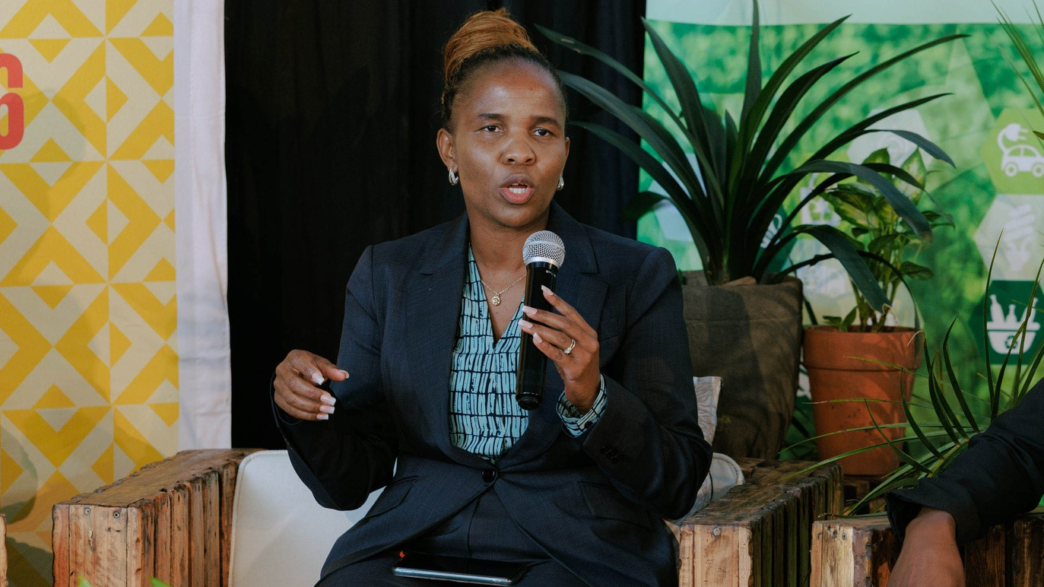
Luyengo – Only about 12% of the about 1.2 million population of Eswatini is not yet connected to the electricity grid with the national electricity access rate at 88%, the Eswatini Electricity Company (EEC) head of environment unit, Dr Constance Van Zydam said.
Dr Van Zydam was speaking at the MTN Bushfire Bring Your Fire live dialogue at the University of Eswatini Luyengo Campus on Tuesday as a panellist assuring that frantic steps are being made to attain a 100% access rate.
“As a country we are currently sitting at 88% access rate like we only have 12% of the communities in Eswatini that are not connected to the grid and the company is working tirelessly to ensure that that portion of the of the country is also connected to our national grid,” she said. 
Although Dr Van Zydam did not state the EEC’s completion rate timeline, she did let in on that most of the country’s electricity was still imported with at least over 70% of electricity imported from neighbouring countries, South Africa and Mozambique.
Domestic electricity generation is sitting at 30% which is mainly from hydro and solar power. EEC has four hydropower stations and a 10 MW solar plant feeding into the national grid.
Meanwhile, the UN Framework Convention on Climate Change (UNFCCC) which calls for clean and renewable energy promotes individual nation’s electricity generation plans to be energy secure.
Eswatini Meteorological Service director, Duduzile Nhlengethwa-Masina said the country is working towards upscaling clean and renewable energy.
“And it’s not only that, but it’s also issues of efficiency as well. Let us use what we have more efficiently so that the small we have can go a long way,” she said.
Environmentalist, Zandisile Howe from the Eswatini Environmental Authority, urged mindfulness in plans of increasing production and consumption to the detriment of accumulating environmental waste.
“And more waste in our environment means more pollution, which then also degrades our ecosystems. Yet, these are the ecosystems that help us even adapt to climate change when we have wetlands out there that protect us from floods or even release water during droughts,” Howe said.
“But now with this development, if it’s not interlinked with environmental protection. We stand a lot to lose.”