

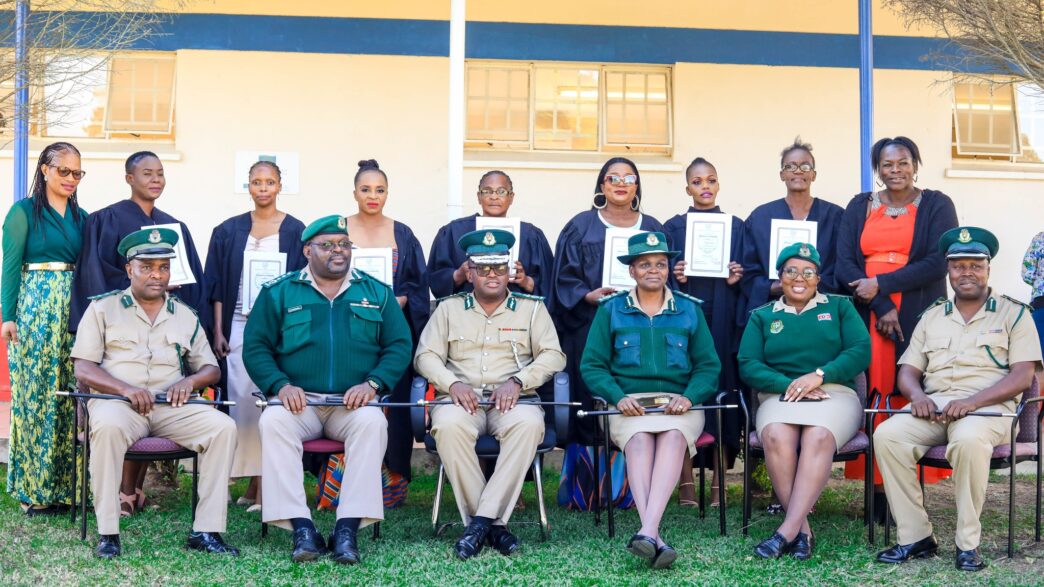
Manzini – Seven women from Mawelawela Correctional Centre graduated from a Basic Computer Skills programme during a ceremony held at Southern Africa Nazarene University (SANU) in Manzini on Thursday.
The seven-month programme, conducted by Beyond the Walls, ran from April to November 2025 and equipped the participants with foundational digital literacy skills aimed at preparing them for reintegration into society and improving their employment and business prospects after incarceration. Some of the graduates have already completed their sentences.
Beyond the Walls Director Sabelo Mlangeni described the occasion as a celebration of resilience, innovation, service and dedication. “Today, we celebrate innovation, service, dedication and resilience values that truly define the work we do at Beyond the Walls,” he said. 
Mlangeni noted that the graduation coincided with Women’s Month in the Church of the Nazarene, making it even more meaningful. “This marks the fourth cohort to benefit from the Beyond the Walls programme, which began in March 2019. It has been a journey of creativity and learning, driven by our mission to ensure that no one is left behind,” he said.
He pointed to the Digital Readiness Assessment Report 2024, conducted by the United Nations Development Programme (UNDP) in partnership with the Ministry of ICT, which found that internet usage in Eswatini stands at about 57.6 percent while computer literacy remains low, especially in rural communities.
“The report highlights significant gaps in digital competencies. While mobile phone use is widespread, actual computer skills such as typing, file management and software use remain limited,” Mlangeni said, adding that Beyond the Walls was committed to bridging the digital divide and reaching vulnerable communities through skills development. “At Beyond the Walls, our mission is clear: to reach the unreachable. That is our pride and joy,” he said.
He also thanked key stakeholders who supported the programme, including the United States Embassy in Eswatini, SANU and His Majesty’s Correctional Services (HMCS). “The US Embassy Eswatini were our very first funders, believing in our mission even before it began. I still use the equipment they donated to this day,” he said.
Speaking on behalf of the graduates, Nokulunga Simelane expressed gratitude to HMCS, Beyond the Walls and SANU for the opportunity to transform their lives through education. “We entered this programme with fear and uncertainty, but today we stand proud and confident because we have gained knowledge that will help shape our futures,” she said.
Simelane said the training had restored hope among the inmates and given them confidence that they could still contribute positively to society. “We are grateful for the patience, encouragement and support we received from our instructors and everyone involved. These computer skills are more than just lessons to us; they are tools for rebuilding our lives, supporting our families and becoming productive members of society once again,” she said, adding that the programme also taught them discipline, teamwork and perseverance.
Deputy Commissioner General Bongani Khumalo applauded Beyond the Walls, SANU, the US Embassy and the Ministry of Education for collaborating with HMCS to empower inmates through education. He celebrated the seven-year partnership between Beyond the Walls and HMCS, describing it as impactful and life-changing. “We are grateful to all partners who continue to support rehabilitation programmes within correctional facilities. Education and skills development are key in helping inmates successfully reintegrate into society,” he said.
Khumalo also thanked the Church of the Nazarene for regularly visiting correctional facilities to share the Word of God and donate toiletries to inmates.
SANU Vice Chancellor Dr. Faith Mlotsa-Mngomezulu said the university valued skills development initiatives that promoted relevance, inclusivity and human capital growth. She noted that SANU’s Continuing Education Department was committed to providing transformative education and micro-credentials that promote self-empowerment and economic growth. “This digital capacitation should be the first step towards minimizing the digital divide in our society. It should catapult a desire to pursue further training in the digital space,” she said.
Dr. Mlotsa-Mngomezulu encouraged the graduates to embrace lifelong learning and adapt to the rapid technological changes brought by the Fifth Industrial Revolution and artificial intelligence. “Embrace digital skills and remain relevant. Most of all, always remember that the fear of the Lord is the beginning of wisdom,” she said, quoting Proverbs 9:10.
Minister of Education and Training Owen Nxumalo commended HMCS officers for advancing His Majesty King Mswati III’s vision of rehabilitation through education and skills development, saying such programmes would help former inmates earn a living or secure employment after incarceration. He encouraged HMCS to continue supporting former inmates as they transition back into society. “Continue to monitor and guide them as they seek employment and business opportunities outside correctional centres,” he said.