

Addis Ababa – Lesotho has called for greater African participation in shaping global discussions on cybersecurity, emerging technologies and the application of international law in cyberspace, amid growing concerns over the impact of cyber operations on civilians during armed conflict.
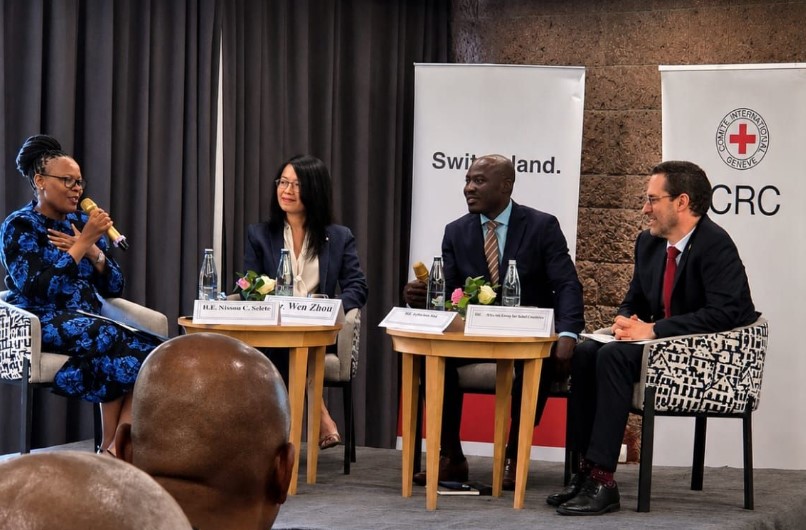
The call was made by Ambassador Ntšiuoa Sekete, Lesotho’s Ambassador to Ethiopia and Permanent Representative to the African Union and the United Nations Economic Commission for Africa, while moderating a high-level discussion on the protection of civilians in the use of information and communication technologies during armed conflict.
The event, held in Addis Ababa, formed part of the Global Initiative to Galvanize Political Commitment to International Humanitarian Law and was organised by the Embassies of Switzerland and Ghana in cooperation with the International Committee of the Red Cross. 
The discussion brought together Member States, legal experts, humanitarian actors and international partners to examine the humanitarian and legal implications of emerging technologies and cyber operations during armed conflict.
Ambassador Sekete said the protection of civilians, civilian infrastructure and essential services must remain at the centre of international and African efforts to address the impact of rapid technological advancements. She also pointed to Lesotho’s commitment, as a current member of the African Union Peace and Security Council for the period 2026 to 2028, to advancing the protection of civilians, promoting compliance with International Humanitarian Law and strengthening humanitarian protection frameworks across the continent.
She called for stronger cooperation and capacity-building among African states to safeguard critical infrastructure and vulnerable communities during conflict situations, noting that Africa’s experiences with armed conflict, humanitarian crises and displacement make the need for stronger legal and policy frameworks all the more urgent, particularly to protect women and children.
The panel featured contributions from experts and representatives from several countries and institutions, including Luxembourg and Mexico, reflecting growing international concern over the protection of civilians in an increasingly digitised conflict environment.
The discussions also recognised the growing African leadership behind the Global IHL Initiative, including the active support of Sierra Leone in its capacity as Chair of the African Union Peace and Security Council for June 2026.
Bruce Biber, Head of Delegation of the International Committee of the Red Cross to the African Union, said the protection of civilians could not be compromised regardless of how conflict environments change.
“Even in the evolving landscape of cyber operations and emerging technologies, the protection of civilians must remain non-negotiable. International Humanitarian Law continues to provide essential safeguards that all parties to conflict must respect,” he said.
Switzerland’s Ambassador Riccarda Chanda reaffirmed the importance of collective international responsibility in preserving humanitarian principles amid rapid technological transformation.
“As technologies evolve, our commitment to humanity and the protection of civilians must evolve with equal determination. Respect for International Humanitarian Law is essential to ensuring that innovation does not come at the expense of human dignity,” she said.