

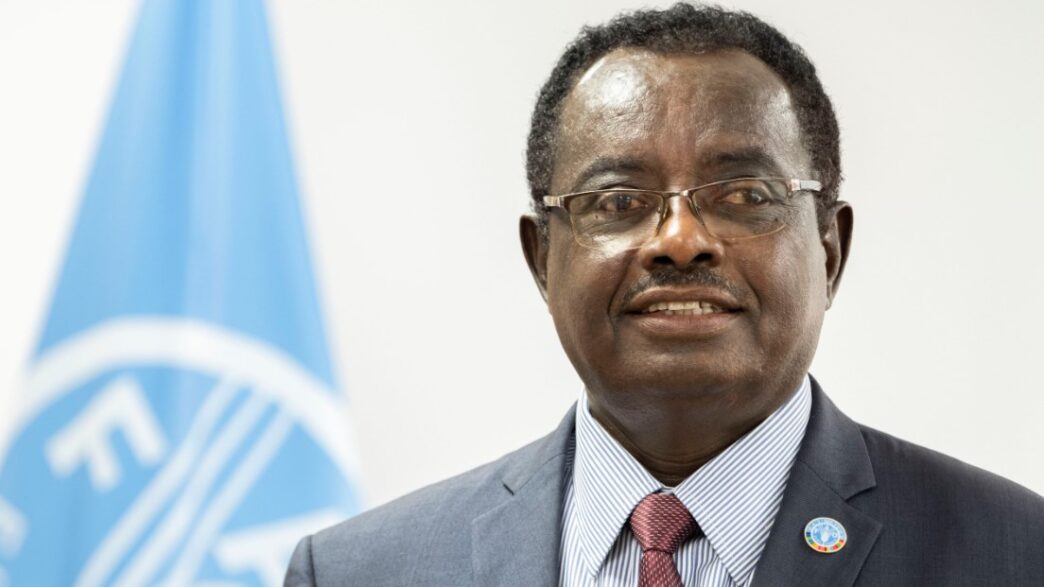
MBABANE – Abebe Haile Gabirel, Assistant Director General and Regional Representative for Africa at the United Nations Food and Agriculture Organization, has called for practical and collective leadership to confront worsening food insecurity across the continent ahead of the 34th Session of the FAO Regional Conference for Africa.
The conference will be hosted by the Government of the Islamic Republic of Mauritania in Nouakchott from 13 to 17 April 2026, bringing together ministers of agriculture and related portfolios from across Africa to translate political commitments into concrete priorities.
Gabirel warned that global shocks are tightening their grip on Africa’s agrifood systems. Trade disruptions continue to raise the cost of fertilizer, fuel and freight. Climate variability is destroying harvests, while conflict forces farmers off their land. Despite these pressures, he noted that the most decisive choices about Africa’s agrifood future are made by African governments through national budgets, regulatory frameworks and investment strategies. 
According to the 2025 State of Food Security and Nutrition in the World Report, around 307 million people in Africa were undernourished in 2024, more than one in five people on the continent. Since 2010, the prevalence of undernourishment has increased by nearly five percentage points, reversing earlier progress. The cost of a healthy diet has risen to an average of USD 4.41 per person per day in purchasing power parity terms, placing proper nutrition beyond the reach of most households.
Gabirel pointed to structural weaknesses, including chronic underinvestment in rural infrastructure, fragmented markets and weak extension services. Agrifood systems remain highly exposed to external shocks, with smallholders, pastoralists, women and young people bearing the brunt despite being central to food production.
He noted that Africa holds about 60 percent of the world’s uncultivated arable land and has the youngest population of any region, yet institutional and investment alignment remains a challenge.
Government expenditure on agriculture reached approximately USD 16 billion in 2022, continuing an upward trend but still far below sector needs. Credit to agriculture stands at roughly 2 percent of total bank lending, even though the sector employs nearly half of the labour force. Gabirel called for stronger risk sharing policy frameworks, more effective use of blended finance and public investment designed to attract private capital, especially for small and medium agrifood enterprises.
On innovation, he said digital advisory services, improved seed varieties, smart farming practices and better market information systems can increase productivity and reduce losses. However, these tools often remain limited to pilot projects or commercial scale operations, leaving many smallholders without access to extension, credit and technology.
He further stated that resilience must be built into every investment, from irrigation and storage to market infrastructure and value chains, given that climate variability and economic volatility are ongoing realities.
The regional conference will provide a platform for FAO members in Africa to set priorities and define the support required. Ministers are expected to align national agricultural investment plans with agrifood system outcomes and design financing mechanisms that reach smallholders and agribusinesses currently excluded.
Gabirel said hunger and malnutrition are the result of policy choices related to budgets and priorities, and can be reversed through deliberate action taken by governments across the continent.