


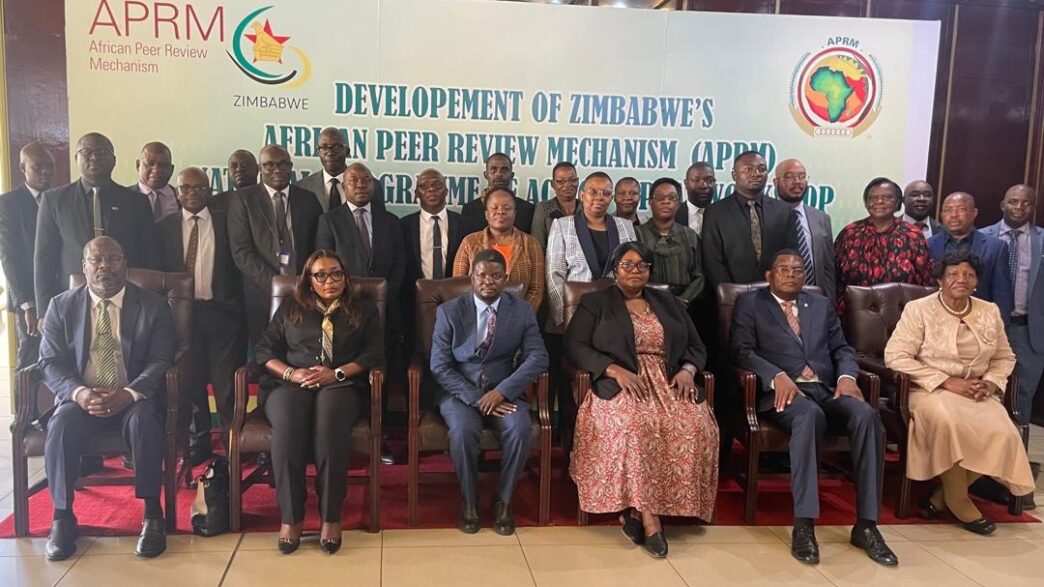
HARARE – Zimbabwe has launched a four-day technical workshop under the African Peer Review Mechanism (APRM) aimed at developing its National Programme of Action (NPoA). The initiative seeks to turn the findings of the country’s Targeted Review Report into actionable policies that support sustainable national development.
Speaking at the opening on behalf of Zimbabwe’s APRM Focal Point and Secretary for Foreign Affairs and International Trade, Chief Director for Multilateral Affairs, Mrs. Petronellah Nyagura, said the country’s engagement with APRM is grounded in law and good governance.
“Section 9 of the Constitution of Zimbabwe mandates the State to enact and implement policies and legislation that ensure efficient, transparent, and accountable governance at all levels,” Nyagura said. 
The APRM process assesses Zimbabwe’s economic and governance systems in line with Africa’s peer review tradition. Dr. Rachel Mukamunana, Director for Country Reviews in the APRM Directorate, said the workshop will help align the NPoA with Zimbabwe’s National Development Strategy II (NDS2), embedding APRM reforms into national planning and budgeting frameworks.
She outlined four key principles for implementing APRM results: political ownership at the highest level, which ensures sustained leadership to drive reforms across institutions; realism and prioritisation, meaning reforms should be sequenced and matched with available capacity and resources; and accountability for results, requiring clear institutional mandates, performance indicators, and monitoring frameworks to track impact.