


New Delhi – India’s Parliament opened debate on Thursday on a landmark bill that would reserve one-third of legislative seats for women, a move that could trigger a sweeping redrawing of voting boundaries and sharpen political tensions across the country.
The bill, if passed, would fast-track a 2023 law mandating 33% reservation for women in Parliament and state legislatures. It would mark one of the most consequential shifts in political representation since India’s independence, and could widen female participation in a system where women remain significantly underrepresented.
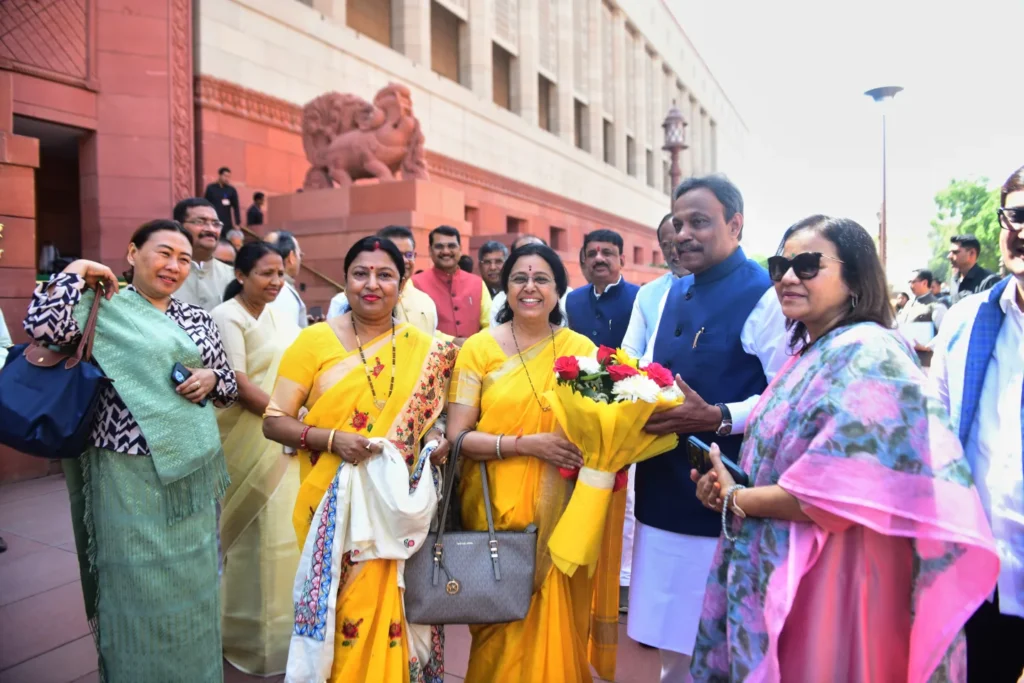
Women currently hold only about 14% of seats in the lower house of Parliament, despite India already mandating that one-third of seats be set aside for women in local governance bodies. 
The quota is, however, linked to a separate and controversial bill that would change voting boundaries, a process that could increase the number of seats in the lower house from 543 to roughly 850.
While there appears to be broad bipartisan support for putting more women into Parliament, opposition parties have raised concerns over the boundary changes, warning they could tilt the political balance in favour of Prime Minister Narendra Modi’s Bharatiya Janata Party.
The bills are being taken up during a three-day special session of Parliament and will require a two-thirds majority in both houses to pass. Modi’s ruling National Democratic Alliance holds 293 seats, while a two-thirds majority would require 360.
Several Asian countries, including India’s neighbours Nepal and Bangladesh, have similar quotas for women in national legislatures.
Women’s rights advocate Ranjana Kumari said the move would make India’s “democracy truly representative” and force political parties to field more female candidates.
“(The) door is little open. Women will enter and fill the room slowly,” Kumari said.
For many young Indian women, the change carries symbolic weight. Pranita Gupta, a 23-year-old law graduate, said it will instil “a sense of confidence that we can participate in politics and we can be part of Parliament not only as an exception but as well as a norm.”
The rollout of the quota is tied to a population-based redrawing of voting boundaries using data from the last completed census in 2011. Opposition parties warn that basing constituencies on population could shift political power toward faster-growing northern states, while diminishing the parliamentary representation and influence of southern regions. They also argue it could benefit Modi’s party, which commands strong support in the north.
India’s Constitution mandates that parliamentary seats be allocated by population and revised after each census, but boundaries have not been redrawn since the 1971 census, as successive governments delayed the process over concerns about uneven population growth.
Modi’s party pushed back on the criticism, saying it would implement a uniform 50% increase in seats across all states to maintain proportional representation. The draft legislation, however, does not explicitly spell this out.
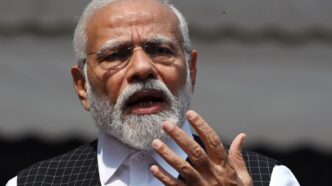
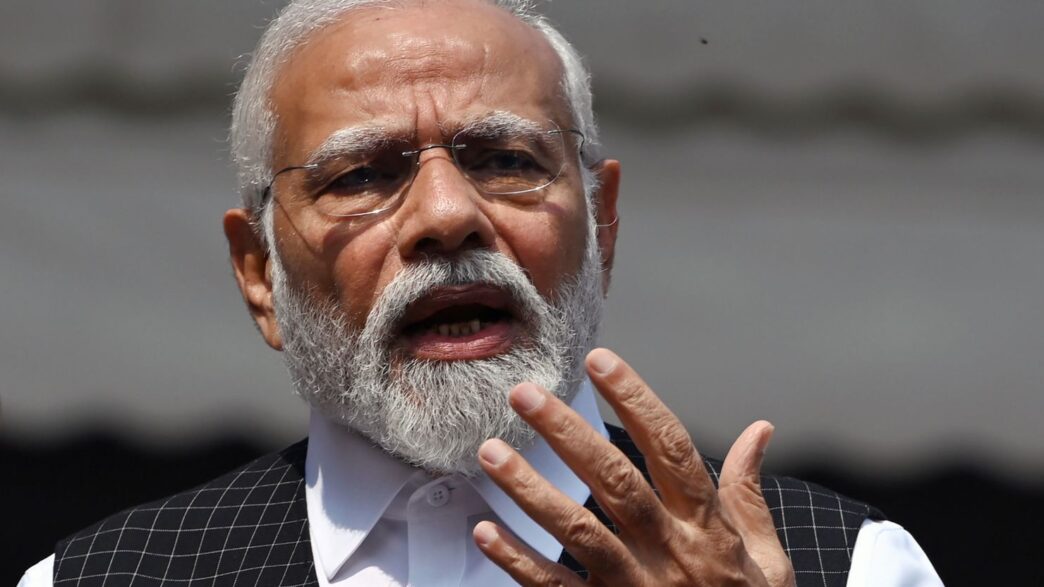
Speaking in Parliament, Modi said the legislation is “not discriminatory” and “will not do injustice to anyone.”




![Law enforcement personnel detain a person of interest in Washington, DC, US April 25, 2026 [Donald J Trump via Truth Social/Handout via Reuters]](https://swazi24.com/wp-content/uploads/2026/04/2026-04-26T034438Z_1693645503_RC2RWKAFQQCJ_RTRMADP_3_USA-TRUMP-DINNER-1777175670-332x249.webp)
![Law enforcement personnel detain a person of interest in Washington, DC, US April 25, 2026 [Donald J Trump via Truth Social/Handout via Reuters]](https://swazi24.com/wp-content/uploads/2026/04/2026-04-26T034438Z_1693645503_RC2RWKAFQQCJ_RTRMADP_3_USA-TRUMP-DINNER-1777175670-688x387.webp)