



A PhD research scholar whose work spans energy economics and environmental policy will speak at the Energies 3.0 Conference, a virtual international event running from April 22 to 24, 2026, bringing data-driven analysis of the barriers blocking energy access across developing economies, including those in sub-Saharan Africa.
The conference, organised by the Green Institute of Nigeria, runs daily from 10:00 AM to 4:00 PM online. Registration is open at www.greeninstitute.ng/energies2026.
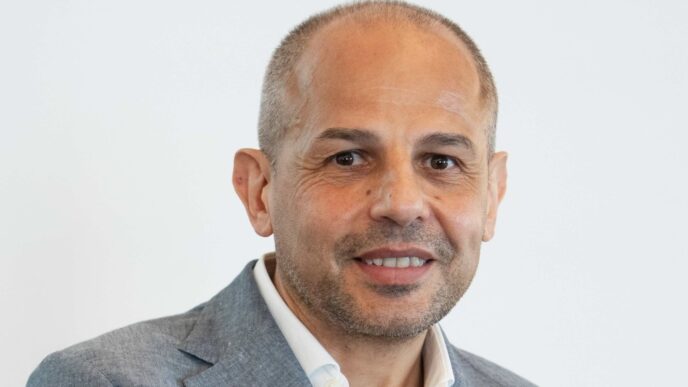
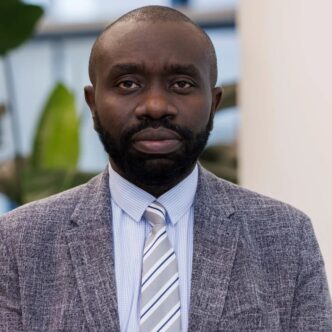
Mr. Litu Sethi is a PhD research scholar in the Humanities and Social Sciences Department at the National Institute of Technology Rourkela in Odisha, India, where he works under the supervision of Prof. Narayan Sethi. His research interests cover energy economics and environmental economics, and he has published in journals including Sustainable Development, Renewable Energy, Energy, Transport Policy and Economic Change and Restructuring, among others. 
Sethi’s analysis of which renewable energy innovations hold the greatest promise for developing economies begins with a stark picture of where things stand. Around 730 million people worldwide still lacked access to electricity in 2024, according to SDG7 tracking data from the International Energy Agency and the World Bank, while broader estimates of energy poverty suggest that between 685 million and over one billion people globally may be living with inadequate energy services. Approximately 75 to 80 percent of those without electricity live in sub-Saharan Africa.
Countries such as Nigeria and the Democratic Republic of Congo illustrate the scale of the problem, with electricity access gaps of roughly 87 million and 80 million people respectively, most of them in rural and underserved areas.
Sethi said decentralised renewable energy technologies are emerging as one of the most promising pathways forward, particularly solar mini-grids, hybrid renewable systems that combine solar generation with battery storage, and community-based microgrids.
He said these systems work because they bring energy infrastructure directly to communities, reducing transmission costs, improving supply reliability and enabling productive uses of electricity such as agricultural processing, small-scale manufacturing, digital connectivity and local entrepreneurship.
However, he was clear that technology alone will not be enough.
“Africa’s energy challenge is not a lack of renewable resources; it is the persistent gap between global climate ambition and the financing required to deliver universal energy access,” he said.
Sethi pointed to rising sovereign debt levels, constrained fiscal capacity and limited access to affordable capital as the primary brakes on energy infrastructure investment across African economies. He said innovative financing mechanisms are becoming just as important as technological advances, citing pay-as-you-go solar platforms, digital energy payment systems, results-based financing and blended finance structures that combine development finance with private capital.
On the role young researchers can play in driving community-centred energy transitions, Sethi said early-career scholars must go beyond the traditional boundaries of academic work.
He said research that evaluates how mini-grids, off-grid solar solutions and renewable energy cooperatives affect rural livelihoods, agricultural productivity, employment and access to essential services can provide valuable insights for policymakers and development institutions.
He also pointed to the human cost of energy poverty, noting that continued reliance on wood, charcoal and kerosene contributes to millions of premature deaths annually from household air pollution, while also limiting educational opportunities, healthcare delivery and economic productivity in low-income communities.
Sethi said young scholars should engage directly with local communities, development institutions and policymakers to co-design energy solutions that fit local realities, and that they should translate research findings into actionable policy recommendations.
He said addressing energy poverty in Africa is ultimately not a question of resource availability but of financing, institutional capacity and global investment priorities, noting that sub-Saharan Africa possesses abundant solar, wind and hydro potential yet receives disproportionately low investment relative to its energy access needs.