

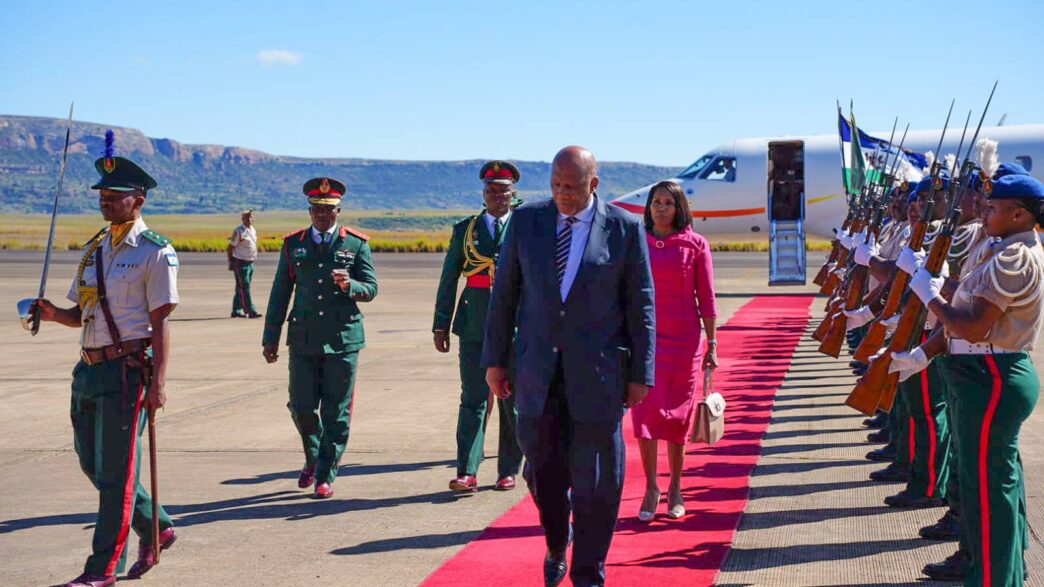
Maseru – Their Majesties King Letsie III and Queen Masenate Mohato Seeiso have returned safely to the Kingdom of Lesotho after attending royal celebrations in Eswatini over the weekend.
The royal couple travelled to the Kingdom of Eswatini at the invitation of His Majesty King Mswati III to join in marking his 58th birthday alongside the commemoration of 40 years on the throne, making him one of Africa’s longest-serving monarchs. The celebrations drew dignitaries, traditional leaders and heads of state from across the continent.
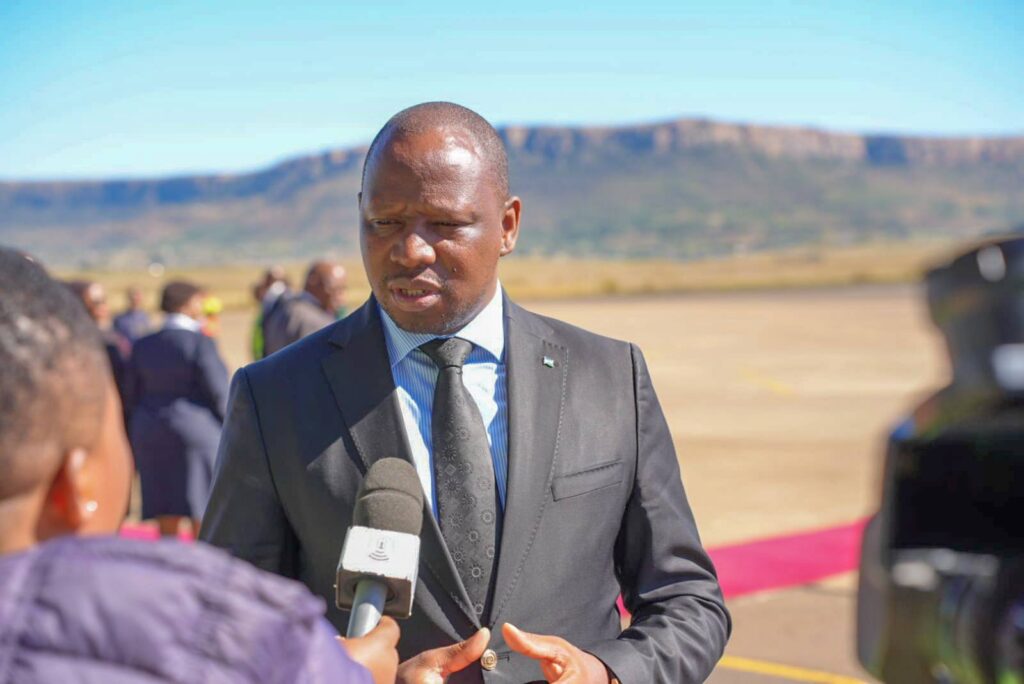
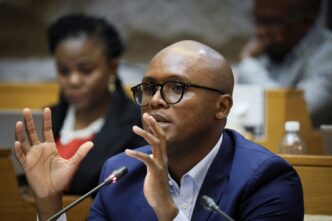
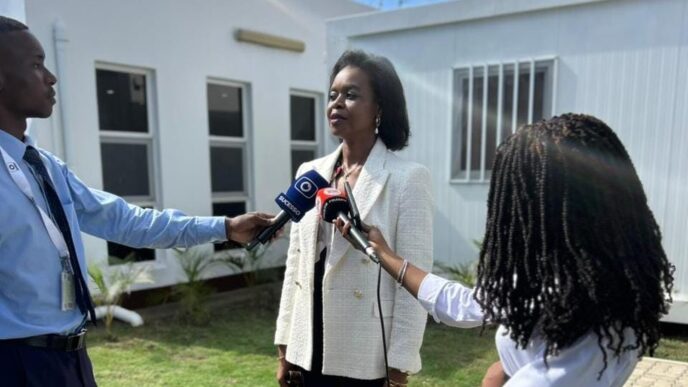
Lesotho’s Minister of Foreign Affairs and International Relations, Lejone Mpotjoane, described the event as a resounding success upon the royal couple’s return. He said the festivities were rich in cultural expression, featuring traditional ceremonies, performances and symbolic rituals that showcased Eswatini’s heritage and unity. 
A significant moment during the visit was the official opening of the Ezulwini Palazzo International Convention Centre, a major infrastructure development expected to boost Eswatini’s capacity to host international conferences and stimulate economic growth through tourism and investment.
Minister Mpotjoane noted that King Letsie III played a prominent role during the celebrations, delivering a keynote address on behalf of African monarchs. In his speech, the King spoke about the importance of preserving cultural identity, strengthening unity among African nations and promoting sustainable development through traditional leadership.