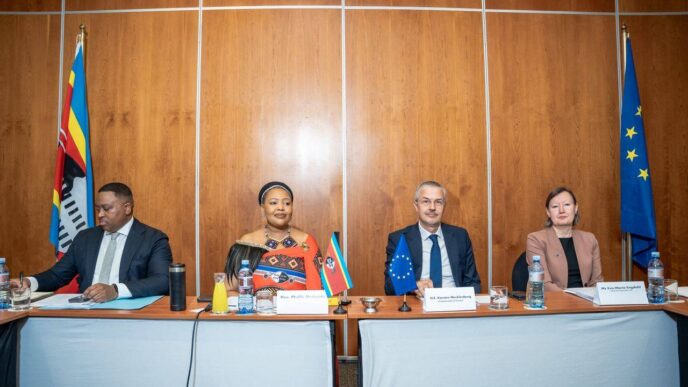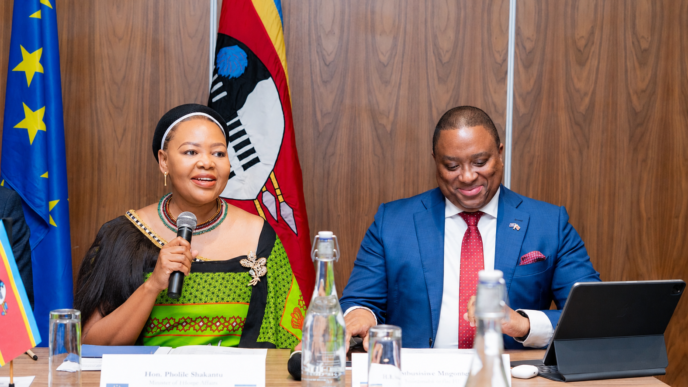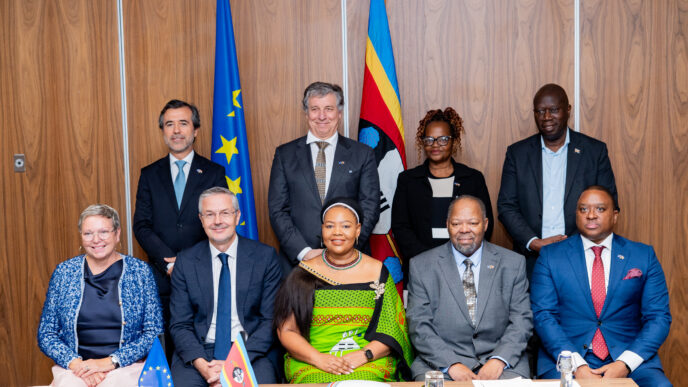


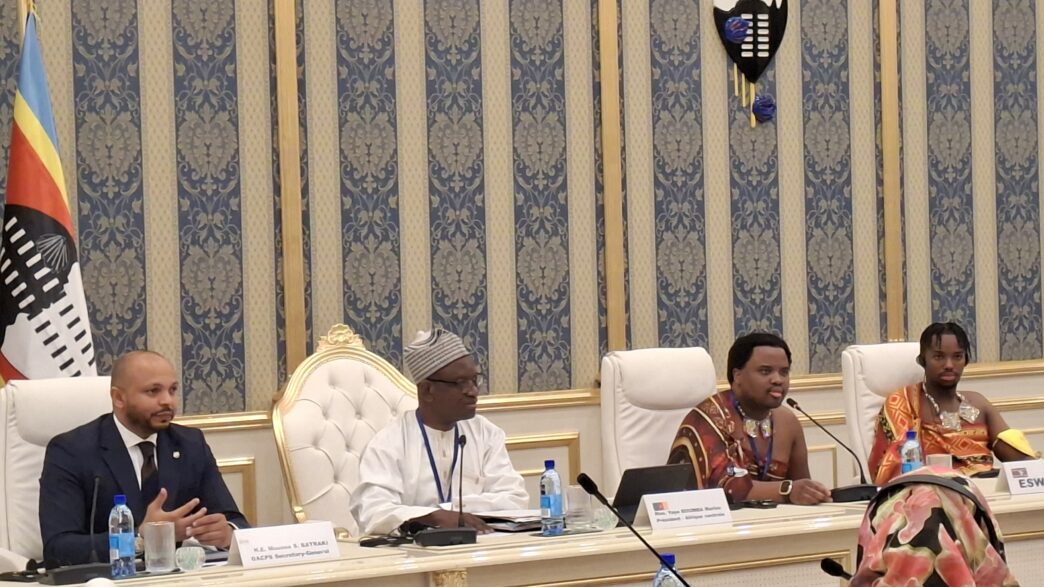
Ezulwini – The Kingdom of Eswatini on Thursday played host to the Organisation of African, Caribbean and Pacific States (OACPS) Central Africa Region Parliamentary Group Meeting, held at the ICC Ezulwini Palazzo in the Ezulwini Valley, with senior officials and parliamentarians gathering to discuss the future direction of the organisation and the implementation of the Samoa Agreement.
The meeting, which ran from 10h00 to 12h00, brought together HRH Prince Lindani, who represents the Eswatini Parliament at the OACPS, Prince Saziwengaye, Hon. Yaya Doumba Marius of the Republic of Cameroon, who chairs the Central Africa Regional Parliamentary Group, and OACPS Secretary-General H.E. Moussa Saleh Batraki. The session was convened ahead of the broader African regional parliamentary assemblies scheduled to take place in the Kingdom.
HRH Prince Lindani was the first to address delegates, telling them he had not originally been scheduled to be part of the meeting but wanted to personally welcome the group to Eswatini. He said that the day before the meeting, he had accompanied the Secretary-General, the Speaker of Parliament, the President of the Senate, ministers and other officials on a visit to the convention centre to inspect preparations for the gathering. 
“As the host nation, we are grateful that after a few disturbances which we’ve had as an organisation, we are now able to come together once again just to brainstorm and discuss how we can take this organisation forward, especially as a region, as the Central African region,” Prince Lindani said.
He told delegates that the Central Africa group held the distinction of being the first to use the ICC Ezulwini Palazzo facility for this series of regional sessions, extending his congratulations to them for that.
“I hope the deliberations which we are going to have today are going to be fruitful and aligned in the way in which we want this organisation to grow. We are all interested in seeing the organisation grow. We want to see it grow in mighty leaps and bounds,” he said.
Prince Lindani also reminded delegates of the major OACPS summit that had taken place just a couple of months earlier in Malabo, Equatorial Guinea, where a wide range of topics were discussed, including resource mobilisation. He noted that His Majesty King Mswati III, in his capacity as chairman of the resource mobilisation committee, had been instrumental in raising significant funds for the organisation at that summit.
He closed his remarks by expressing hope that delegates had rested well and were ready to produce “tangible solutions for this organisation so that it can get to where we all wanted it to be” by the time the broader meetings began over the following days.
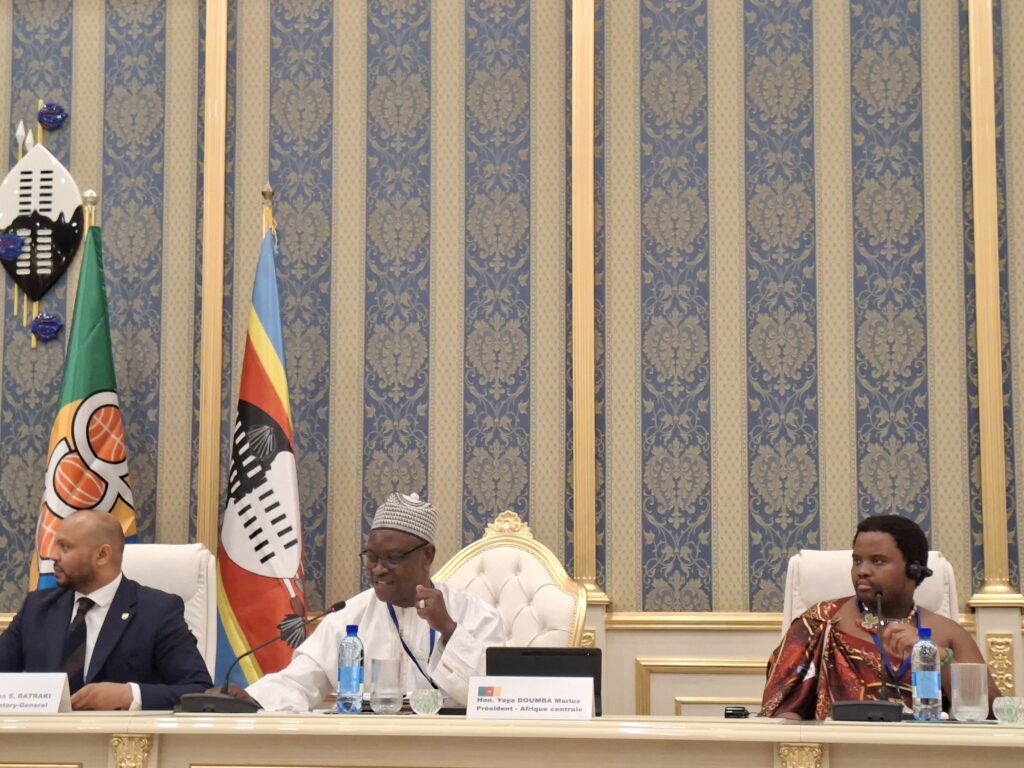
Hon. Yaya Doumba Marius, the group’s chair, opened proceedings formally after Prince Lindani’s welcome, thanking the host nation on behalf of the Central Africa delegation. He extended particular gratitude to H.E. Batraki for his presence, describing the meeting as the first in-person session with the Secretary-General since he assumed office.
“Excellence, we thank you for your availability and we look forward to hearing your remarks,” Hon. Doumba Marius said, before reminding delegates of the translation channels available, with French on channel two and Portuguese on channel three. He called on delegates to be precise in their contributions, saying they had limited time to deliberate on essential issues for the region and to identify common priorities that would guide their engagement going forward.
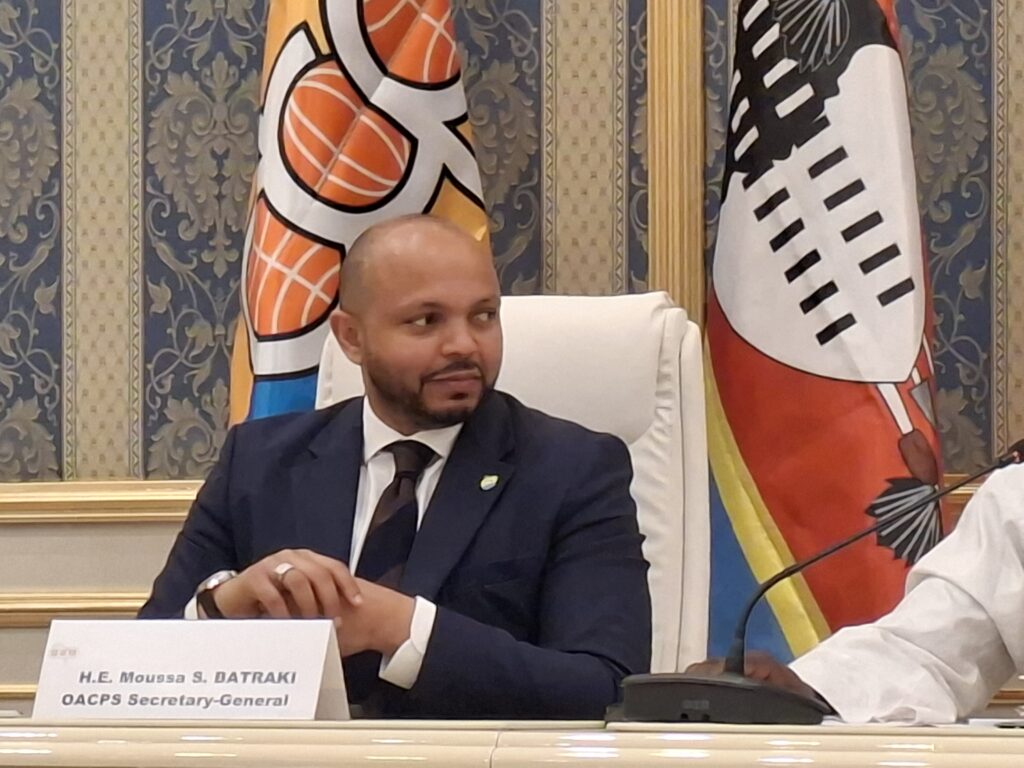
OACPS Secretary-General H.E. Moussa Saleh Batraki then took the floor, welcoming delegates to what he described as a meeting organised ahead of the ACP-EU regional parliamentary assemblies. He thanked the Eswatini Parliament for its hospitality and support in organising the meeting.
H.E. Batraki told parliamentarians that the Samoa Agreement, which governs the OACPS partnership with the European Union, had opened a new chapter in the partnership, one that called for more structured, more balanced dialogue that was better aligned with the concrete priorities of member states.
“The role of parliamentarians is essential because it gives democratic legitimacy to our collective action and allows you to bring international commitments closer to the realities experienced by our populations, while ensuring the indispensable political monitoring of common priorities,” he said.
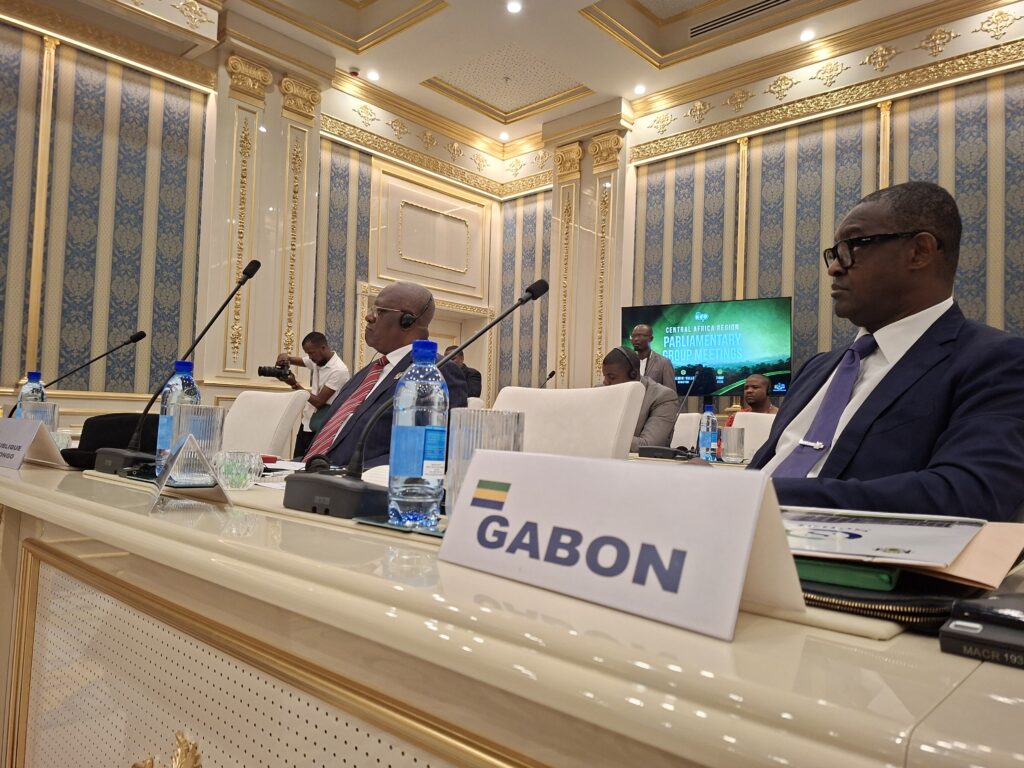
A central issue before the meeting was the question of independent funding for the OACPS Parliamentary Assembly, which H.E. Batraki described as one of the most important items on the agenda. He told delegates that a significant portion of the assembly’s activities was currently being funded by the secretariat and by partners, in particular the European Union, but warned that this arrangement could not on its own provide a durable and sustainable foundation for the parliament’s functioning.
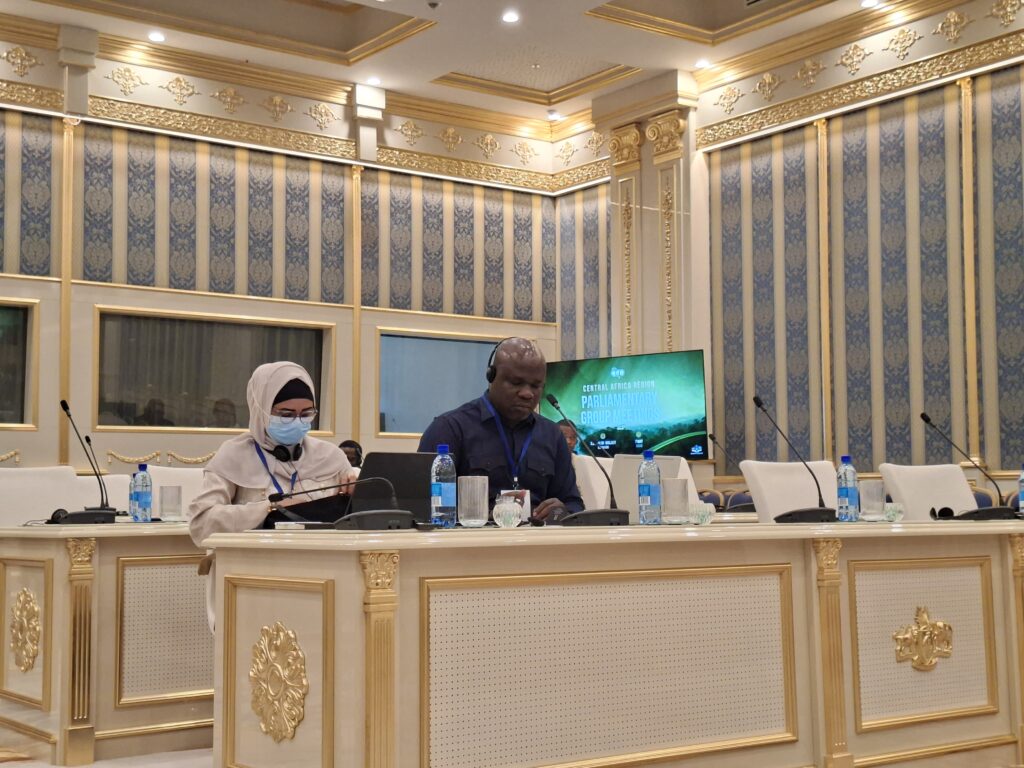
He proposed the establishment of a more stable and predictable funding mechanism, one carried primarily by member states through their national parliaments, based on a fair contribution per country determined in line with the OACPS contribution system. He said the secretariat stood ready to present the proposed mechanism during the day’s discussions.
“The objective is not to create an additional burden without justification, but to guarantee that the OACPS Parliament has the means necessary to function with autonomy, with credibility and with effectiveness,” H.E. Batraki said, before urging delegates to engage in frank, constructive exchanges oriented towards concrete proposals. He assured them that the secretariat would take their recommendations into account in the subsequent institutional process with the European Union.
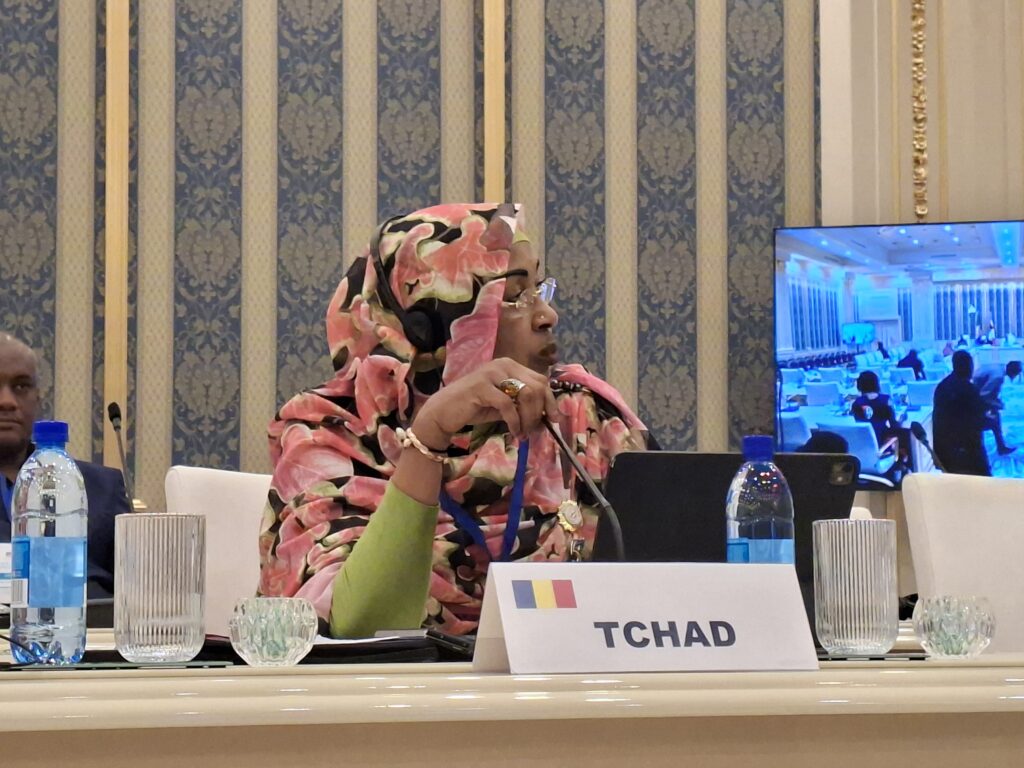
The funding question drew immediate and strong reaction from the floor after the Secretary-General concluded his address. One delegate told the meeting that African member countries needed to urgently step up their financial contributions to the organisation.
“We are all bound, as African countries, to tighten our belts to finance our continent. Each one of us must do our best so that our organisation is autonomous. Because we do not contribute as we should, I think the organisation can never work as it should. I draw the attention of each and every one of us who are present to take this seriously,” the delegate said.
Hon. Doumba Marius, responding to the debate, said funding was indeed the central issue of the morning’s discussions and would continue to dominate the sessions ahead.
“I believe the first three or four days will essentially be devoted to the financing of the OACPS,” he said.
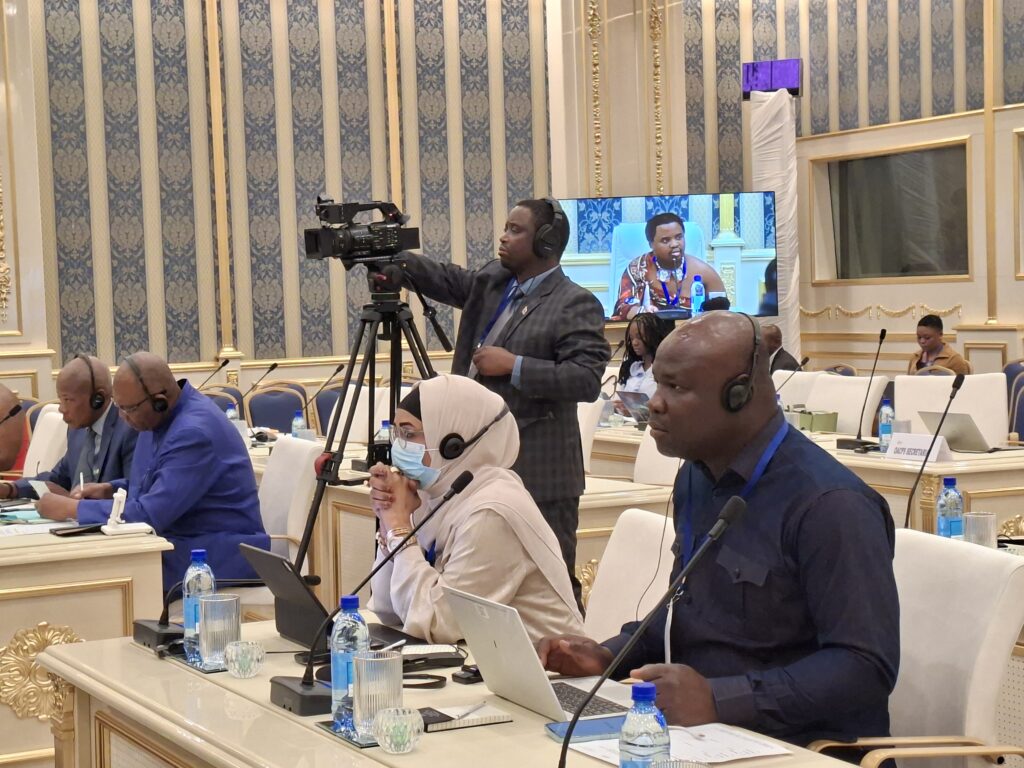
Following the open exchanges, the chair suspended the session briefly to allow non-technical guests to exit, as the meeting moved into a closed technical discussion on the organisation’s funding arrangements among the parliamentary delegates themselves.
The draft agenda for the meeting, issued from Brussels on 4 May 2026, had listed six items for discussion, covering opening and welcome remarks, the chair’s communication, an exchange of views on Central Africa regional priorities and key issues in implementing the Samoa Agreement, the question of independent funding for the OACPS Parliamentary Assembly, and any other business.