

Banjul – The Second Vice President of the Pan-African Parliament, Hon. Dr. Zanetor Agyeman-Rawlings, has told African leaders that human rights are not abstract principles but everyday realities that determine whether ordinary people can live with dignity, safety, and opportunity.
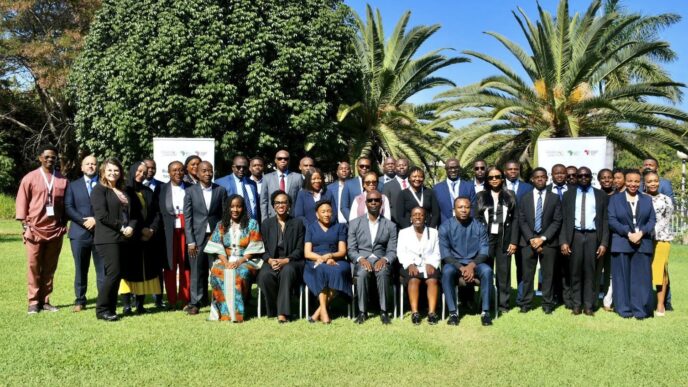
She made the remarks while representing the President of the Pan-African Parliament at the opening ceremony of the 87th Ordinary Session of the African Commission on Human and Peoples’ Rights in Banjul, The Gambia.
Dr. Agyeman-Rawlings said human rights come down to whether a child can access education safely, whether a woman can access medical care, whether a woman can participate fully in public life without fear, whether young people can find opportunity and inclusion instead of frustration and exclusion, and whether citizens can speak freely, organise peacefully, and trust the institutions meant to protect them. 
She told delegates that the session was taking place at a moment that calls for deep reflection and courageous action, saying: “Across our continent, many of our people continue to face significant challenges: from conflict and violent extremism to unconstitutional changes of government, economic hardship, forced displacement, rising inequality, climate insecurity, and growing mistrust in institutions.”
On the link between peace and governance, she was direct, saying: “Where justice is absent, instability grows. Where exclusion persists, insecurity deepens. Where institutions fail to protect the dignity and rights of citizens, trust erodes and tensions rise. It is therefore essential that we strengthen the link between the African Governance Architecture and the African Peace and Security Architecture.”
She warned against treating governance, peacebuilding, and security as separate issues, adding: “Too often, we approach governance, peacebuilding, and security as separate conversations, when in reality they are connected. Sustainable peace requires accountable governance. Democratic governance requires respect for human rights. And strong institutions are essential for both stability and development.”