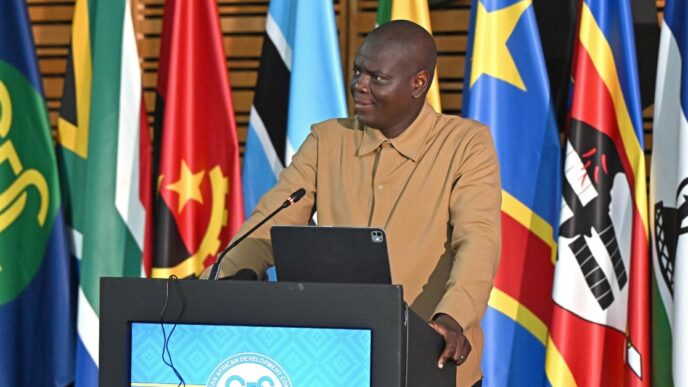


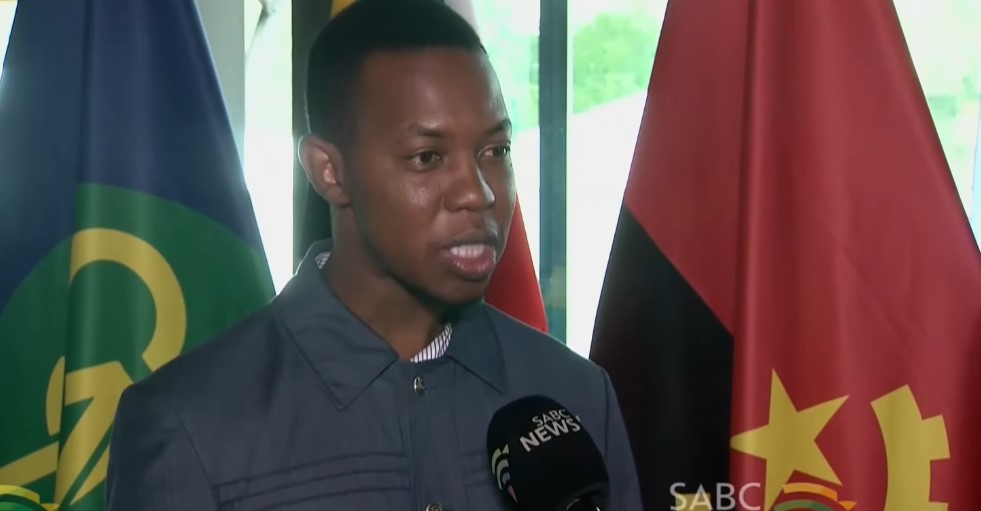
Skukuza – Foreign affairs ministers from across the Southern African Development Community gathered at Skukuza in the Kruger National Park this week for a high-level retreat focused on crafting a coordinated regional response to growing geopolitical and economic pressures affecting Southern Africa.
South Africa convened the four-day meeting as interim chair of SADC, with discussions covering migration, trade, food security, industrialisation and the cost of living crisis facing millions of people across the region.
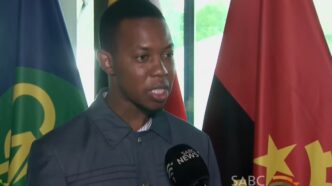
DIRCO spokesperson Chrispin Phiri told SABC News on the final day of the retreat that the deliberations had been thorough and wide-ranging, led by experts from within the SADC region. 
“The deliberations have been very, very insightful. One of the things that we’ve seen is that this region can actually be self-sufficient in many ways. If we speak about natural gas, if we speak about all of the mineral deposits that we have, even oil for energy and also for the green energy transition, most of those minerals lie here in the SADC region,” Phiri said.
Ministers agreed that the bloc needed to move toward a new level of industrialisation powered from within, with Phiri noting that discussions centred on how SADC nations could invest in each other’s economies rather than relying solely on external foreign direct investment.
Intra-regional trade, currently sitting at around 20%, was identified as a key area for growth, with ministers calling for it to be increased to approximately 50%. Tanzania’s self-sufficiency in rice production and Zimbabwe’s capacity to produce enough wheat to supply the entire region were cited as examples of what was possible within the bloc.
On migration, South Africa’s Foreign Affairs Minister Ronald Lamola was said to have been direct with his counterparts, calling on the region to examine both the pull and push factors driving movement across borders and to find collective solutions.
“It is quite fair to say most of the countries in the region wouldn’t want their nationals to be flowing to another country because of whatever concerns that they have within their own countries. No country can build itself without migrants. This economy, South Africa, stands on the shoulders and the back of migrants from the southern African continent but also the whole world. So it’s quite clear that we need to have a clear migration system as a whole of SADC that enhances our integration, that enhances our economies and that doesn’t burden other countries,” Phiri said.
Phiri also dismissed reports that diplomats were planning to boycott South Africa’s Africa Day celebrations as an isolated incident involving only a handful of ambassadors.
“We do expect ambassadors who are hosted in South Africa to help us resolve whatever challenges that we have. What is clear from that report is that this is clearly one ambassador pulling together a number of others and we don’t see this as a continental approach. It’s clearly isolated to a couple of ambassadors,” he said.
On reports that the Ghanaian and Nigerian high commissions were advising their nationals to leave South Africa, Phiri said Minister Lamola had been emphatic that much of what was circulating was misinformation.
“We are seeing a great deal of fake news that is being spread. Initially there were rumours that Ghanaians have been killed. There’s no official record of any Ghanaian being killed. We’ve also seen the same being purportedly said by the Nigerians, that Nigerians are being killed in South Africa, judicial killings. Nothing of the sort has emerged in the way of evidence,” Phiri said.
He added that South Africa would not stand in the way of any repatriation process but insisted it had to be conducted in an orderly manner and in accordance with the rule of law, including verification of the immigration status of every person wishing to use such a programme.
Phiri also reacted to reports of a break-in at the Pretoria residence of former minister Pandor, describing it as very disturbing and calling on the South African Police Service to act urgently and bring the perpetrators to book. He also extended condolences to a family that had experienced an attack near the Kruger National Park during the same period.