

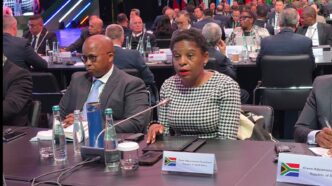
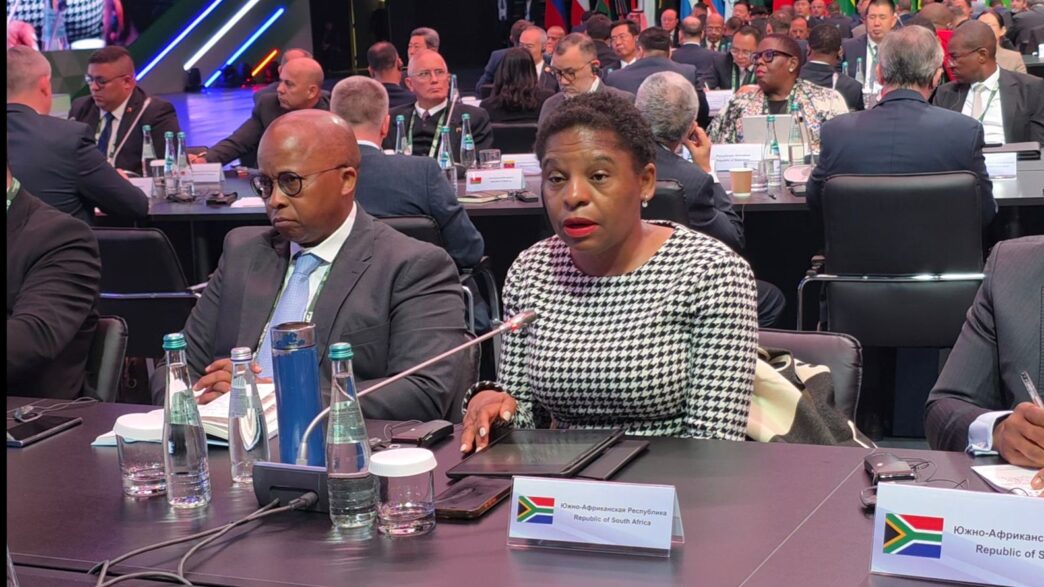
Moscow – South African Minister in the Presidency Khumbudzo Ntshavheni used her address at the opening session of the Third International Security Forum in Moscow on 28 May 2026 to warn that the emerging multipolar world order risks repeating the same damage inflicted on Africa during the 19th century, when a similar system gave rise to colonisation and slavery.
Speaking before Secretary Sergei Shoigu of the Security Council of the Russian Federation and senior security officials from across the globe, Ntshavheni said the diffusion of global power, while creating opportunities for greater inclusivity and regional influence, is also intensifying geopolitical rivalry, strategic uncertainty and complex transnational threats.
“The multipolar system of the 19th century resulted in colonialisation and slavery in Africa and the developing world, the consequences of which Africa is yet to recover from,” she told delegates. 
Ntshavheni said the new multipolar competition is playing out through proxy conflicts, militarisation of strategic regions, economic coercion, sanctions, and a scramble for influence over Africa’s resources and trade routes. She said the competition for influence on the continent carries direct negative consequences for the African Union’s Agenda 2063 development blueprint.
The minister again raised the “white genocide” narrative being used against South Africa, describing it as part of a coordinated international misinformation campaign with a clear political objective.
“The overall intention is to mobilise and justify the cessation of the Western Cape province to a whites-only enclave,” she said, adding that the narrative undermines the core foundations of a democratic South Africa built on non-racialism, non-sexism, equality and national unity.
Ntshavheni told the forum that weakening multilateral institutions such as the United Nations are increasingly unable to resolve conflicts due to divisions among major powers, leading to paralysis in international decision-making, declining trust in international law and reduced effectiveness of peacekeeping missions.
She warned that growing global insecurity has strengthened transnational criminal networks, driving increases in human trafficking, drug trafficking, illegal mining, arms smuggling and terror financing. She said these networks directly threaten governance, economic stability and public safety.
On the technology front, Ntshavheni said multipolar competition is fuelling cyber warfare, digital espionage and disinformation campaigns, with rising attacks on state infrastructure, data breaches and social media manipulation all posing serious risks to financial and communication systems.
In response, she said South Africa is modernising its security framework to address these hybrid threats, with priority placed on cybersecurity capability, border security, counter-organised crime operations and protection of critical infrastructure. The country is also investing in artificial intelligence, developing digital sovereignty and advancing the African Continental Free Trade Area as part of its strategy to diversify trade and investment partnerships.
Ntshavheni also connected economic instability to illegal migration, warning that financial pressures created by the global multipolar competition are reversing progress in the fight against food insecurity in Africa, and that the resulting rise in illegal migration is creating tensions in receiving countries, including South Africa.
She closed by calling on forum participants to rally behind President Cyril Ramaphosa’s 2024 Pact for the Future, which she described as an opportunity to reinvigorate the multilateral system and reform the UN Security Council to make it more representative, inclusive and responsive to today’s security and development challenges.
“Multipolarity must not mean multiple conflicts or multiple standards. It must mean shared responsibility, consistent respect for international law, and a greater voice and urgency for the Global South in shaping the future of the global security architecture,” she said.