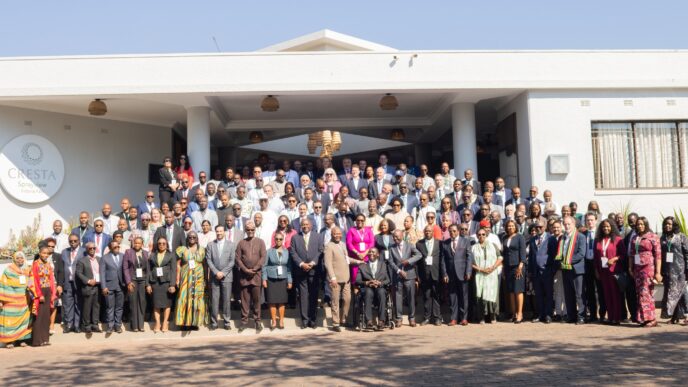



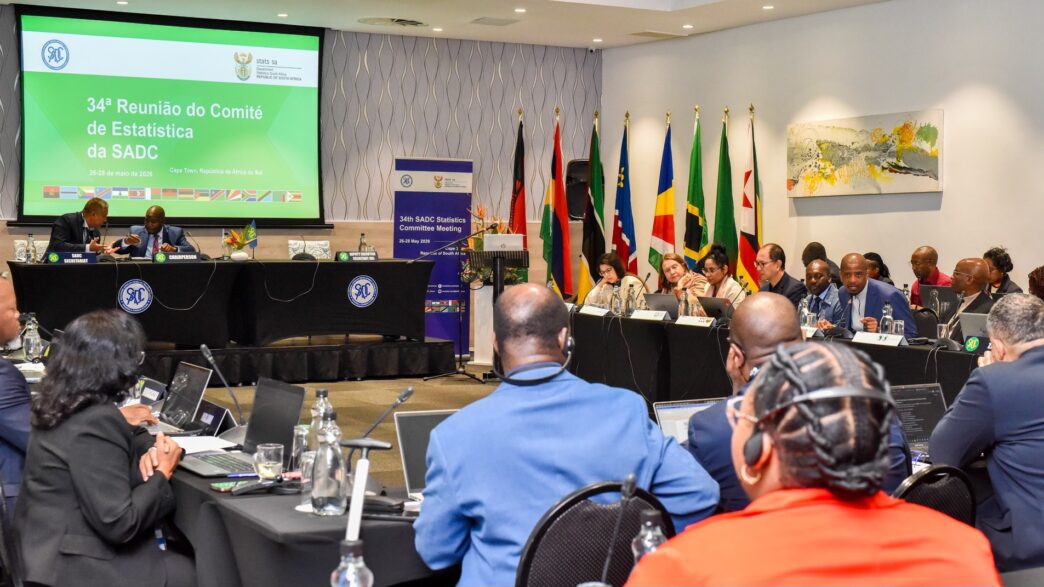
Cape Town – Statistical experts and policymakers from across the Southern African Development Community, including Eswatini, gathered in Cape Town, South Africa from May 26 to 28, 2026 for the SADC Statistics Committee meeting, convened to review progress on key regional statistical programmes and strengthen national data systems across member states.
The meeting, supported by the Republic of South Africa, brought together delegates to assess the implementation of the SADC Statistics Programme, the SADC Protocol on Statistics, the Regional Strategy for the Development of Statistics and the SADC Regional Project. Delegates also examined progress reports covering macroeconomic, poverty, trade, gender, prices, agriculture and labour statistics.
A key matter on the table was accelerating the signing and ratification of the SADC Protocol on Statistics, which was approved by the SADC Summit of Heads of State and Government in August 2021 but is yet to be fully ratified across member states. 
Other areas under discussion included reviewing regional statistical capacity building activities, evaluating progress on the digital transformation of regional statistics, receiving updates on international statistical standards and promoting the harmonisation of statistical methodologies across SADC member states in line with international best practice.
SADC Deputy Executive Secretary for Regional Integration Ms. Angéle Makombo N’Tumba, speaking to the South African Broadcasting Corporation on the sidelines of the meeting, said the demand for credible and timely statistics had never been greater. She noted that societies across the region and the world were undergoing rapid transformation driven by industrialisation, urbanisation, climate change, disasters, migration and shifting labour market dynamics, all of which were reshaping policy priorities and making robust statistical systems more critical than ever for informing responsive and inclusive policies.
The SADC Statistics Committee serves as the principal regional coordinating body for statistics, providing oversight on data collection, analysis, quality assurance and reporting to support decision-making and regional development planning.