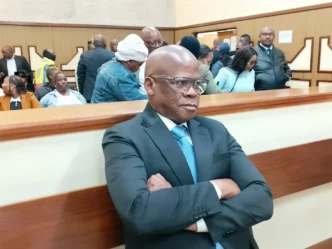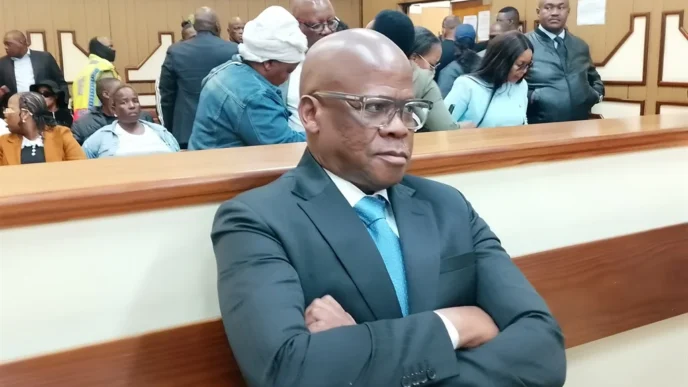


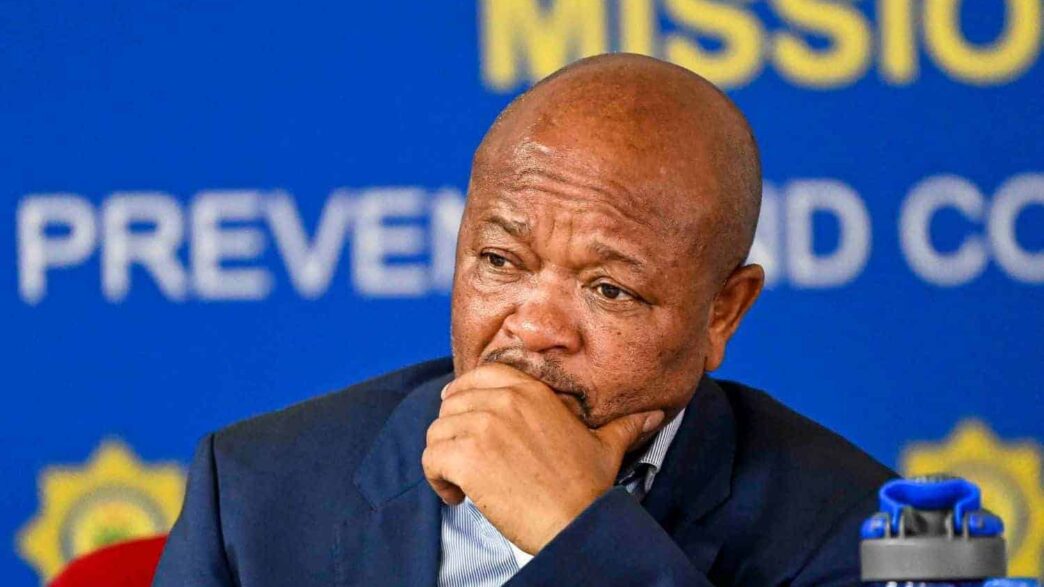
Johannesburg – South Africa’s suspended Police Minister Senzo Mchunu has been dealt a serious blow after evidence leaders of the parliamentary ad hoc committee investigating police corruption made adverse findings against him in a draft report presented to the committee on Thursday evening.
Advocate Norman Arendse read out the report, which found that Mchunu issued a 31 December 2024 directive to disband the Political Killings Task Team, known as the PKTT, without consulting any of his colleagues, a conclusion drawn largely from his own evidence before the committee.
The KwaZulu-Natal Director of Public Prosecutions, Advocate Elaine Harrison, Deputy Police Ministers Cassel Mathale and Polly Boshielo, suspended National Police Commissioner Fannie Masemola, and KwaZulu-Natal police commissioner Lieutenant-General Nhlanhla Mkhwanazi all previously told the committee that they only heard about the disbandment through social media. 
“The evidentiary record discloses a serious and multilayered institutional crisis. The central findings distilled from the testimony of 28 witnesses are that the 31 December 2024 directive disbanding the PKTT was issued without consultation with the national commissioner, the president, the National Prosecuting Authority, the State Security Agency, or the civilian secretariat,” the report reads.
“It was transmitted to a subordinate officer rather than the national commissioner, while the national commissioner was on leave on the eve of a public holiday.”
The report was also critical of Mchunu for only providing his full reasons for disbanding the PKTT when he appeared before parliament, rather than including them in the directive itself. In the directive, Mchunu stated only that the PKTT’s continued existence was no longer necessary and that it did not add value to policing in South Africa.
Additional reasons he revealed in parliament included budgetary concerns, letters of complaint from Mary de Haas, emails and text messages from former South African Police Service official Patricia Mashale, media reports about Crime Intelligence’s involvement in the murder of Sindiso Magaqa, and a complaint from MP Fadiel Adams.
The report found that Mchunu contradicted his own reasons during testimony.
“A credible evidentiary basis exists with the inference that the disbandment was influenced by the PKTT success in assisting the Gauteng Counter Intelligence Operation to unmask a criminal syndicate involving law enforcement officials and not by the operational or budgetary reasons advanced on 31 December,” it states.
The word “immediately” in Mchunu’s directive also came under scrutiny. While all other parties understood it to mean “right now,” Mchunu argued otherwise, a position the report flatly rejected.
“Minister Mchunu, we conclude that on his own evidence, issued the directive using the word immediately, but was unable to reconcile his subsequent resistance to that meaning with the ordinary meaning of his own letter,” the report reads.
“He advanced reasons in evidence, not recorded in the directive, and derived from sources such as Mary De Haas and Patricia Mashale, whom the inspector general and the national commissioner told him were unreliable. He admitted instructing his chief of staff to record Mkhwanazi without consent, and he misrepresented to parliament the extent of presidential consultation on the directive.”
The evidence leaders left it to the committee to decide whether Mchunu was within his legal rights to issue the disbandment directive.
On President Cyril Ramaphosa’s role, the report found that Mchunu misrepresented his discussions with the president regarding the disbandment.
“The president did not approve the disbandment, was not consulted and has taken constitutionally grounded steps in response. However, the evidence leaders noted systemic gaps in executive oversight, including no performance assessments of the minister of police during the seventh administration,” the report states.
“The president did not sanction the disbandment. The response establishing the Madlanga Commission, placing the minister on special leave, and appointing an acting minister under Section 98 of the constitution was constitutionally grounded, though the evidence reveals a pattern of passive executive oversight in the policing portfolio that the committee may wish to address in its recommendations.”