




Geneva – Informal sector workers will raise the lack of participation in the main economies of nations affiliated with the International Labour Organization (ILO) on the sidelines of the 114th International Labour Conference.

Street and market vendors under StreetNet International will be represented by veteran South African trade unionist Pat Horn, the organization’s senior adviser and founding international coordinator, who will speak out for thousands of street vendors who are still harassed, have their goods confiscated by municipal wardens, and are denied access to social protection.
A copy of Horn’s talking points, titled Submissions to the Recurrent Discussion Committee on Social Dialogue and Tripartism 114th International Labour Conference, calls for reforms. Horn will speak for over 800,000 members in 62 organisations in 56 countries under StreetNet International, a global alliance of street and market vendors, including Eswatini. 
Her speech focuses on the glaring exclusion of the informal economy workers in social dialogues while they call for more fora to have this discussion finally adopt resolutions. They also highlight the need for mechanisms that ensure inclusivity where that all workers, including own-account workers, are truly represented in tripartism.

StreetNet says the ILO office report IV’s recommendations are being overlooked yet specifies the clear entry points for action in tackling identified gaps that affect the majority of the global workforce.
“The majority of the global workforce are engaged in informal employment, and many work precisely as street and market vendors, who contribute significantly to local economies, food systems, distribution networks, employment creation, and the social life of cities. Yet in the majority of countries, we continue to face harassment, criminalisation, forced evictions, confiscation of goods, exclusion from social protection, and denial of labour rights,” Horn says.
Horn says they need to be engaged in urban planning meetings, public space management, licensing systems, market infrastructure, law enforcement, and local economic development, overturning exlclusion.
“For street vendors, participation in social dialogue must go beyond symbolic consultations,” Horn says, calling for a rights-based transition from informality to formality in these talks.
Street vendors say formalisation processes must not become mechanisms of exclusion that displace workers from their livelihoods through restrictive licensing systems, privatisation of public space, or punitive regulation. They call for a fair formalisation mechanism which supports that workers should not be excessively taxed ‘without granting them rights and representation within institutional structures’.
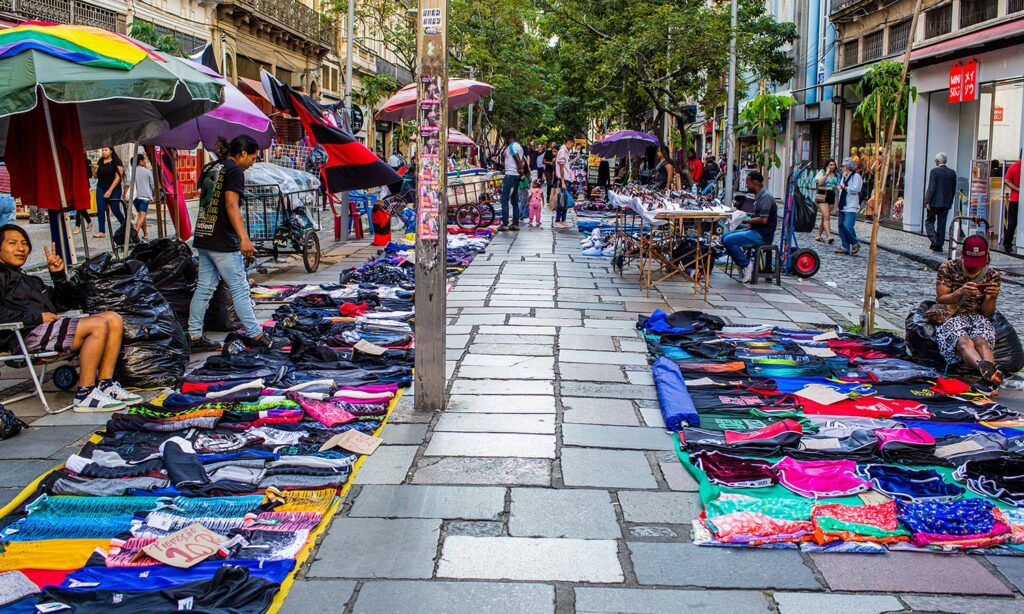
“All workers must have access to proper representation, collective bargaining and social dialogue, whether they are in the informal economy, the platform economy or in formal employment. There can be no genuinely inclusive social dialogue while millions of workers in the informal economy remain excluded from the institutions that shape labour, economic, and urban policy,” StreetNet says.