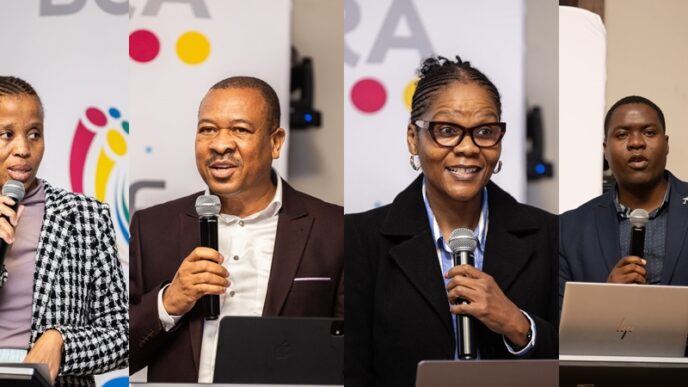


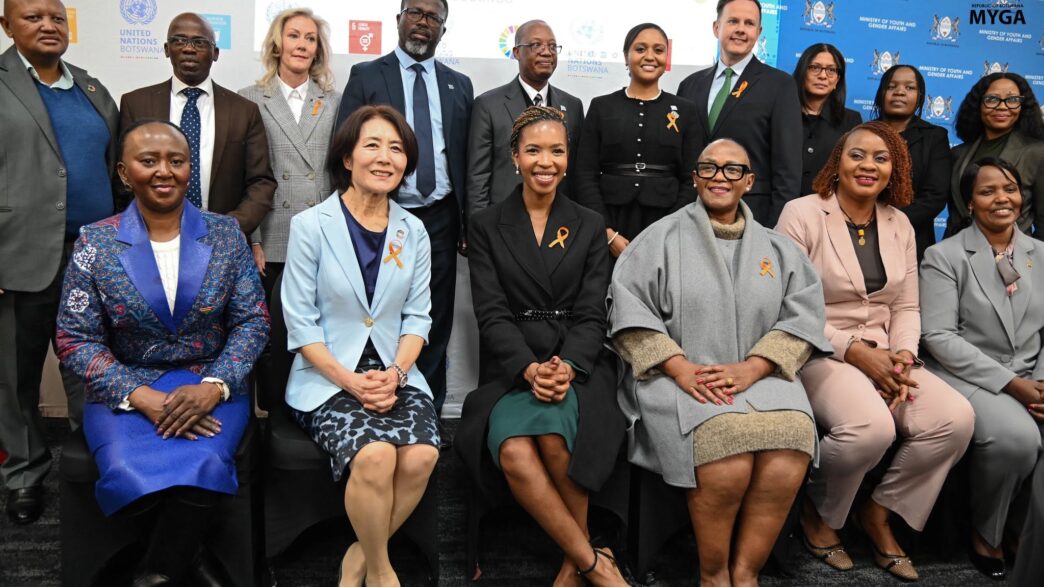
Gaborone – The Ministry of Youth and Gender Affairs in Botswana and UN Botswana have signed a Joint Gender-Based Violence Prevention and Response Programme aimed at strengthening efforts to combat GBV in Botswana.
The signing took place during a High-Level Development Partners Forum, where Permanent Secretary in the Ministry of Youth and Gender Affairs Ms Natasha Rampa told attendees that at least 37 percent of women in Botswana have experienced violence in their lifetime, while 30 percent of men report having perpetrated GBV.
Ms Rampa said the programme was inspired by a regional initiative discussed in Pretoria in 2023, which seeks to reduce gender inequality and empower women and girls by 2030. She said it aims to bring together government, development partners, civil society organisations, the private sector, and communities to coordinate efforts and leverage technical expertise in addressing GBV. 
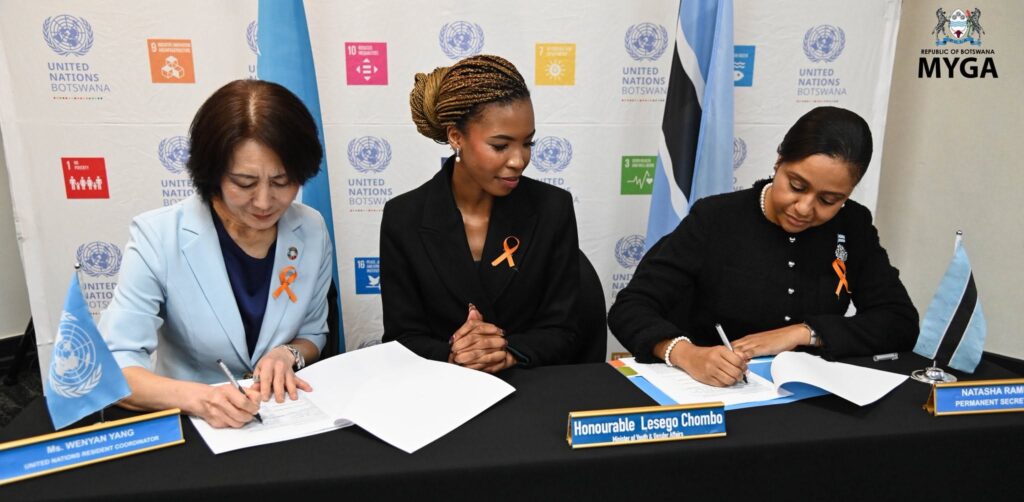
UN Resident Coordinator Ms Wenyan Yang commended the Ministry and the Government of Botswana for their efforts in advancing gender equality and combating GBV, saying the statistics serve as a stark reminder that GBV remains a reality affecting families and communities, undermining dignity and perpetuating inequality.
“Partnerships are a cornerstone of meaningful change,” Ms Yang said, adding that collaboration among government institutions, non-governmental organisations, the private sector, and survivors is essential given the complex and multidimensional nature of GBV. She called for increased investment in community-level prevention efforts, addressing the root causes of GBV, and strengthening data collection systems to inform interventions.
Minister of Youth and Gender Affairs Hon. Lesego Chombo pointed to key achievements from past collaborative programmes, including the development of national GBV strategies, the establishment of specialised GBV courts, economic empowerment initiatives for women, and the creation of the Gender and Child Protection Branch within the Botswana Police Service.
Hon. Chombo revealed that police records for the first quarter of 2026 show 1,517 GBV cases were reported, including murder, rape, assault, and offences involving children. She reaffirmed the Government’s commitment to strengthening policies and legislation, enhancing survivor support services, expanding prevention programmes, improving data collection, promoting women’s economic empowerment, and engaging men and boys as champions of GBV prevention.
Representatives from the Delegation of the European Union to Botswana and SADC, Debswana, and the Botswana Council of Non-Governmental Organisations also addressed the forum, agreeing that strengthened community awareness, greater attention to the mental health needs of survivors and perpetrators, and a united approach to treating GBV as a national crisis are all critical to the fight.