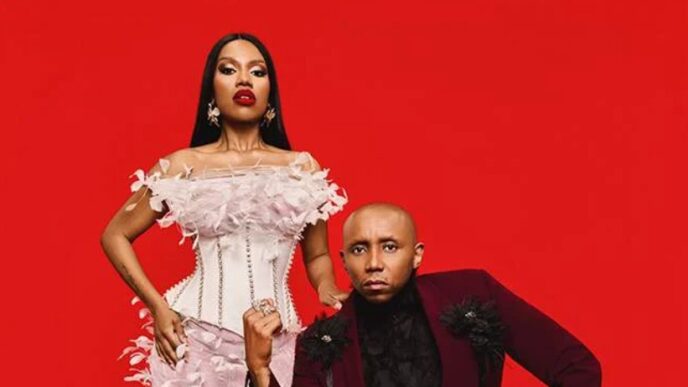



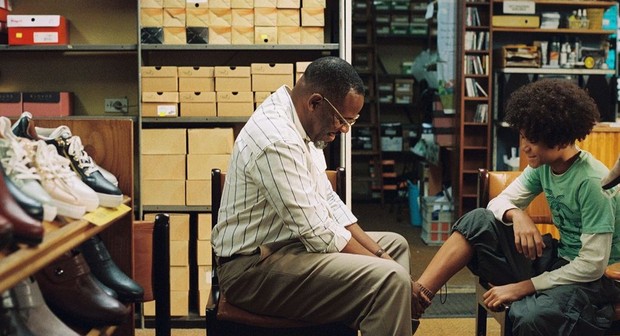
Melbourne – There is a scene in Pasa Faho that tells you everything about what kind of film it is. A Nigerian shoe salesman, too proud to ask for help and too stubborn to admit failure, sits in his small Melbourne shop staring at an eviction notice. His estranged 12-year-old son has just arrived from across the country. The timing could not be worse.
That tension, between pride and love, between the life a man imagined and the life he actually has, is at the heart of Igbo Australian filmmaker Kalu Oji’s debut feature, a film that has quietly built one of the more interesting audience journeys in recent Australian independent cinema. It sold out every one of its sessions at the Melbourne International Film Festival before it had even opened, becoming the first film to do so at MIFF 2025.
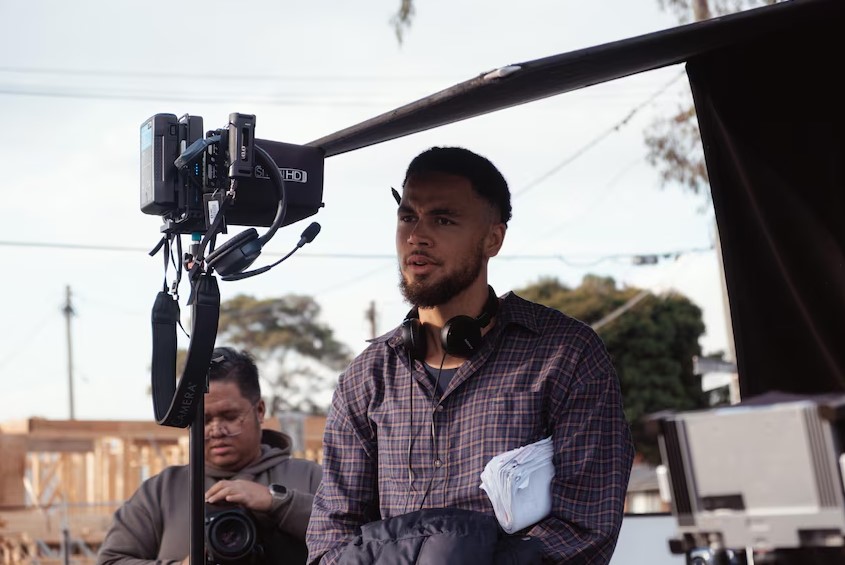
Pasa Faho follows Azubuike, played by legendary Nollywood comedian and actor Okey Bakassi, as he navigates the threatened loss of his business and the arrival of his son Obinna, played by Tyson Palmer. The estranged pair must find stability at one of the most turbulent moments in their shared history. 
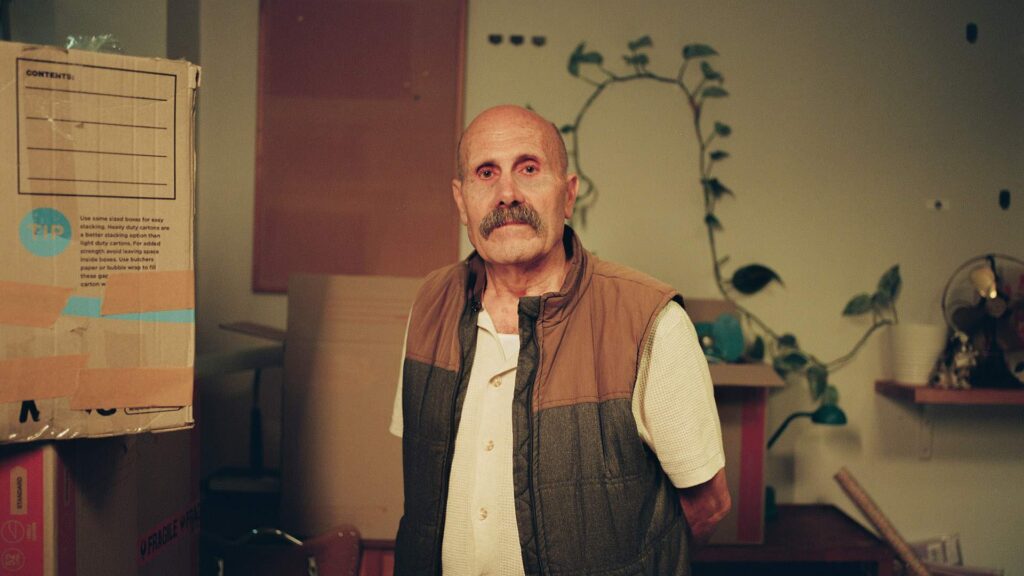
The film spreads its focus beyond the central duo. Amaka, played by first-timer Laureta Idika Uduma, is Azubuike’s sister and Obinna’s aunt, carrying the quiet weight of a life shaped by expectation rather than choice. Yorgos, a septuagenarian Greek florist played by Kostas Makrygiannakis, runs the shop next door, equally threatened by the same developers. Nigerian preacher Edward, played by fellow newcomer Idika Mba Uduma, balances personal ambition with his responsibilities to Melbourne’s Igbo community.
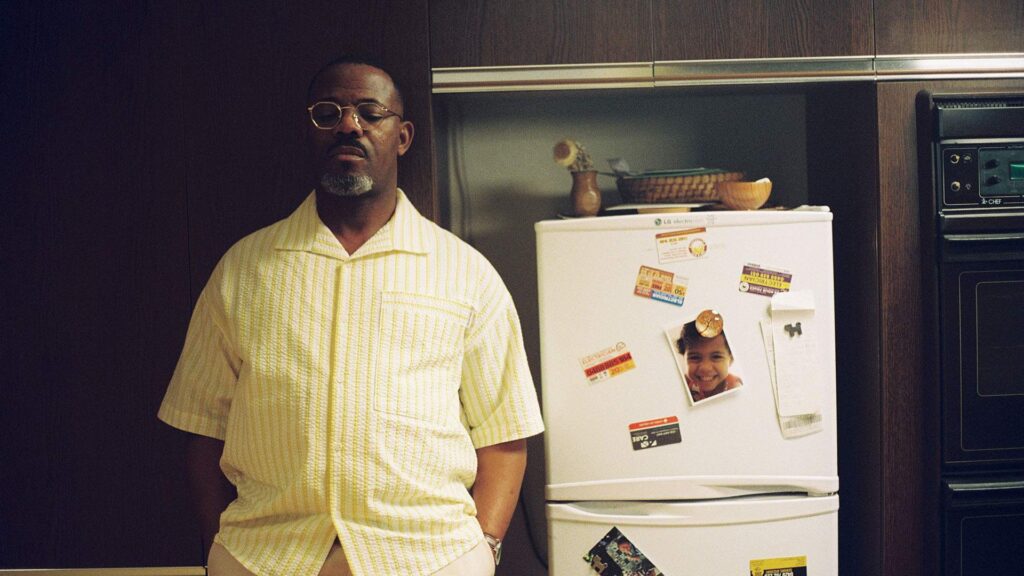
Oji said the character of Azubuike demanded an actor who could carry that particular kind of weight.
“He’s spent his whole life building up this image of what it means to be successful. There’s so much tension in that,” Oji said.
Bakassi, a stand-up comedy icon and award-winning Nollywood star, was cast in a role quite different from anything his fans would associate with him. For Oji, watching Nigerian audiences encounter that shift in real time was one of the defining moments of the film’s festival run.
“It’s as the film is playing live on screen, people are reacting in real time, like, ‘Why did he do that?!'” he said.
That Lagos screening stood in sharp contrast to the more restrained atmosphere of international festival circuits, and Oji said both reactions told him something important about the film’s reach.
“When Okey landed in Australia and my WhatsApp suddenly became the busiest it had ever been, I think it really hit me just how significant this was,” he said. “Reflecting on the experience now, Okey’s involvement is probably one of the things I’m most grateful for. I don’t think Azubuike is the same without him.”
Casting the right Azubuike was always going to be central to the film’s success. Oji said the search was long and extensive, driven by the understanding that the character needed to carry the entire film.
“So eventually we got to a point of process where we felt it made sense to reach out to Okey, especially as he’s got a lot of experience and a lot of charisma as a performer. But it was also this material, I think, was also asking him to step into a space that he frequents less so,” Oji said.
Finding Tyson Palmer was a different kind of discovery. Unlike the language-specific search for Azubuike, the net was cast more broadly for Obinna, and Palmer announced himself almost immediately.
“As soon as we found Tyson throughout the process, he was great, we knew it from two minutes into the audition,” Oji said.
The film’s young co-lead held his own alongside a veteran of African screen and stage. Oji described a mentorship dynamic between the two that echoed the film’s own story.
“Tyson is such an intelligent kid and a really hungry actor. They were together for a bit over six weeks in total. It was special to witness their relationship develop during this time, somewhat mirrored in what we shot,” Oji said.
Suburban Melbourne is woven through the film as more than just a backdrop. Oji said he wanted the setting to function as a time capsule for the city’s migrant communities, a portrait of a particular kind of life that rarely gets this kind of screen attention.

“You have this Greek florist, and you have this Nigerian shoe salesman, and on paper, there’s not really directly anything that kind of matches them, but in their experiences, and in the ways they feel, there’s so many overlaps,” he said.
Much of that texture came directly from Melbourne’s Igbo community, which Oji consulted throughout the development process. Workshops, meetings and informal conversations with men of Azubuike’s generation shaped the inner life of the character in ways that could not have come from the script alone.
“The tension between Obinna and Oscar, and him taking on a different name, came from an anecdote that someone had told me while just sitting down and chatting,” Oji said. “The inner workings of his character and his pride, and I guess where he draws that line, that came from sitting down and speaking to people who have lived more of that experience than I have lived.”
At its core, Oji said, the film is about a pressure that many people in the African diaspora carry but rarely speak about openly.
“You never exist in isolation. You’re never just living for yourself. And that’s a beautiful thing. But there’s also a lot of pressure that comes along with that, especially financially. And the weight of that pressure, I think, is often not talked about,” he said.
The title is itself a deliberate invention. Oji coined Pasa Faho as a term meaning “parts of a whole,” a concept with no prior meaning that accumulated layers as the film travelled.
“It just feels to me like this idea that just keeps on having layers or parts, I guess, added onto it,” he said.
The project had been years in development, with Oji beginning to write the script in late 2020. It was preceded by a series of award-winning short films, beginning with his 2019 Victorian College of the Arts graduate film Blackwood, which screened at Palm Springs Shortfest and the BFI London Film Festival. His 2021 short The Moon and Me was acquired by San Francisco’s Museum of the African Diaspora, and 2023’s What’s in a Name? won the Craft Award at the Sydney Film Festival.
The feature was made with long-term collaborators Ivy Mutuku and Mimo Mukii, whose working relationship with Oji he described as grounded in shared aesthetics and a relaxed onset culture.
Pasa Faho is now available on SBS On Demand. For Oji, the journey of this film is a foundation, not a peak.
“The best is yet to come. Undoubtedly,” he said. “I see my marriage with film as a long one, and don’t imagine I’ll ever stop growing in my practice.”
Watch “Pasa Faho” trailer