

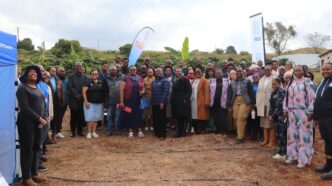

Mbabane – The Ministry of Natural Resources and Energy has handed over renewable energy and clean cooking systems to businesses, schools and Neighbourhood Care Points across Eswatini, in a move that has already benefited an estimated 15,577 emaSwati.
The handover was carried out in partnership with UNDP, WFP and the United Nations Resident Coordinator’s Office under the Igniting Eswatini’s Green Engine programme. Solar PV systems were installed in 16 micro, small and medium enterprises across all four regions of the Kingdom, while clean cooking technologies were deployed in 11 schools and 11 Neighbourhood Care Points.
Under Secretary Technical in the Ministry of Natural Resources and Energy Gabisile Mabuza said the programme addresses a fundamental need for businesses. 
“Energy is not a luxury, it is a foundation. For MSMEs, reliable and affordable energy means higher productivity, lower operating costs and more sustainable businesses,” Mabuza said.
UNDP Deputy Resident Representative Nessie Golakai-Gould called for the lessons from the pilot initiative to be properly documented to inform future interventions and support the scaling up of successful clean energy solutions.
For businesses in the agriculture, hospitality, retail, catering and creative industries, the solar-powered technologies are already helping reduce electricity costs, improve productivity and strengthen resilience. Schools and Neighbourhood Care Points received electric pressure cookers and biogas systems that reduce dependence on firewood, lower greenhouse gas emissions and improve food preparation efficiency for children and vulnerable communities.
The programme was implemented through a partnership between the Ministries of Natural Resources and Energy, Commerce Industry and Trade, and Education and Training, alongside the Deputy Prime Minister’s Office, UNDP, WFP and the UN Resident Coordinator’s Office.