

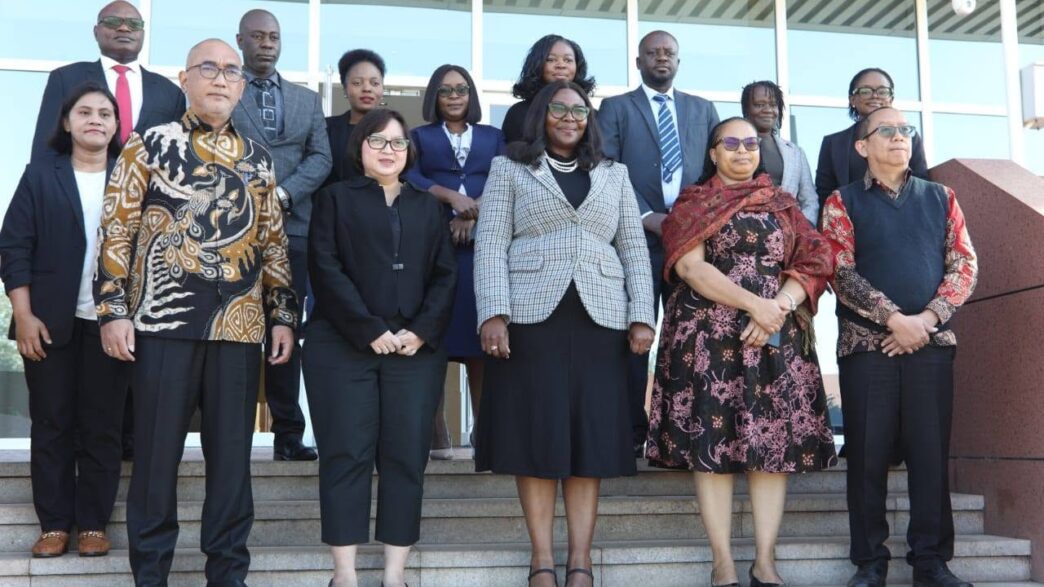
Lusaka – Zambia and Indonesia have held their first ever Foreign Office Consultations in Lusaka, bringing together senior government officials from both countries to explore new areas of cooperation and lay the groundwork for a more structured bilateral relationship.
The consultations were opened by Etambuyu Anamela Gundersen, Permanent Secretary for International Relations and Cooperation at Zambia’s Ministry of Foreign Affairs and International Cooperation, who described the meeting as a landmark moment in the history of relations between the two nations.
Gundersen said the meeting reflected a shared commitment by both governments to deepen dialogue, strengthen mutual understanding, and expand practical cooperation. She noted that Zambia and Indonesia have long enjoyed cordial relations anchored on mutual respect, shared values of non-alignment, and common aspirations for peace, stability, and sustainable development. 
She said Zambia was keen to expand collaboration in agriculture, forestry, fisheries and livestock, mining, renewable energy, tourism, and cultural cooperation, and pointed to the importance of South-South cooperation as a guiding principle for the engagement.
Indonesia was represented by Dewi Justicia Meidiwaty, Acting Director General for Asia Pacific and Africa Affairs at Indonesia’s Ministry of Foreign Affairs, who described the consultations as the beginning of a new chapter in the friendship between the two countries.
Meidiwaty pointed to the historical bonds between Indonesia and Zambia, rooted in a shared struggle for independence and solidarity under the Bandung Spirit. She noted that the inaugural consultations were particularly significant given that the two countries are approaching the commemoration of 50 years of diplomatic relations.
She said Indonesia was committed to converting longstanding political goodwill into meaningful economic cooperation that delivers tangible benefits to citizens in both countries. She pointed to opportunities in mining, agriculture, manufacturing, trade, investment, education, and cultural exchanges, noting that bilateral trade between the two countries reached approximately USD 11 million in 2025 but held significant untapped potential.