

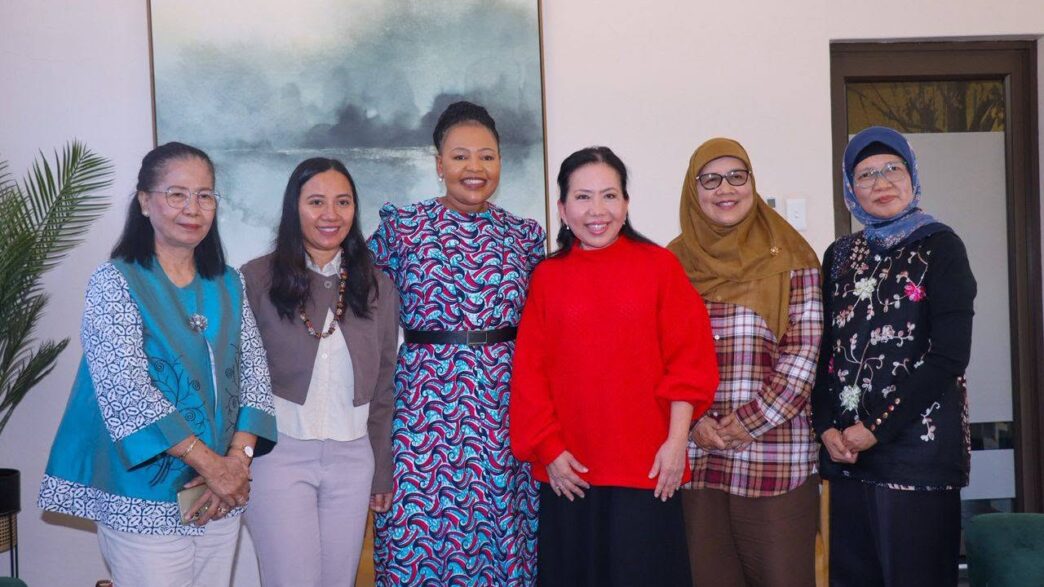
Mbabane – Senator Pholile Shakantu, Minister of Foreign Affairs and International Cooperation, on Friday received a delegation from Indonesia’s Universitas Airlangga and affiliated wellness and spa industry partners in Mbabane, with talks centred on agricultural value chains, natural product exports and academic exchange.
The delegation included Lenywati, Dipl. Cidesco, Director of The Royal Tirta Ayu Spa and Umtfombo Wekuphila Pty Ltd; Prof. Dr. Ni Nyoman Tri Puspaningsih, M.Si., Executive Secretary of the World University Alliance for Community Development and a chemistry lecturer at Universitas Airlangga’s Faculty of Science and Technology; Prof. J. Sri Wulan Manuhara, M.Si., Head of Biotechnology of Tropical Medicinal Plant and a biology lecturer at the same faculty; and Prof. Dr. Nanik Siti Aminah, M.Si., Person in Charge of the Nurturing Wellness Programme at Eswatini and a chemistry lecturer at Universitas Airlangga.
The meeting came days after the 10 June 2026 launch of the Ginger and Turmeric Research, Production and Value Addition Initiative at the University of Eswatini’s Luyengo Campus, where Prime Minister Russell Mmiso Dlamini witnessed the signing of a Memorandum of Understanding between Government, the University of Eswatini, Universitas Airlangga and private sector partners. The initiative aims to position ginger and turmeric as strategic commodities for national development through research, value addition, agro-processing, export growth and job creation. 
Friday’s discussions broadened the scope of Indonesia-Eswatini cooperation to cover indigenous high-value natural products, notably Marula oil and avocado. The Indonesian delegation identified both as promising commodities for global wellness and natural product markets, including Thailand, Europe and Nigeria, and called for the industrialisation of their full value chains, from cultivation and harvesting through to processing and certification.
Senator Shakantu said the Ministries of Agriculture, Commerce and Education would each engage the delegation within their respective mandates. She stressed the need to move beyond bilateral understanding toward concrete, all-inclusive programmes that bring smallholder farmers in at scale, noting that the Ministry of Agriculture was well placed to connect the delegation with farming communities capable of supplying the one to two tonnes of ginger required monthly.
The delegation noted that a pilot programme producing ginger using enzyme-based organic fertilisers in greenhouses was already under way at the University of Eswatini, with seeds sourced from Indonesia. The programme also incorporates student exchange opportunities under Indonesia’s Government-to-Government scholarship scheme, alongside a university-level scholarship offering of up to 15 places annually for students from across Africa.
Minister Shakantu committed to coordinating across relevant ministries to ensure the partnership delivers tangible outcomes for emaSwati farmers, women entrepreneurs and students.